Wednesday, March 16, 2011

White Egrets

Derek Walcott can spin out a long phrase as well as anyone, as in this poem, number V of part 10 of White Egrets, "In Italy":

Those hillsides ridged with ramparts and bell towers,
the crests of olives, those wheat-harvested slopes
through glittering aspens, those meadows of sunflowers,
with luncheon napkins like the mitres of popes,
lanes with long shadows, wide open retreats
guarded by leaping cypresses, shade-splashed ochre
walls, then the towns themselves with streets
as close as chain-mail, named after some mediocre
saint, coiling as one road down to the hazed sea.
All of those little ports, all named for saints,
redeem the sadness that was Sicily
and the stupidity of innocence.
It is like Sicilian light but not the same
sun or my shadow, a bitterness like a loss.
Drink of its bitterness to forget her name,
that is the mercy oblivion allows.

Look how the first nine lines play out phrases of varying length against the relatively even lengths of the lines. Look how the nouns that are the heads of those phrases run through those lines: hillsides, crests, slopes, lanes, retreats, walls, towns. Look how the feel created by the incomplete sentence of the first nine lines contrasts with the much shorter, complete sentences of the last seven. It's a poem that always knows where it is—in Italy—and yet it begins with a breathlessness that leaves you hanging somewhere before it sets you down there. White Egrets is full of writing like this.

But it is also full of poems that stumble rather than take off. Contrast the above with this poem, part III of section 13 of the book, "The Spectre of Empire":

The docks are dark and hooded, the warehouses
locked, and his insomnia rages like the moon
above the zinc roofs and spindly palms; he rouses
himself and dresses slowly in his small room:
he walks to the beach, the hills are brooding whales
against them drift the flambeaux and the lanterns
of the crab fishermen, the yachts have furled their sails,
he goes for this long walk when guilt returns;
indifferent to a constellation's Morse,
his resignation no longer sends
out fleets of power, an echo of that force
like dissipating spume on the night sand.
To the revolving beam of the Cyclopic lighthouse
he hears the suction of his soul's death-rattle,
but his is a history without remorse.
He hears the mocking cannonade of battle
from the charging breakers and sees the pluming hordes
of tribesmen galloping down the hills of sand
and hears the old phrase "Peccavi. I have Sind."
Think of the treaties signed by the same one-ringed hand,
think of the width its power could encompass
"one-seventh of the globe," we learnt in class.
Its promontories, docks, its towers and minarets
with the power that vanished as dew does from the grass
in the rising dawn of a sun that never sets.

Many of the things I am going to say in what follows could be dismissed as quibbles, except for the fact that there are so many of them.

The poem begins with a simple sentence, and then a simple elliptical phrase that implies the use of the same verb: "The docks are dark and hooded, the warehouses / [are] locked." This is perfectly fine, of course, but I find it quite clumsy to continue with an "and" after that ellipsis, followed by a clause with a new verb.

Eith that elliptical construction and then a longer, complete main clause, the semi-colon in line three (instead of a new sentence) makes things even more imbalanced. All the phrases in the long sentence fragment that begins the first poem I quoted balance beautifully; here, in contrast, the four clauses of the first lines do not build up toward something but instead head off in a variety of directions, semantically and syntactically.

That fourth line ends with a colon. What should follow a colon? Some sort of explanation or clarification of what came before. But what follows this colon is simply the next step in a narrative of what "he" is doing. And after a short clause about him comes a short clause that shifts the focus to the hills, so that the first five lines have six different clauses. Not only are the relationships between those clauses unclear, the sentence is not even finished yet.

Now take a look back at the punctuation at line breaks in the first poem I quoted: every line that could end in a comma does end in a comma. (The next-to-last line could have a semi-colon instead, but it works fine with a comma.) But here, as line five moves to line six, there is no comma. If we take the absence of a comma here seriously, then the enjambment across the line makes no sense: "the hills are brooding whales against them drift the flambeaux" is grammatical nonsense. "Against which" would work, but it doesn't say that.

Things settle down a bit for the next few lines, but it's worth noting that the first eight lines here contain nine main clauses. It's possible to write a compound sentence with nine main clauses over eight lines without getting clumsy, but these eight lines begin with clumsy syntax and are marred by sloppy punctuation—and the sentence is still not finished!

The next four lines are one main clause, but there are several problems here, beginning with my on-going question as to why this is all one sentence. In passing, I would also note that the semi-colons are used inconsistently here. (Note that I am not trying to tell Walcott how to use punctuation marks; I am just expecting from him what I would expect from any writer: that the y be used consistently in a way that serves the poems well.)

Then there's the question of the reference of "indifferent": it's easy enough to attach it to "his" so that we read "he is indifferent," but there is a moment of hesitation when it is the resignation that seems indifferent, which doesn't quite make sense. (I am not one to make too big a deal about "misplaced modifiers" that modify a possessive like this, but it's another infelicity to add to the list.)

Then there's the question of just what it is that "an echo of that force" is supposed to be doing syntactically: I guess it is supposed to be either a clarification of "fleets of power" (an appositive) or a second complement to "sends out" (with no coordination between the two complements). But neither of those options makes much sense to me.

The next sentence is mercifully brief, but even here a syntactic problem arises: in effect, the sentence says that "he hears the suction ... to the revolving beam." The introductory prepositional phrase with "to," that is, simply has no place in the main clause that follows.

The following sentence picks up on "he hears" and adds a "sees" and another "hears." It's actually fine in terms of the flow of points and the overall grammar, syntax, and punctuation, but even here, the verb phrases are connected clumsily: "he hears ... and sees ... and hears ..." ("Everything only connected by and and and," as Elizabeth Bishop would put it.)

The two lines that begin with "think" are lines 20 and 21 of the poem; as with the end of the section of "In Italy," it would be possible to use a semi-colon at the end of line 20, but it is unnecessary.

But some punctuation mark is necessary at the end of line 21—a colon, perhaps? That would introduce an explanation or clarification of "the width its power could encompass." Or perhaps a dash? That would be more emphatic; it would make the movement to line 22 less a matter of logic than a leap of memory, in a sense. — Even a comma would be better than the nothing that is here! (Here, though, a semi-colon would be nonsense, completely inconsistent even with Walcott's own somewhat haphazard use of semi-colons in the rest of the poem.)

The last three lines are not a complete sentence, which is not a problem (see the beautiful incomplete sentence I first talked about above). But there are still problems here: the promontories, docks, towers, and minarets in line 23 are not presented as a simple list along the lines of the one I just presented them in—a straight list of four items with a final "and" before the last item and no repetition of the initial "its." I could also imagine doing this: "Its promontories and docks, its towers and minarets." That's a relatively conventional rhythm for a list of four items. (I think there's even a term for that in classical rhetoric, but I can't remember what it is.) Yet once the list is established as not using "and" and not repeating "its," the introduction of "its" before "towers" makes me stumble.

And finally, there's the question of what the prepositional phrase "with the power" is supposed to be connected to. Should this be read as "its minarets with the power that vanished as dew does from the grass ..."? What does that mean?

Why go into this poem's infelicities at such great length? Two reasons: first, there is a great deal of beautiful writing in White Egrets, as beautiful as the first poem I quoted. But there is also a great deal of clumsy writing, where I find myself having to ask basic questions about the intended grammar and syntax. If these poems had no punctuation, I would expect to be doing that work, but they are punctuated, and the poems that work wonderfully succeed in part because they carry me along in a poetic trance in which I do not have to worry about syntax and grammar. So it is extremely surprising to find the trance repeatedly broken by such questions.

Secondly, Walcott's book won the T. S. Eliot Prize in January. I was happy to hear that, as I had read all but one of the shortlisted books and I had not thought that any of the others contained any poems as downright beautiful as some of the poems in this book (like the one I began with). But Anne Stevenson, the chair of the judges, was quoted (here) as saying that the book was "moving and technically flawless." Many of the poems in White Egrets are indeed both moving and technically flawless, but as I could show with a significant number of other poems in the book besides the one I dissected here, the book is full of technical flaws—and those flaws make it harder for the poems to be consistently moving.

Perspectives on nuclear reactors

A few days ago, this article about the design of the Fukushima nuclear reactors got a lot of attention. I appreciated it for its clear, careful description of the design of boiling water reactors. When I posted a link to it on my Facebook page, the comments began to fly, and I saw many of my Facebook friends linking to the same article (and even to a German version of it).

One thing I wondered in the comment stream on my posting of the link was whether a nuclear skeptic who understood the design might also provide an analysis of the situation. Well, it turns out, according to this article in today's New York Times (and International Herald Tribune) that such an analysis has been made—and not only has this reactor design been criticized, it has even been criticized right from its earliest days. And the NYT article cites several people who clearly have the credentials to understand the Fukushima design but have also long identified potential problems with the design that are the very problems that are now causing trouble in Japan.

Given that the author of the first description of boiling water reactors linked above apparently wrote the description in an email to his family to reassure them that things were okay, it's not surprising that he did not mention the existence of long-standing criticisms of the safety of such reactors.

But once the article went public, it's too bad that the MIT people who offered to host the article did not provide that information. This is a case where the "two-sides-of-the-story" ethic of contemporary journalism (which so often leads to a "balanced" presentation of a situation where one side is, as an FB friend put it recently in a different context, "batshit") actually does serve a purpose.

Monday, March 14, 2011

Just One

So I wanted some chocolate with my cup of coffee after lunch, but we're out of chocolate, in part because I intentionally did not buy any so that I would not overindulge.

But we have a box of Walker's Belgian Chocolate Chunk Cookies, so I thought I would eat just one. Then I wondered whether I would be able to resist eating another after eating the first one.

It seemed like that would be a really hard thing to do, as these cookies belong to the category of "you can't eat just one" (one of the many old advertising slogans still slithering around my brain). So I thought about giving myself a reward if I managed to eat only one.

But all I could think was this: "If I manage to eat just one, then I'll give myself another as a reward."

Friday, March 04, 2011

The Garden in Dream

Here's a stanza from David Harsent's "The Garden in Dream" (from his new collection Night):

VII
This flower's baby blue seems almost bland
except, when you hold it close, you get the true
depth; and when you look away, you're blind.

I'm struck by how this stanza seems to summarize the logic of a great deal of poetry. Perhaps if I highlight a few words, I can make my point clear:

This flower's baby blue seems almost bland
except, when you hold it close, you get the true
depth; and when you look away, you're blind.

The logic is that something seems to be one way, but a closer look reveals that it is not what it first appeared to be. (And as I type up this note I wrote the other day, it strikes me that I am using the same logic when I highlight those phrases: look closely and you'll see something else.)

What takes this stanza beyond the logic of "look deeper and you'll see the truth" is this: what is revealed is not something about the flower. In fact, what is ultimately revealed is not "the true / depth" but one's own blindness—as if the result of revelation were the impossibility of further revelation.

So maybe what this post reveals is also not something about the poem but something about me: I am always seeing the ways in which seeing becomes indistinguishable from blindness. (So what it reveals is that I read Paul de Man back in the day? Blindness and Insight and all that.)

Saturday, January 29, 2011

Skills

I saw a headline in the local free daily newspaper the other day that said that children today are better at playing computer games than they are at tying their shoes. I did not read the article (I saw the headline over someone's shoulder on the bus), but I can imagine someone saying that this is another sign of how things are going downhill. But frankly, it's no surprise at all: children know how to play computer games because they play computer games, and they don't know how to tie their shoes because they have velcro shoes. If a skill disappears, it might just mean that people don't need that skill anymore.

Friday, January 21, 2011

Horizon Review, Issue 5

Issue Five of Horizon Review is up, and it's a pleasure to have four poems of mine featured alongside the work of such a strong line-up of poets, including Mark Granier, Alison Brackenbury, Ian Duhig, and Rob A. Mackenzie.

Tuesday, January 11, 2011

Land of Marvels

The main character of Barry Unsworth's 2009 novel Land of Marvels (reviewed in the New York Times here) is John Somerville, an archaeologist doing an Assyrian dig shortly before World War One begins. At one point, he ponders the reign of Ashurnasirpal II, in a passage that makes clear what contemporary issues were on Unsworth's mind as he embarked on a novel set in what would one day become Iraq (which, it turns out, is the novel's last word):

Some change in the human spirit here, not in the doing but in the telling, the pride, some ugly twist of soul towards a new idea of supremacy. How? From where? Why among these people at this time? Bred by conquest, like an appetite that grows from feeding? With the blessing of their god Ashur to lend them a sense of mission, bloodshed would become a form of devotion. Since Ashur was above all other gods and the king was his earthly embodiment, there would be a duty to impose his cult, carry light into dark places. The light they had carried had been cast by the flames of devastation. They too, the light bearers, had ended in that same fire.

A later passage returns to the same considerations:

This story began with the second king called Ashurnasirpal, the first of them all to boast of his power to inflict suffering, the first to make this power the symbol and test of kingship, the first to aim not merely at conquest and plunder, as had his forebears, but at the permanent subjection of the conquered peoples, changing the very nature of the state, from one rich and strong within its borders and content to be so to one that gloried in dominion, ruthless in its greed for territory and vassalage, a policy that was to be followed by all his successors down to the last days, down to the fires in which the empire perished.

On the basis of these two passages, one of the concerns of Unsworth's novel is a variant of "those who don't know the past are doomed to repeat it," and the doomed party here would be today's United States, doomed to burn in the very fires of devastation that have been dominating its policies over the last nine-plus years.

But a novel that leaves it at that would hardly be worth commenting on. There is an American character in the novel, Alex Elliott, a geologist who, for strategic reasons involving oil, is pretending to be an archaeologist attached to Somerville's working party. This is a character who is marked in many ways as untrustworthy; in fact, he is even apparently selling his services as a geologist to the Americans, the British, and the Germans all at the same time. And this ambiguous figure is the one who actually states the principle of history: "As someone wiser than I has said, if we ignore the lessons of the past, we will be condemned to repeat our mistakes." He says this at the end of a dinner-table soliloquy about the Hittites—but of course he is not really an archaeologist at all, but a geologist who has boned up on archaeology in order to be able to pass as an archeologist, and he is not interested in the mistakes of the past but in the possibilities of the future, a future that, as he foresees, will be dominated by oil. This quotable quote from "someone wiser than" Elliott is thus deeply ironized in the novel, and any straightforward reading of Unsworth's implicit comparison of the Assyrians and the Americans is called into question by the novel as a whole. The comparison stands, of course, but Unsworth is both establishing the parallel and fictionally exploring its implications and imprecisions.

Saturday, January 08, 2011

August Peonies


There's a good study to be written about one-sentence poems (or perhaps it has been written already). Here's the one-sentence poem on Poetry Daily today:

AUGUST PEONIES

Lallygagging on bent stems, late
this year because of the snow
in May, their rag-tag magenta
cluster-heads freshen the still heat
like a rush of wind in the leaves
or the cool brush of deep sea
crinolines as the ripple kiss
of a breeze opens their bunched petals
just enough to let them breathe
before they ease back
into light repose, poised
at the edge of time-lapse
attention, like us, who lose
momentum in the heavy air
rich with the scent of ripening
wheat that drifts in from the fields
over the slow-moving river
as the afternoon nods and lengthens
into shade, into thoughtfulness,
and the sky deploys an argosy
of softly tinted clouds, fresh
blooms without stems
that sail where we cannot
go, all the way to the edge
of everything where daylight looks
back, once, then disappears.

George Amabile
The Malahat Review
Fall 2010

And here's a favorite one-sentence poem of mine, by a poet, Sarah Wardle, who is particularly good at one-sentence poems:

HERE AND THERE

When I'm walking in the city

past banks of offices and shop windows,

noticing the leaf-fall of litter,

as I'm swept along by a stream of feet,

I imagine I'm strolling in the country

past crowds of trees and parked hedgerows,

hearing the breeze change up a year

and the river roar, like a main street.


Friday, January 07, 2011

I See Alps

In the summer of 2003, we took Miles, then three and a half, on a boat tour of the Seattle harbor. As the boat turned back towards the harbor and gave us a great view of Mount Rainier, Miles exclaimed, "Look, Mommy! I see Alps!" This amused not only his parents but also all the people within earshot. The others probably did not know that he is a resident of Switzerland.

I found this photo the other day while going through old photos to put them on a memory stick for our new digital picture frame. It reminded me of Miles's exclamation, of course, but it also reminded of the gigantic cranes that can be seen in the photograph, which were designed and built in order to be able to load and unload the gigantic container ships that the Seattle harbor specializes in serving.

Seen up close from the tour boat, they were huge; from this perspective, they are dwarfed by the mountain in the distance. Someday, the Seattle skyline will surely be gone, and with it the cranes, but the mountain will remain.

Thursday, January 06, 2011

Werner Herzog reads

It's a bit late for the season, but I just came across this rendition/adaptation of "Twas the Night Before Christmas" by Werner Herzog:


And there's a whole bunch of other "Werner Herzog reads" videos to watch, too, including "Madeline" and "Winnie the Pooh."

(There's a footnote somewhere that says it is not really Werner Herzog ...)

A wonderful curse poem

The first of today's three poems on Poetry Daily is a wonderful curse poem by Paul Zimmer:

Zimmer's Head Thudding Against the Blackboard

At the blackboard I had missed
Five number problems in a row,
And was about to foul a sixth
When the old, exasperated nun
Began to pound my head against
My six mistakes. When I wept,
She threw me back into my seat,
Where I hid my head and swore
That very day I'd be a poet,
And curse her yellow teeth with this.


A curse poem that is also a bit of an ars poetica, in fact: here's why I became a poet, and here's what poetry is for.

Saturday, October 30, 2010

Cameras as metaphors

In John Fuller's latest collection, Pebble & I, there is a poem called "Small Room in a Hotel", which begins with this quatrain:

In this cool cube of marble
I am valid but invisible

As an image caught in a camera

But not yet reproduced.


This reminded me of another passage about photography that I recently came across, in "Old Soul Song (for the New World Order)" on the Bright Eyes album I'm Wide Awake, It's Morning. (There are a bunch of videos of live performances of the song on YouTube, but mostly pretty low quality audience shots.) After a first verse about a demonstration, the second verse reads:

We left before the dust had time to settle,
And all the broken glass swept off the avenue.

And on the way home held your camera like a bible,

Just wishing so bad that it held some kind of truth.


And I stood nervous next to you in the dark room
You dropped the paper in my water,
And it all begins to bloom.


So what happens to how the taking of pictures is used as a metaphor when one moves from developing film to processing digital images? Fuller's quatrain could be digital, but the way in which an image in a digital camera has not yet been reproduced is quite different from how an undeveloped image waits to be developed in a film camera. And the Bright Eyes lyric is, in a sense, already out of date, since almost anyone attending a demonstration these days would have a digital camera in hand. So you would not have to wait to develop the pictures to see if "it held some kind of truth," since you could look at the pictures on the camera's screen on your way home.

Monday, October 25, 2010

Cats of the Temple

A theme that runs through Brad Leithauser's poetry is the position of the mind in the world, or the relationship between the mind and the world. There are three moments in his 1986 collection Cats of the Temple that stake out the territory at issue here. The poem "On the Lee Side (Cape Breton, Nova Scotia)" concludes with a description of the mind's desire to see the world as being there just for itself. Leithauser describes the mind (or this part of the mind) as an "elusive but unavoidable, queer / but predictable inner companion":

... who's
neatly, snugly sure


just how this splendid

show of weather's to be accounted for:

ingenious exhibitions exclusively intended

to entice and entertain him here.


From this perspective, the mind is sure that the world is there for it, as "irresistible grist / for the fabulist," as the book's opening poem, "Two Suspensions against a Blacktop Backdrop," puts it.

Here, the mind (or this part of Leithauser's mind) feels that the world is there for its delectation, but near the end of the book, this perspective shifts significantly. First, in "Seaside Greetings (Oki Islands, Japan Sea)," the penultimate poem in the book, after describing how "the crest of a bluff" looks like Japanese armor, Leithauser carefully considers that surprising similarity, and others:

Of course given the scale Nature has
to work with, all of these uncanny,

and often funny, resemblances

(the ancient trees


wrung like buxom women, whales
in the clouds, bights like laughing

horses' heads, potatoes bearing profiles

of generals


dead now for centuries) are

statistical certainties, nothing

more, and yet they do appease our

appetite for


play at the heart of things ...


The "ingenious exhibitions" of the earlier poem are now "uncanny ... resemblances" that are "statistical certainties, nothing / more"—and that line break after "nothing" briefly makes those "resemblances" and "certainties" into "nothing." That "nothing" then calls forward to the "things" of the next clause, the "and yet" clause that gives us something back from that "nothing / more": the satisfaction of a desire for play. The "ingenious exhibitions" may not be "ingenious" and they may not be "exhibitions," but the mind can still be appeased by them—not with meaning, but with playfulness.

The final poem in the book takes place in the same location: "On a Seaside Mountain (Oki Islands, Japan Sea)". At the top of the mountain, there are horses in a pasture, and the poem concludes:

The sun's pace
is perfectly theirs, and the planted ease

they are breathing, are breeding, in this place,

while not meant for us, lightens us anyway.


The "ease" of the horses is "not meant for us," but it "lightens us anyway." Again, the mind seeks something in the world, but in these last two images, Leithauser's "elusive but unavoidable, queer / but predictable inner companion" has been tempered by a realism that still leaves room for that companion to be "enticed and entertained." The world may not be "exclusively intended" for us—it may even be devoid of meaning—but it "appeases" and "lightens" us anyway.

Aroma

A few lines I particularly liked from Durs Grünbein's new book Aroma:

Die Städte traumen alle voneinander. ("Corso Trieste")

"The cities all dream of each other": behind this evocative image is the simple fact that streets and squares in one city are often named after other cities, but that does not reduce but rather enhances the evocativeness of the line.

Dies ist der Platz mit den glücklichsten Tauben der Welt. ("Piazza San Marco")

"This is the square with the happiest pigeons in the world": I read this quick translation of the line to my mother, and she immediately knew which square it referred to. I had not told her the title of the poem!

Werbung macht müde. ("Aroma," XXII)

"Advertising is exhausting": Or perhaps "wears me out," but Grünbein is, as usual, more general than personal. The title poem, "Aroma", is a 53-poem sequence about a year spent in Rome at the Villa Massimo. Looks like a nice play to stay:


Sunday, October 24, 2010

Übersetzerhaus Looren


Literary translators looking for a good place to finish up a commission might be interested in the "Translation House Looren" in Switzerland. There's information about residency for a "working stay" at the house here.

Saturday, October 23, 2010

The Day's Announcement

Here's a poem from Brad Leithauser's Curves and Angles that made me burst into tears (with my own father mostly fit but still worse for wear after two strokes in the past five years). Looking at it again, I am particularly struck by the two different meanings of "gone" in the first two lines.

If you like this one, there are several more at the link if you click the book's title above.

THE DAY'S ANNOUNCEMENT

The family’s hope? That he was too far gone
to notice she was gone. But when he asked for her
for four weeks running, it didn’t seem quite fair
to reassure him with—She’ll be back soon.
So when, pale blue eyes jumping in his head, he said
again, Nurse, where’s my Meg?, as if she were a stranger
(her, his own Bridget, sixth child and sole daughter!),
she told him—Poppa, listen: Momma’s dead.

The news plunged deep into that drowned brain.
He bowed his weighty head. She took his hand—
Had she made a mistake? Could he understand?
. . . Maybe, for when he raised his face again,
he wore a look of rationality triumphant:

I knew it. Otherwise, she would have come.

Friday, October 22, 2010

Fishing for Amber

Ciarán Carson's Fishing for Amber contains several passages that indirectly describe how the book works. Here's one:

For one thing leads to another, as it does in Holland. The cities, by means of canals, communicate with the sea; canals run from town to town, and from them to villages, which are themselves bound together with these watery ways, and are connected even to the houses scattered all over the country; smaller canals surround the fields, meadows, pastures and kitchen-gardens, serving at once as boundary wall, hedge and roadway; every house is a little port, in which you might hear stories from the seven seas. One can drift from any place to anywhere. (152-153)

While reading Fishing for Amber, I kept thinking of W. G. Sebald's books, so I was pleased to come across a reference to St. Sebald in Carson's Shamrock Tea (which I read immediately after reading Fishing for Amber). But when I was done with both these Carson books, I no longer thought of Shamrock Tea as being "Sebaldesque"; it ends up being quite different than anything Sebald wrote (except perhaps Austerlitz, which, like Shamrock Tea, is held together by a continuous narrative more than any of Sebald's other books, or than Fishing for Amber).

Instead, it is Fishing for Amber that actually feels Sebaldesque, with one significant difference: Sebald's work is very melancholy, even pessimistic, while Fishing for Amber uses similar associative techniques (encapsulated in the quotation above) but takes a much different kind of pleasure in those techniques, not the pleasure of melancholy that pervades Sebald but a pleasure in how full of wonders the world is. There is darkness in Carson as well (otherwise, the books would not be interesting), but the experience is of pleasure most of all, while in Sebald, the darkness is foregrounded, and the joy of reading his work comes in spite of the darkness, as it were.

In both Fishing for Amber and Shamrock Tea, Carson repeatedly contemplates paintings, especially Dutch paintings (the Arnolfini Double portrait by Jan van Eyck plays a crucial role in Shamrock Tea). But it was his description of a Vermeer painting in Fishing for Amber that struck me most, in part because I had just read another description of the same painting in Michael Donhauser's Nahe der Neige. Here's Carson on the painting:

... one of the essentials of comfort for a Dutch lady was the vuur stoof, a square box open on one side to admit an earthen pan filled with embers of turf, and perforated to allow the heat to ascend and warm the feet; it served as a footstool, and was concealed under the dress. The use of it was rarely dispensed with, whatever the season, indoors or out—the citizen's wife had it carried after her by her servant to church or at the theatre.

This, indeed, is the object depicted in the lower right corner of Vermeer's Woman Pouring Milk ... She's pouring white milk from a red earthenware jug into a brown glazed bowl and there's a loaf of bread in a wicker basket on the table and a lidded pitcher and other bits of broken bread on the tablecloth. (99-100)

What struck me was Carson's emphasis on the "vuur stoof" in his description of the painting, in contrast to his merely passing mention of the bread on the table. Donhauser emphasizes the bread, and mentions the stove only in passing:

Der Raum, worin das geschieht, ist ein Neben- oder Zwischenraum, der nicht wirklich als Küche erkennbar ist—es hängen da ein Korb und ein Messingbehälter, ein Stövchen steht auf dem Boden ... die Magd, die schaut nicht auf, sie bereitet ein Gericht namens Wentelteefje, wofür Brot gebrochen wurde und wofür die Magd nun Milch in eine Schüssel schenkt; das Brot wird dann etwa eine Stunde in der Milch eingeweicht werden ... (19-20)

I don't have anything to add to these two descriptions; I just enjoyed the (Sebaldesque?) coincidence of reading them both within a few days of each other, as well as how each author emphasized one thing while only barely mentioning the other, so that the two descriptions end up wonderfully complementing each other.

Tuesday, October 12, 2010

Monday, October 11, 2010

Introduction to the Songs of Innocence and Experience

I read this just now on the Poetry Foundation iPhone app, and I don't think I've ever been quite as aware of just how brilliant the poem is. And then I found it in all its illuminated glory at blakearchive.org and thought I'd share it with you. A perfect example of how complex simplicity can be.


Sunday, October 10, 2010

"World's greatest bass line"

I put a link to my post about The Smiths on my Facebook profile, with this comment:

The Smiths as "the commodification of the critique of commodities." Oh shut up and dance! :-)

That led a friend to say, "What difference does it make?" And that reminded me of this story: It was sometime in the mid-eighties. I was at a party at Synergy, a co-op at Stanford, and the band was playing "Mystery Achievement," by The Pretenders. Jack Sayers was on bass, but I don't remember which of the specific bands he was in that was playing that night (Missy and the Boogiemen; The Heptiles?). And while that killer bass line was throbbing along, I found myself next to my friend Paul G., and I said to him, "World's greatest bass line!" And he agreed. A few moments later, I asked Paul, "Do you think the bassist knew it was the world's greatest bass line when he came up with it?" And Paul stopped dancing for a moment and said something like, "That's the question, isn't it? Did Rilke know how good 'The Duino Elegies' were while he was writing them? Or was he just writing them, so caught up in the act of creation that he did not think about how good they were? Does the genius know when he has produced a masterpiece?"

And then we went back to dancing!


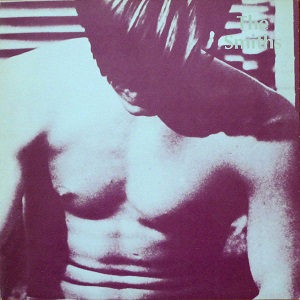
"The Smiths"


Simfy listening: The Smiths, The Smiths

My joke about The Smiths and The Cure back in the eighties was that I liked their guitarists, but not their singers, which was not a problem with The Smiths, with Morrissey on vocals and Johnny Marr on guitar, but was a problem with The Cure, with Robert Smith on guitar and vocals. In either case, it came down to that I was impressed by the bands but found the singers so annoying that I could not stand them.

Over the years, I've come to like The Cure after all; the turning point was probably the use of their song as the title song of the brilliant film Boys Don't Cry. But I've still never gotten into The Smiths, nor been taken with Morrissey as a solo artist. But Simfy led me to give their first album a listen while running recently.

The first thing I noticed is that Morrissey's voice does not annoy me as much as it used to (though I still don't like it much). In contrast, Marr's guitar work doesn't seem as impressive as it once did! (Perhaps I need to listen to later Smiths albums to get what I remembered.) While running, I began to ride a train of thought that took me back in several ways: the eighties fans of The Cure and The Smiths felt spoken to by their music and by their lyrics of disillusionment with the world, even despair at its emptiness. And this album does communicate such feelings effectively—the paradox being that such feelings derive at least in part from dissatisfaction with the consumer world but their artistic expression takes the form of consumer goods (albums). So there I was, jogging in 2010 and, as if I was back in the eighties, thinking about "the commodification of the critique of commodities." At the same time that I was off on this high-falutin' philosophy trip, I was also struck by how funny Morrissey can be, in his deadpan way, as in "Still Ill":

For there are brighter sides to life,
And I should know, because I've seen them
,
But not very often ...


Back home, listening to the end of the album, I was drawn back to Morrissey's lyrics by a line from "Suffer Little Children": "Manchester, you have a lot to answer for." This made my digression away from the album seem very appropriate, what with Manchester having to "answer for" the global commodity capitalism it was, in many senses, the birthplace of. It was not a surprise to me that The Smiths generated such a train of thought; I had always recognized them as a band worth taking seriously, despite my dislike of them. And this round of listening to their first album does make me want to check out the rest of their catalog, as well as at least a bit of Morrissey's, even though I doubt I will become a big fan.

(Note to Smiths fans: By now I know that "Suffer Little Children" is not a critique of capitalism but a response to the Moors murders, so you don't have to make fun of me for not knowing that!)

Saturday, October 09, 2010

Ian Seed, "From a Long Way"

Here's a poem from Ian Seed's Anonymous Intruder (Shearsman, 2009):

FROM A LONG WAY

Sometimes I asked: how do I reach
this truth? Each time I was surprised
by the pictures they painted of you
as if day or night could be framed.

So I stepped out and journeyed
not to learn your secrets but to see you
tying your shoe laces beside the path
which cuts into the mountain as it climbs.

If it hasn't been done already, someone should write a study of such eight-line, two-quatrain poems with a hinge between the quatrains (here, a causal hinge with that "so"). One approach to such a study would be to consider how the form created by the lines interacts with other patterns created by the words. The most obvius one is that the first quatrain has two sentences, while the second only has one, and the poem's three sentences get longer and longer. Here's another pattern, highlighted in bold:

Sometimes I asked: how do I reach
this truth? Each time I was surprised
by the pictures they painted of you
as if day or night could be framed.

So I stepped out and journeyed
not to learn your secrets but to see you
tying your shoe laces beside the path
which cuts into the mountain as it climbs.

I could imagine other poems making the exact same argument, but with different themes, Sometimes something happens, each time it had this feature, as if ... So I did not something, not with one intention but with another.

Or there's this shape, too, now highlighted:

Sometimes I asked: how do I reach
this truth? Each time I was surprised
by the pictures they painted of you
as if day or night could be framed.

So I stepped out and journeyed
not to learn your secrets but to see you
tying your shoe laces beside the path
which cuts into the mountain as it climbs.

The first pattern is the shape of the argument; this is the argument's content, but one could imagine a poem that addresses the same issues in the same order with the same words while having a different shape. The interaction of the sentences, the quatrains, and the two patterns I highlighted work together to establish the poem's emphasis on pictures and seeing over against truth and learning.

Both these patterns within the lines are striking, of course, in that they "stop," as it were, before the final two lines. These lines are the only ones in which there's no shifting around, no contrast, no staking out of territory—just the image being seen "from a long way." "Secrets" and "truth" are rejected, then, in favor of a picture, of something "seen"—not by them, but by the poem's speaker. As Seed writes in the prose poem "A Cry Permitted": "There is nothing you need to understand. Shake hands and surrender to another vision." (For some reason, both when I wrote notes on Seed in the back of the book and when I typed this up, I first produced "version" there instead of "vision.")

(For another example of the shifting, contrasting, staking-out-of-territory style of the first six lines of Seed's poem, see my quotation from John Gallaher here.)

Friday, October 08, 2010

Mozart's Third Brain

Göran Sonnevi's Mozart's Third Brain (translated by Rika Lesser) is a long poem of a restless, dissatisfied mind pondering problems ranging from the global to the most intensely personal. Here is all of an unusually short section that struck me (LXXVII):

Not in vain do you give me your rose The transparent forms
are reborn; from them everything arises All leaves, birds
All the images Growing quickly, quickly destroyed

I will not let you down A flower opened your heart
Now you open mine, again, with your rose, shining dark red
The yellow pollen from eternity's sunflower falls on the table

This recalls the T. S. Eliot of Four Quartets, while also being utterly independent of Eliot as it shifts rapidly between image and abstraction. (Eliot hovers in the background at other moments throughout the book, as does Wallace Stevens; I kept hearing echoes of "The Man with the Blue Guitar.")

A passage from the previous page (section LXXV) seems to me to represent how this poem works. This does not contain any of the specific references to events of the time of the poem's writing (early to mid 1990s) that pepper the poem (especially the genocides in the Balkans and in Central Africa), but it is otherwise exemplary of how Sonnevi thinks and writes:

... I pledge allegiance to the contaminated
world, such as it is, in its luminous right . . .

What sort of imaginary community do I seek? Which one
is active, est agens, within me? I project the collective Sade!
The collective Mozart! As if there were no difference!
Summed up in the Gödel-face, dark Beneath the real Gödel's
shy gray shadow In which group do I seek protection? Whom am I
excluding? Which flame of self-forgiveness consumes me?
Societies float gently, like ashes An architecture of smoke

I love the first sentence quoted here, which reminds me of Greg Brown's wonderful song "Two Little Feet": "It's a messed-up world but I love it anyway."

Sonnevi addresses this "allegiance to the contaminated / world" in more specifically political terms later in the poem: "The right to say no is the basis of democracy But only within the matrix of / a deeper yes" (section CIX). There's a philosophical point here resembling Nietzsche's insistence that one must affirm all of existence in order to affirm even one moment of one's life. But the political point is even more startling: democracy provides a space for dispute, for negation, for expressing a choice between options—but it does not (and cannot?) provide for the rejection of that space itself. You have to affirm the system of democracy in order to "say no" to some issue within that system. More specifically, you have to say yes to the result the system produces even when you do not like the result.

That's why I get very angry about claims that one's taxes should not be used to pay for things one doesn't agree with—whether the claim that school vouchers should be provided for private school or that pacifists have a right to refuse to pay taxes because of military spending. (An example from both sides, but it is usually "conservatives" who ask for the right to be exceptions to the system, in my experience.) — That's not a point about Sonnevi's poetry, but it shows how far his work takes you when you follow its leads.

Tuesday, September 28, 2010

Human Shields, Vollmondbar, Basel, Sept. 23, 2010

My band Human Shields played the Vollmondbar in Basel last Thursday. It's the kind of place where some people come to hear the music, but most of the people have come to eat and drink and chat. I once had a terrible experience playing music at such a place, but at the Vollmondbar the sense that we were playing background music for most of the audience was actually pretty liberating, and we just relaxed and played and had a good time. I've rarely, if ever, had as much fun playing live music as I did there!

Setlist (all tunes by me unless otherwise noted)

First set


I Will Survive (the tune Gloria Gaynor made famous)

The Morning after the Night Before

Friend of the Devil (Garcia-Hunter; from the Grateful Dead)

Penny a Point

King Solomon

Raining (With the Sun in the Sky)

The Ferryman

Turned in Time (music by Markus Bachmann with my English version of his German lyrics)


Second set


Sundowning

Brain Damage (Roger Waters; from Pink Floyd)

Alisa's Bridge

Magpie

Land without Nightingales

Spring in My Step

Triolet on a Line Apocryphally Attributed to Martin Luther (lyrics by A. E. Stallings)

Tambourine

You Know I Know


Third set


Gingerbread Blues

Trinklied (lyrics by Paul Celan)

Long Enough

Hair of the Cat

It's All Right With Me (Cole Porter)

Pale Horse

If I Had Known

Rumpus

Better Never Than Late

You're Gonna Make Me Lonesome When You Go (Bob Dylan)


By the time we were done with our three sets, we had played two songs new to our repertoire (Brain Damage and Trinklied), and we had played all but four of the songs we have ever played live! I was tired, but I still could have played more, thanks to the most powerful drug I know: adrenalin.


Thursday, September 23, 2010

Garbage, Beautiful Garbage


Garbage, Beautiful Garbage

I've had this album on my iPhone for several weeks; a friend of mine gave it to me with a bunch of other stuff a while back. It's on my "songs" playlist, which I often listen to on shuffle, and as occasional Garbage songs kept coming up, I made a note to myself to listen to the whole album. And then shuffle presented with "Shut Your Mouth," and I liked the song so much that the album moved to the top of my listening list, and I listened to it while running yesterday.

"Shut Your Mouth" is the opener, and it is really good. The lyrics move at a fairly simply level, but they are biting, bitter and ironic enough to make more out of the simple text: "And the world spins by / With everybody moaning / Pissing, bitching and everyone is shitting / On their friends / On their love / On their oaths / On their honor / On their graves / Out their mouths / And their words say nothing / Shut your mouth / Try not to panic / Just shut your mouth / If you can do it." And the music: a thumping beat, effective distorted guitar, well-mixed vocals, a sinister overall feel. Good stuff.

But the rest of the album, frankly, makes "Shut Your Mouth" seem like an accident. The music is less interesting, the lyrics remain simple and sink into the worst kind of clichéd phrases, and the mix puts the words front and center so that you can't just ignore them and get into the groove. If Iron and Wine's lyrics are good enough to deserve more prominence in the mix, Garbage's lyrics should be downplayed, rather than emphasized!

Final analysis: one great song (I've been listening to it again while typing, and it's a great song!), and an otherwise boring record that even makes the great song seem weaker. (And the live video is nowhere near as good as the recording.)


Iron and Wine, "The Shepherd's Dog"

Simfy listening: Iron and Wine, The Shepherd's Dog

With its layers of mostly acoustic instruments and a touch of electric guitar, and with its haunting melodies and hypnotic mid-tempo grooves, this is a record for me to love. If I'm ambivalent about it, it has to do with the vocals: with how they are sung and how they are recorded. Samuel Beam (who is Iron and Wine; it's not a band name but his stage name) has a very soft, dreamy voice; he doesn't slur his words as many singers do, but he doesn't clearly articulate them either. And the vocals are recorded with a touch of reverb and closely sung background harmonies that further wash out the words. This singing and recording style contributes hugely to the album's trance-inducing effect—but the lyric love in me feels shortchanged. The bits that I do catch make it clear that there's some excellent lyric writing going on here—but in a sense the lyrics are sacrificed to the overall sound. That sound is wonderful, but I would still like to hear more of the words.

And presenting the lyrics less dreamily would not actually detract from the effect: on Iron and Wine's Around the Well, which I talked about here recently, it was the clarity of the words that made "Belated Promise Ring" stand out for me, without the song being any less hypnotic than the other songs on the album.)

Tuesday, September 14, 2010

John Gallaher, Map of the Folded World

"You know the secret language," John Gallaher writes in "Your Golden Ticket," but the poems in Map of the Folded World are not in a secret language. There's nothing esoteric about them; they do not gesture towards hidden depths that demand subtle interpretation. Instead, they are surfaces on which a train of thought is skating, "suggestions, not depictions," as Gallaher writes in "What & Who & Where & What." The beginning of "The Universe is Incapable of Disappearance" strikes me as exemplary, as a statement leads to a series of qualifications and hedgings that generate a quite singular humor:

They keep talking about a road, but there never is a road,
and if there was, it would always be ending,
the way everything is always ending
unless you're of the mind that everything is always some sort of middle,
or some continual beginning
that rises and falls from a never quite completed something
that we're continually waking from
in a kind of polite vagueness.


Saturday, September 11, 2010

Bright Eyes, "Lifted, or The Story is in the Soil, Keep Your Ear to the Ground"

Bright Eyes, Lifted, or the Story is in the Soil, Keep Your Ear to the Ground

The real reason that I have been commenting on albums lately is not that I started listening to albums on Simfy but that I started running regularly, and while I run I listen to albums on my iPhone (some on the iPod, some on Simfy). Since I keep making asides about Conor Oberst and Bright Eyes, I thought I'd listen to a Bright Eyes album while running and see whether I could come up with some coherent comments about it without just gushing about how fantastic I think CO and BE are. I chose the earliest CD I have by Bright Eyes as a starting point.

This turned out to be more difficult than I thought it would be, simply because I found so many things to comment on that I could not keep them all in mind while running! So I found the lyrics to the album on-line and put them all in a Word file and printed it out and read them, looking for themes I had noticed while running. Even then, I had too many passages to comment on! If Conor Oberst was a poet (well, he is, but that's a different issue), and I was doing literary criticism, I would look for the exemplary passages that stand for all the others, but this is my blog, so I don't have to be rigorous, and I've just picked out a few of my favorite bits.

In the first song, "The Big Picture," I laughed out loud at the line "don't go blaming your knowledge on some fruit you ate." Over and over again, Oberst picks up on Christian imagery to look at it from all sides and challenge it, and he almost always does so with this much wit. The end of "Waste of Paint," with the singer at choir practice at the cathedral, provides a kind of summary of this theme of the CD:

But when I lift my voice up now to reach them,
the range is too high, way up in heaven,
so I hold my tongue, forget the song,
tie my shoe, and start walking off,
and just try to keep moving on,
with my broken heart and my absent God,
and I have no faith, but it is all I want,
to be loved and believe in my soul, in my soul.

Oberst was 22 when this CD came out, and there are a few moments here where he shows his age, as it were, but here the specificity of the scene allows him to arrive at a very general, quite abstract conclusion that is fully grounded in the imagery. Here, music leads him to a clear statement of the problems he keeps addressing, but the music only clarifies, even heightens, the problems, without solving them.

The last lines of the CD, though, in the song "Let's Not Shit Ourselves (To Love and To Be Loved)," return to these themes:

But where was it when I first heard a sweet sound of humility?
It came to my ears in the goddamn loveliest melody.
How grateful I was then to be part of the mystery,
to love and to be loved. Let's hope that is enough.

The "conclusion" of the CD seems a bit flat, actually: we should "love and be loved," that's all that we need to do. But that flatness is offset not only by the uncertain hope that is actually the end of the CD but also by the rich and biting writing that precedes it. There is too much irony in Oberst's lyrics to allow the conclusion to flatten out what has come before it; in fact, the irony and imagery of the lyrics as a whole tend to undermine the possibility that "to love and to be loved" is "enough."

These lines also provide a conclusion to the album's theme of what music is for: the "loveliest melody" provides access to "a sweet sound of humility" and the experience of being "part of the mystery." At times, this theme is as hopeful as it is at the end, as here in "Bowl of Oranges":

But when crying don't help,
and you can't compose yourself,
it is best to compose a poem,
an honest verse of longing or a simple song of hope.

Here, and elsewhere on the album (and in Oberst's writing in general), I'm struck by how he represents what poetry is for: here, it is poetry as therapy, as a way to make up for not being able to "compose yourself." But the song concludes with a different understanding of art:

But if the world could remain within a frame like a painting on a wall,
then I think we would see the beauty.
Then we would stand staring in awe
at our still lives posed like a bowl of oranges,
like a story told by the fault lines and the soil.

This is a much different sense of art's purpose: not as therapy for the artist but as an experience for the recipient, as a frame for the world that makes it possible to "see the beauty" that is otherwise lost in the details. The "still lives ... like bowls of oranges" provide a sense of "awe" that make one think that "the goddamn loveliest melody" might be enough to redeem the world.

But "Waste of Paint" (the song that ends with the choir practice and the "absent God") provides another understanding of what poetry is for and what it "makes happen" (to finally refer to W.H. Auden, whose lines keep crossing my mind as I think about Bright Eyes):

As I hide behind these books I read,
while scribbling my poetry,
like art could save a wretch like me,
with some ideal ideology
that no one can hope to achieve,
and I am never real;
it is just a sketch of me,
and everything I made is trite and cheap
and a waste of paint, of tape, of time.

Here, the writing of poetry is not therapy, not an attempt to make up for being unable to "compose yourself," but it does not provide a sense of awe, either. The artist cannot see the work from the outside, cannot see the "bowl of oranges" in such a way that he is awed by it. The imagery may make me, as the listener, feel that sense of awe and wonder and humility that Oberst keeps circling around, but his own work only ends up feeling like a "waste" to him.

It's when Oberst does let the "bowl of oranges" speak for itself that he does his best writing. Here's a favorite passage of mine from the beginning of "Let's Not Shit Ourselves (To Love and To Be Loved)":

I've seen a child caught in the sad trap of gravity.
He falls from the lowest branch of the apple tree
and lands in the grass and weeps for his dignity.
Next time he will not aim so high.
Yeah, next time, neither will I.

This is all just a perfectly described scene with a deft little interpretation provided, but of course the scene is full of resonances that make it much more complex than the issue of how much ambition one should have, how high one should aim: the apple tree alone manages to connect Genesis and Isaac Newton. Even as Oberst says he will reel in his ambition because of what he has seen, the lines make clear just how ambitious he is, driven by the problem of "the absent God" and the "end of the world" as described by modern physics to try to find meaning for himself and others, in art and in love, hoping that is enough.

Thursday, September 09, 2010

Trouble House

Swiss poet and rapper Jürg Halter (whose rap alias is Kutti MC) has a new band called Schule der Unruhe. I was just playing around with the idea of how to translate "Schule der Unruhe" into English with more assonance than "School of Restlessness," and I remembered my three-year-old niece telling me at great length about "Trouble House," the place you got sent if you were in trouble, and how I kept asking her if she could take me there, and how every time I asked her that it got farther and farther away.

What taxes are for

Wizard of Id

Wednesday, September 08, 2010

Amit Majmudar, "0°, 0°"


"Inevitabilities found by accident" are what one should "look for in a ghazal," according to the final line of Amit Majmudar's ghazal "By Accident," and hte interplay between the inevitable and the accidental runs through his collection 0°, 0°—or how the accidental later seems to have been (or perhaps makes itself seem?) inevitable: "You can / Make anything sound predetermined just / By rhyming on it twice," he writes in "M. C. Escher and the Art of Tessellation," which suggest that poetry produces the sense of inevitability Majmudar keeps circling around, and that he's aware that that might be the case.

But there's something else going on here, too: Majmudar keeps looking at how things might seem if seen backwards, not from the accidental to the inevitable but the other way around. The Escher poem begins with a stanza about mathematicians:

Mathematicians make the toughest audience.
Your complexity has to arabesque a chalkboard
And then, with joyful slashes, above, below,
Cancel itself before their eyes. Simply put,
They expect you to write them a Paradise Lost
And then resolve it back to Genesis.

This provides a nice twist on Jorge Luis Borges's suggestion that the Odyssey could be read as a version of Ulysses [though I just checked "Pierre Menard, Author of the Quixote" and discovered that I had misremembered it: he speculates on reading the Aeneid as having preceded the Odyssey], but it also marks how Occam's razor cuts away elaboration in favor of simplicity—sacrificing poetry to proof? Producing a reading of history based on its outcome? [Avoid Nietzsche digression here.]

Yet the source does not inevitably contain what flows from it, for accident must still play a role, and in "Merlin," Majmudar develops an elaborate conceit (Merlin living his life backwards) to arrive at a scene in which Merlin meets the first cave painter: "How will all he has witnessed / result from that stargazing hunter?" How does the accidental come to seem inevitable? "Answers for the Whirlwind" concludes with a passage that reads like an answer to that question:

Who paved roads when they found themselves blocked off
From one another by the wilderness
Who bruised their heels against the wilderness
Who named it tasted every leaf of it at least once
Who remembered which was medicine and which
Was food and which was poison shuffled with
The rest its green no different to the eye
Who sawed and sanded it to crib and casket
And who did that to the wilderness Lord God

With nothing but hands

Experimentation, memory, and technology lead from the stargazer to us; the work of hands turns accidents into inevitabilities.

But such a process does not necessarily involve progress; a dark thread of violence runs through Majmudar's book, at great length in "Letter to the Infantry" and "The Cherry Blossoms at Walter Reed," both of which address the Iraq war, and allegorically in "Michael Reminisces about the War." That's the Archangel Michael, and the war in question is the one between God's host and the fallen angels. The poem concludes with God and Michael celebrating their victory and their soldiers:

On the throne with a wineglass, He praised me
For discovering good little killers inside
Of those golden androgynous boys.

And in retrospect, of course, it seems inevitable that the "golden androgynous boys "had "good little killers" inside themselves, even it was accidents, not inevitabilities, that gave those killers life. The darkness in Majmudar's book is alleviated by his sensitivity to the accidental, unpredictable, human side of violence, all of which it makes it possible to choose or refuse it. And (even though the poem in question is called "The Miscarriage") he ends the book with "hope dry and brittle but intact." That hope is fragile, but it survives the accident that creates it, and ends up seeming inevitable.

Tuesday, September 07, 2010

Ani DiFranco, Evolve

Ani DiFranco is so prolific that I have ended up avoiding listening to her music for a long time, because I was somehow sure I would be so into it that I'd end up wanting to be a DiFranco collector (the way I am a Greg Brown collector or a Bill Frisell collector: with completist ambitions). Now I've finally started listening to her with this CD, Evolve, from 2003, and I was right: this music makes me want more. If this were a band, I could rave about the great singer and the great songwriter and the great guitarist and the great arrangements, and I'd be praising several different people, but it's all Ani D, and it's all fantastic. The songs are built around her guitar work (mostly acoustic, mostly superb fingerpicking), with some additional instruments added for most of the tracks; the instruments provide her with the foundation for her bold singing: she has a great voice, and she takes it everywhere she can. Favorite line, from "Slide":

The pouring rain is no place for a bicycle ride;
try to hit the brakes and you slide.

I was running when I listened to the album, and I heard this line and just knew the song was called "Slide." :-)

(This was not Simfy listening, but finally giving my full attention to something someone gave me a while back.)

Sunday, September 05, 2010

Iron and Wine, Around the Well

Simfy listening: Iron and Wine, Around the Well

So I've been pretty critical for the most part in my posts about what I've been listening to on Simfy, the streaming service that just started up in Switzerland two weeks ago. In part that's because I left out the one batch of music that totally thrilled me, Conor Oberst's two CDs under his own name (rather than with/as Bright Eyes). I find it hard to say anything about how utterly brilliant I think Oberst is ... It might just end up as boring gushing.

So I was listening to Iron and Wine's Around the Well while running today, and for a while, I thought, "Well, I can say good things about this: fine picking, excellent arrangements, good lyrics and melodies, the singing a bit too dreamy to really get my attention, but a strong record that makes me interested in hearing more."

But then came "Belated Promise Ring," and such cool, distanced praise went out the window. In fact, as soon as the song started, I thought, "Yes, this is a good one." Perhaps that was just because it was almost the first (or may even the first) song on the CD with drums on it, but it also just seemed fuller and richer and more complete from the start. And then the vocals come in:

Sunday morning, my Rebecca sleeping in with me again.
There's a kid outside the church kicking a can.
When the cedar branches twist, she turns her collar to the wind.
The weather can close the world within its hand.

This is just first-class writing. I've listened to the song at least three times since my run this afternoon, and it just gets better and better. And the song is good enough to make me want to hear more by this band (which, it turns out, is not a band but one guy, Samuel Beam, who goes by this name). [I tried to find an Iron and Wine version of the song on YouTube, but there are only a bunch of cover versions of it—which shows that others love the song as much as I do!]

Isobel Campbell and Mark Lonegan, Hawk

Simfy listening: Isobel Campbell and Mark Lonegan, Hawk

Here's another pairing I've heard great things about and am disappointed by. The album is atmospheric without building up any tension; it's surprising that a band with a singer (Lonegan) with such a dark voice seems so unthreatening, so bland. The beginning is especially dull, but I stuck it out and enjoyed the cover of "Time of the Season," and then things do pick up quite a bit at the end, culminating in a fine closer called "Lately." Still, given the hype, I sure expected more from these two.

Saturday, September 04, 2010

Left Behind

And here's another poem worth a comment this morning, "Left Behind," by Kristin Berkey-Abbott, from qarrtsiluni. Lots of layers of resonance here, from miracles to rapture. I'm a bit hesitant about two of the line breaks ("hungry / families"; "mystical / theology"), but these breaks between adjectives and their nouns, though not very productive in the poem, are at least not distracting.

Tracking the Hurricane

Here's "Tracking the Hurricane," by W. F. Lantry, from The New Verse News, a poem that is as calm as the calm before the storm that it describes. I do have a quibble with it, though; commas would be helpful at the ends of the third and fourth lines of the second stanza:

or a day when everything has calmed
and the silence is like glass
still glowing orange from the forge [,]
small bits of rime forming around the walls [,]
each edge waiting to shatter,

But I have gathered over the years that many poets and readers of poetry don't mind having commas omitted at the end of lines (and often even prefer to leave them out there). For me, the absence of those two commas makes it distractingly difficult to parse the lines, which breaks up the poem's calming effect.

Friday, September 03, 2010

Alison Krauss, Forget About It

Alison Krauss, Forget About It

I first heard Alison Krauss singing backing vocals on Phish's Hoist, but I never got around to listening to any of her own CDs until a friend gave me her CD with Robert Plant, Raising Sand (another album with magnificent Marc Ribot guitar work on it). And I've never listened to any of her solo or Union Station CDs until today. What a voice she has! She likes slower tempos and melodies that give her room to linger on long notes. Really beautiful stuff. My favorite line (from "Could You Lie"):

Could you lie and say you love me just a little?

And check out the personnel list at the Wikipedia link above: Jerry Douglas, Sam Bush, Lyle Lovett, Dolly Parton! Alison sure has a lot of talented friends!

Thursday, September 02, 2010

M Ward, Hold Time

Simfy listening: M. Ward, Hold Time

A friend of mine gave me a copy of M. Ward's Post-War a couple years ago (thanks, SJS!), and I liked it a lot, especially the wonderful "Rollercoaster." I'd also seen that Ward is part of Monsters of Folk with my current absolute favorite, Conor Oberst, so I thought I'd check out another CD of his. And it's a winner. The highlights for me are the gorgeous and completely startling covers of "Rave On" and "Oh Lonesome Me" (the latter featuring Lucinda Williams—I thought I recognized that voice when I heard the song while jogging today!) and Ward's "Stars of Leo" (with "Epistemology" also up there).

Ward does like to use rather stock phrases—but then he does things with them, as here in "Stars of Leo":

I get so low I need a little pick me up.
I get so high I need a bring me down.

Two poems at The Nepotist

Two poems of mine are featured today by The Nepotist. As the titles make clear, these contain explicit language (and explicit themes!): "Up Shit Creek" and "Cock and Bull." I'm flattered and humbled by the Nepotist's introduction to the two!

Wednesday, September 01, 2010

John Mellencamp, "No Better Than This"

Simfy listening: John Mellencamp, "No Better Than This"

As a kid, I was a big fan of John Cougar's "I Need a Lover," not as much because of the song itself but because of the great introduction to the song. And then he had his big moment in the limelight with "Jack and Diane," another tune I liked. But I haven't listened to anything by him in a long time. I was convinced to check out his latest when it was referred to in The New Yorker, and with Simfy I can easily check things out (simfy is something like Pandora in the US, I take it).

So I've listened to it once, and it's a very fine album that I'm going to listen to again: the sound of the record is fabulous (clean, simple folk-blues-country production), the playing is superb (somehow I knew before checking just now that Marc Ribot was on guitar here!), and the arrangements are varied enough to not get boring while also being consistent in sound and feel.

Still, my first reaction is to play with the title: "Why is 'No Better Than This' no better than this?" With one exception, my response to the lyrics was rather critical: they are good but not great. Too often, Mellencamp reaches for the standard lyrical turn from the folk-blues tradition, so that when he doesn't, on the stunning "Easter Eve" (the exception), it makes the "straightness" of the other tunes even more noticeable.

I have to admit I'm probably being unfair here, because I have been getting so into the magnificent Conor Oberst (and Bright Eyes) that almost all songwriting pales by comparison. But even without comparing Mellencamp to Oberst, I feel like he could have done "better than this" in the lyrics.

A streaming service changes how one thinks about music: do I want to own it for my collection? Do I want to listen to it again? Do I want to delete the album from my playlist right now? Those are the three basic responses. Here, at the moment, I'm with the middle of those: I'm going to listen to it again (and perhaps several more times after that, if only because of Ribot), but I don't think I'm going to buy it for my collection.

Oh, and there's also the category "songs to listen to again," and "Easter Eve" belongs in that one!