Wednesday, April 18, 2012
Persuasion
Speak Softly ... no, Whisper
Sunday, April 15, 2012
A Statement of Accounts
Friday, April 13, 2012
"The Lyric I"?
- Do you use it?
- Have you heard others use it?
- Does it sound odd you?
Thursday, April 05, 2012
... was gesagt werden muss.
*****
Afterthought: The salient interpretation of the "was gesagt werden muss" construction is actually a third possibility: the implied active subject is "jemand", as in "somebody has to say it, so I will."
There are two further implications: nobody else was willing to take on the risk of saying it, and "I am the one who is courageous enough to sacrifice himself by saying it."
This is connected to the overall tenor of the poem, which focuses less on the critique of Israel than on Grass's perception of himself as a victim of the criticism that he expects to receive for having written the poem.
In this respect, all criticism of the poem for its representation of Israel fulfills one of the poem's goals (I would say "implicit" goals, but in fact, it's pretty explicit): that Grass will be criticized for it. One could call this masochism, but what it really is a rhetorical use of the passive voice to stylize oneself as a victim of the criticism one expects to attract.
The rhetoric is quite powerful, in fact, as it defuses all criticism of the poem's contents by anticipating it and putting those who do criticize the contents in the position of protecting taboos that only Grass has had the guts to break: somebody has to say it, and I will say it, and if you criticize me for it, then you are part of the reason that nobody had said it before.
Tuesday, March 20, 2012
Gullible Dolts?
Sunday, March 11, 2012
Snapshots of a Daughter-in-Law, part 5
she shaves her legs until they gleam
like petrified mammoth-tusk.
(Adrienne Rich, "Snapshots of a Daughter-in-Law," part 5)
*
A woman makes her legs "gleam" like ivory. This makes her beautiful, but the resulting beauty is "like petrified mammoth-tusk." The ivory this gleam is compared to comes from a mammoth (an extinct pachyderm) and is petrified (turned to stone by the passage of time). The gleam is uncanny in its lifelessness.
This tercet begins with a bit of Latin that is often translated as "sweetly laughing, sweetly speaking" and identified as a reference to Horace (Ode XXII, from the first book of the Odes). This makes the woman here more lively, vivacious and charming in her laughter and speech. If the words used to describe her are from a dead tongue, and a man's words, they still carry the magic and charm of beauty, for in the poem in question, Horace claims that a song he had written about his beloved kept a wolf from attacking him.
Yet even as the three lines celebrate the woman's beauty, they act out how the ideal of that beauty traps women in ancient patterns (represented here by Latin, the mammoth, and petrification). The woman in the middle line of the tercet is vividly present, but she is framed by terms that she has not defined for herself.
Wednesday, March 07, 2012
But go slowly if the old dog wakes up
If.
Tuesday, March 06, 2012
A Winter Night
Sunday, March 04, 2012
The Lure of Lyrics
The Lure of Lyrics: A Songwriting Workshop
Workshop
A workshop on lyrics and songwriting from a "creative writing" perspective. (In English)
When
17. March, 10 am - 4 pm (with lunch)
Where
To be announced
For whom?
Songwriters, Lyricists, Rappers, Poets, Writers of all kinds and every age. A group of six to twelve participants is hoped for.
Register by March 9 at:
workshops@bscene.ch
Sunday, February 26, 2012
Mr. Memory
Saturday, February 25, 2012
Voices from the air
Wednesday, February 15, 2012
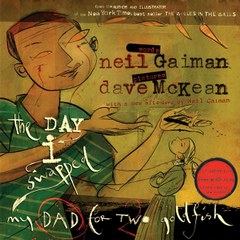
Updating "The Day I Swapped My Dad for Two Goldfish"
It begins as follows:
One day my mom went out and left me home with just my little sister and my dad. My dad sat in front of the television, reading his newspaper. My Dad doesn't pay much attention to anything, when he's reading his newspaper.
I revised it as follows:
One day my mom went out and left me home with just my little sister and my dad. My dad sat in front of the television, reading his iPad. My Dad doesn't pay much attention to anything, when he's reading his iPad.
Yes, yes, that is much more up-to-date!
I should add that the book is hysterically funny. I laugh my head off about some of the bits, even though I know they are coming: "Mumf, mumf, mumf," said my little sister. You'll have to get the book yourself to know why that is hysterical. :-)
Monday, February 13, 2012
Streaming services and bands
2. Bands earn money every single time a song is played on a streaming service. That's not comparable to the sale of a CD or other ways of earning money from selling music. (My comment: when you sell a CD, you don't earn money every time the consumer listens to each song.)
Friday, February 10, 2012
Home in on and hone in on
As for "treating all users of a language as worthy of respect": do you accord the same respect to people who deploy (as two examples we see on Fakebbook every day) "your" rather than "you're" and "it's" rather than "its"? If not, then perhaps you'd care to explain *why* not?
Thursday, February 09, 2012
Within Shouting Distance of the Coosa
Once in Alabama when I was young
and given to aimless ambling,
I followed a red road between pines
where even at midday the cicadas
were complaining, and with nothing
on my mind and expecting nothing
I was about to pause for water
when the road's weedy roughness
opened to a clearing where boards
wounded by years of weather
formed a modest church, the peak
of its steeple gone and door scotched
open. The wind was scattering pollen,
and somewhere off in the needles
a mockingbird thought it was evening
and half-heartedly sang. Do I need
to say I forced the door and found
everything rain-soaked and broken,
the pews only planks whose cinder
blocks had fallen or were, as I've said,
ruined? But I heard a hum or what
I thought could be a hymn rising
from behind the altar and squinted
to see the worker bees dance and circle
where they'd swarmed. Young
as I was, I understood "not one step
closer, do not disturb," so backed
away, because I knew they believed
their honey holy and would not
suffer it to be troubled without
rushing to beset me, and besides I'd
already been touched by the Word
and held under down at the river
till I heard God's gold voice shining,
insects swarming the choir's serenade,
bee sound the very sound He made.
I stumbled at the question in the middle of the poem: "Do I need / to say ...?" Until this question (and after it, in fact), the poem presents a speaker remembering an experience, and the reading of the poem is itself an experience. The question about what one "needs to say" shifts away from the experience of a poem depicting an experience to the discursive nature of the poem itself. In itself, that's not a problem: there are many successful poems that address the discursive nature of poetry as a problem. But this question seems out of place to me.
Tuesday, February 07, 2012
Dream of publication
Saturday, February 04, 2012
Habits
In this case, I only noticed that I even had a particular habit once the habit no longer functioned as such. It reminds me of this poem, which I wrote shortly before my second child was born:
HABIT
We've moved into the dining room,
and Miles into ours,
to make room for number two.
And every couple hours,
I head to what was once our room to get
something no longer there,
then turn around, amazed by habit,
by what I live in, unaware.
Light Quarterly 50, Autumn 2005
Friday, February 03, 2012
Blowin in the Wind parodies
Can you sue somebody for stealing a parody? After all, the Chenille Sisters got there first:
Tuesday, January 31, 2012
Stanley Jordan and Michael Hedges, plus Kaki King
In the summer of 2003, I was in Seattle visiting my Dad, and we went to Jazz Alley to see Stanley play a concert. The opener was a young guitarist named Kaki King, and she played acoustic guitar like she was Michael Hedges. Now it was my turn to sit there with my jaw dropped, as I watched her channel Hedges from back in the 80s when I used to see him at the Varsity in Palo Alto. And she came out for an encore with Stanley and got into a wicked touch-tapping jam that, if I closed my eyes, made me think I was hearing something I never had the chance to see (and I don't know if it ever happened): Stanley jamming with Michael.
One of the things Stanley played that long-ago Sunday at the Coffee House was "My Favorite Things". There are no YT videos of him playing MFT, but here it is on Spotify.
Monday, January 30, 2012
Reading Backwards
His conclusion: if you read a book forwards, it is like looking out a window and seeing something happen. But if you read a book backwards, it is like looking at the window itself.
Tuesday, January 17, 2012
Quiet Rooms
You know I think it's fine to talk about those things in quiet rooms. (Mitt Romney)
We talk about these things in quiet rooms
where nobody can sit alone for long.
We weave our words as if on ancient looms,
turning our measured voices into songs
everyone begins to sing as one.
We choose our usual places in the choir,
pursuing harmonies nobody spun
and tunes that leave us nothing to desire.
If several singers always take the lead,
it's only that their voices are the best.
If anyone's outside, why don't you come
and join us? We'll teach you what you need
to know to sing our songs, or play a drum.
Or just come in and listen. Be our guest.
Monday, January 16, 2012
Mark Wallace on Dieter M. Gräf
Monday, December 12, 2011
Gross- und Kleinschreibung in der deutschen Lyrik
Hier das heutige Gedicht des Tages von Fixpoetry:
ich lebe in einem wasserturm am meer, was albern ist.
ich bin immer versalzen, aber das süße halt ich nicht aus.
eine katze schlich ums haus & hat sich auf den rücken geworfen.
was das nur soll? ich will keine ergebenheit, ich will liebe.
woher ich meine liebe nehme, ist mein größtes geheimnis.
ich habe einen tank voll davon, aber nicht in meinem turm.
ich bin oft betrunken vor liebe & oft ein stinkendes feld.
das meer ist eine katze, der ich nichts anvertrauen mag.
in den dünen finden sich manchmal die knochen von engeln.
trete ich aus meinem turm heraus, liebe ich heftig die sonne.
Hier mein Facebook-Kommentar dazu:
Mir gefällt dieses Gedicht, aber wie so oft, wenn alles kleingeschrieben ist, frage ich mich, warum das so sein muss. Wie ist das kleingeschriebene Gedicht anders als die mögliche grossgeschriebe Form? Was bringt es gegenüber die Standardschreibung:
Ich lebe in einem Wasserturm am Meer, was albern ist.
Ich bin immer versalzen, aber das Süße halt ich nicht aus.
Eine Katze schlich ums Haus & hat sich auf den Rücken geworfen.
Was das nur soll? Ich will keine Ergebenheit, ich will liebe.
Woher ich meine Liebe nehme, ist mein größtes Geheimnis.
Ich habe einen Tank voll davon, aber nicht in meinem Turm.
Ich bin oft betrunken vor Liebe & oft ein stinkendes Feld.
Das Meer ist eine Katze, der ich nichts anvertrauen mag.
In den Dünen finden sich manchmal die Knochen von Engeln.
Trete ich aus meinem Turm heraus, liebe ich heftig die Sonne.
Das ist letztendliche keine Kritik an Carl-Christian Elze, sondern eine generelle und sehr ernst gemeinte Frage an die zeitgenössischen deutschsprachigen Lyrikern, die so schreiben, von einem in der Schweiz wohnhaften amerikanischen Lyriker, Übersetzer und Songwriter, der einfach nicht versteht, warum diese Form so geläufig ist, da sie sich, meine Erfahrung nach, selten mit irgendeinem Gewinn gegenüber der Standardschreibung rechtfertigt, und relativ oft (obwohl nicht in diesem Fall) nur Verwirrung stiftet.
Tuesday, November 15, 2011
"Then you get another guy"
The other thing that Rawlings had brought to divert himself was a collected works of Shakespeare. "I've been reading the histories," he said. "I'm up to the third act of 'Henry V,' and when I'm done I might even start them again. I like how fatalistic they are. They feel a little like the Iliad and the Odyssey. I like it in the Iliad when Homer introduces a warrior and says who he was and where he grew up and who his parents and his grandparents were and what they did, and then Hector disembowels him. Then you get another guy."
I love a guitarist who reads Shakespeare on the road and compares the plays to Homer, with superb comic timing in the next-to-last sentence of the passage. What would it mean to play guitar like this, with a flurry of information and then a comic twist?
Since I'd not only read that passage but also read it out loud to my son Miles (who was not as amused as I was ...), it was striking to find the same point made in a different article in the same issue: "Battle Lines," Daniel Mendelsohn's review of Stephen Mitchell's new translation of the Iliad, which begins like this (also only in the on-line archive):
For sheer weirdness, it would be hard to find a passage in the Western canon that can compete with the tenth book of Homer's Iliad—the one classicists call the Doloneia, "the bit about Dolon." Not the least of the book's oddities is that it's named after a nobody: Dolon is a character whom the poet conjures merely so that he can kill him off, a few hundred lines later, in literature's nastiest episode of trick-or-treating.
This is not the first time I have come across such a doubling in the New Yorker. I wrote about a case a few years ago, when articles by Malcolm Gladwell and Caleb Crain referred to the same thing in consecutive issues. And in April of 2006, I also wrote about two profiles in the same issue (of Pete Seeger and Maurice Sendak), which both included images of the profiled celebrity interacting with a famous poet (Seeger with Edna St. Vincent Millay and Sendak with Marianne Moore). Amusingly, the Seeger profile is by Alec Wilkinson, who also wrote the bit about Welch and Rawlings.
Saturday, November 12, 2011
Sunday, October 30, 2011
Ashes of American Flags
When I said that "Art of Almost" seemed primarily "suggestive" and not much more, I meant that the lyrics were so open to interpretation that even such an enumeration of the straightforward readings would not be possible. "Ashes of American Flags" is more than "suggestive," in this sense, because its text is more limiting in its possible interpretations.
Ashes of American Flags
the cash machine
is blue and green
for a hundred in twenties
and a small service fee
I could spend three dollars
and sixty-three cents
on diet coca-cola
and unlit cigarettes
I wonder why
we listen to poets
when nobody gives a fuck
how hot and sorrowful
this machine begs for luck
all my lies are always wishes
I know I would die
if I could come back new
I want a good life
with a nose for things
a fresh wind and bright sky
to enjoy my suffering
a hole without a key
if I break my tongue
speaking of tomorrow
how will it ever come
all my lies are always wishes
I know I would die
if I could come back new
I'm down on my hands and knees
every time the doorbell rings
I shake like a toothache
when I hear myself sing
all my lies are only wishes
I know I would die
if I could come back new
I would like to salute
the ashes of American flags
and all the falling leaves
filling up shopping bags
Saturday, October 29, 2011
The Art of Almost
If the music of the song is fantastic, the lyrics settle for being suggestive. But most lyrics do (not every songwriter is Conor Oberst, not even Jeff Tweedy).
While searching for the lyrics, I discovered that the Wilco website has all their lyrics, and that you can request songs for concerts. So I requested "Hummingbird" and "Impossible Germany" for Basel. You can even dedicate your requests!
Here's a live video of "The Art of Almost," followed by the lyrics:
The Art of Almost
No!
I froze
I can’t be so
Far away from my wasteland
I never know when I might
Ambulance
Hoist the horns with my own hands
Almost
Almost
I heard a faint olé
True love but
I had other ways to hurt myself
Like calling
I could open up my heart
And fall in and
I could blame it all on dust
The Art of Almost
Almost
Almost
Almost
I’ll hold it up
I’ll shake the grail
Disobey across the waves
Tomorrow
I’ll have all the love I could ever ache
And I’ll leave almost with you
All of almost
Almost
Sunday, October 23, 2011
Antiphon
On reading through the rest of the journal, a few of the poems struck me in particular:
"Why do you live on your own, without any children?", by Michaela Ridgway
Nil by m0uth, week 3, by Cora Greenhill
Triptych, by Claire Dyer
But most of all I liked Archie's Paris, by David Harmer, which reminded me of the first sentence of Reginald Shepherd's essay "Why I Write" (which I quoted in my brief eulogy for him when he died, over three years ago now).
Thursday, October 13, 2011
Wilco, "A.M."
(This version doesn't quite do the Stones comparison as much justice as the studio version, actually.)
Some might think an "altcountry" band should not be compared to "the world's greatest rock and roll band," but as my friend Geoff once pointed out to me, on Exile, the Stones also proved that they are the world's greatest country band, and reminded us all that country and rock-and-roll come from the same sources, and that the original distinctions between them were all about marketing and radio formats ...
Tuesday, October 11, 2011
Fish on a Stick

This Wondermark comic from mid-September struck me as a little lesson in linguistics, although as is often the case, I am not enough of an expert in linguistics to really figure out how to talk about it. I'm only good enough to see that there is some linguistics to be talked about here.
The lesson is that language involves not just what is said but a whole bunch of assumptions that we have that help us interpret what is said. I thought this might have something to do with the Gricean maxims, but I can't figure out how the two speakers' assumptions violate those maxims of quality, quantity, relevance, or manner.
The second man assumes that if something is carrying something and shouting out a description of it, that it must be for sale. The man with the fish, though, interprets the question not as "how much do you want for it?" but as "how much of the fish is on the stick?"
Monday, October 10, 2011
Rob A. Mackenzie and Katy Evans-Bush, reading in Basel, Thursday, October 20, 2011
Salt poets Rob A. Mackenzie and Katy Evans-Bush will read from their poetry on Thursday, October 20, 2011, in Room 11 of the English Seminar of the University of Basel, at Nadelberg 6 in downtown Basel.
For more information, click on the image of the flyer below.
The next ESP reading will feature Michael Hulse and Quinn Latimer on November 21, 2011.

Sunday, October 09, 2011
Cleanse Song
From the roof of a friend's I watched an empire ending
Bright Eyes, "Cleanse Song"
A few months ago, I was listening to Bright Eyes, as I was obsessively doing at the time, and up came "Cleanse Song," a beautiful ballad from their album Cassadaga. While I love the song, I had to differ with Conor Oberst about the above lines: it was not the end of an empire. Nor was it the beginning, of course. It was an opportunity for the leaders of the empire to reassert and even vastly expand their empire's reach, both abroad and, especially, at home.
Saturday, October 08, 2011
No Need for Due Process
Kudos to Jake Tapper of ABC News for asking the important questions. I would say "non-kudos to Carney," but he's just doing his job. The real "non-kudos" have to go to the President.
As Tapper asks, what would "Constitutional Law Professor Barack Obama" say about how President Barack Obama is handling the Constitution? And all American citizens and residents should be asking themselves, "Do we want to live in a country where the President can order people to be executed without trial?" If even a large minority, let alone a majority, answers that question with "Yes," that is a very sad state of affairs.
One thing that I think should be made as clear as possible about this sad state of affairs: in the end, it's not about ordering the assassination of an American citizen. That's just an extra turn of the screw. The real problem is the President reserving the right to order the assassination of anybody anywhere.
UPDATE: Here's a more recent Greenwald column about how people get put on the list for assassination. As Greenwald puts it:
Seriously: if you’re willing to endorse having White House functionaries meet in secret — with no known guidelines, no oversight, no transparency — and compile lists of American citizens to be killed by the CIA without due process, what aren’t you willing to support?
Thursday, October 06, 2011
Michael Donhauser reading in Basel, October 25, 2011

Sunday, October 02, 2011
Footnotes
The main period of my life when I used a lot of footnotes was, unsurprisingly, in graduate school from 1988-1995. I wrote my dissertation on a Mac Classic (or perhaps it was a Classic II), using the version of Microsoft Word that existed way back then, and footnotes were added by typing apple-E. But since I veered away from scholarship into translation after finishing my doctorate, I have rarely written anything since then that called for footnotes.This weekend, I'm translating an academic text with footnotes, and whenever I want to type a footnote, the old apple-E reflex takes over, and I end up with the text centered instead of with a footnote. It's not that I want to know what keystroke produces a footnote (I'm perfectly happy to go the Insert menu and select Footnotes). What strikes me is that this ancient reflex is still there, as it has never been over-ridden by a different reflex for generating footnotes or by a different use for apple-E.
There's probably a bit of deep psychology to be done here, but it's all just an anecdote really.