Showing posts with label music. Show all posts

Monday, July 06, 2015

Jerry Garcia at a Los Lobos concert, 1987

When I saw Los Lobos in the summer of 1987 at the Warfield Theater in San Francisco, Jerry Garcia was in the audience. After the opening act, I had a little chat with him about the lyrics of “Lady With A Fan”: I wanted to know if it was “his job is to shed light and not to master” or “share light.” He said, in his inimitable voice, “Some people hear shed; some hear share. Hunter wrote shed, but whatever you hear is okay by me; I’m just the singer, you know.”

During the Los Lobos set, a roadie came out and gave David Hidalgo a cherry-red Telecaster, and David strapped it on to play “Come On Let’s Go,” which he dedicated to Jerry.

A week or so later, I met a guy who had been backstage at the show, and he told me about that guitar: Jerry had come backstage with a guitar case before the show, looking for Hidalgo. When he found him, he gave him the guitar: a mint-condition vintage Telecaster. Hence the dedication!

Monday, November 03, 2014

Piano trio

I'm a great fan of jazz piano trios, such as the Brad Mehldau Trio with Larry Grenadier and Jorge Rossy or Jeff Ballard, and the classic Bill Evans trio with Scott LaFaro and Paul Motian. But until today, I never realized that the first piano trio I ever got into was not a jazz trio but a rock trio: Emerson, Lake, and Palmer. Consider the piano/bass/drums passages of "Take a Pebble," from their first album:


This was definitely the first such music I ever heard, several years before I got into jazz.

[I was listening to ELP this morning because of this post about ELP by Don Brown.]

Sunday, October 19, 2014

Gilgamesh Must Die! (Part One): a video by The bianca Story

Here's a video by The bianca Story: "Gilgamesh Must Die! (Part One)". I cowrote the lyrics. Enjoy!


You can get the album "Digger" for free by clicking on the band's name above. If you get it and like it, pass it on to your friends! (If you get and don't like it, pass it on to your enemies!)


Sunday, October 05, 2014

Leonard Cohen, "Popular Problems"

    In "Slow," the opener of "Popular Problems," 80-year-old Leonard Cohen warns us how not to interpret the album: "It's not because I'm old / It's not what dying does / I always liked it slow." And these mostly slow tunes do belie reading the album as "a work of old age." Here, Cohen looks at love from many angles, climaxing in the speechlessness of a wondering lover: "My Oh My." But the songs also depict a perplexed individual trying to make sense of the contemporary world; with his lover gone to fight a war, he finds himself among the ruins, "standing on this corner / Where there used to be a street".

*

[I'm teaching a course on Writing Reviews. The first assignment was to write a 100-word review. I thought I'd take a stab at it. This is 111 words long. Two-word version of the review: "Get it!"]

Saturday, October 04, 2014

Boyhood withdrawal

I've been telling people that I'm looking forward to mid-December, when the DVD of Richard Linklater's film "Boyhood" is due to be released. And I'd pre-ordered it, but today I got an email saying that it's been delayed until mid-January. 

It's hard to have to wait a month longer to see it again, but I guess I'll just have to bear it. Until then, I can get a bit of a fix by listening to songs featured in the movie, especially "Hero," by Family of the Year, and "Hate It Here," by Wilco. And by watching other Linklater movies!

Tuesday, August 19, 2014

Make it ancient

Listening to "The Band," by The Band, for the first time in a long time today, I was struck yet again by the brilliance of all the songs, but especially by "The Night They Drove Old Dixie Down." It's a song I grew up with, one I don't remember hearing for the first time. But I do know how surprised I was when I discovered that the song is even younger than I am. How could it not be ancient? How could it not have been written in the era it is set in? It shows that one way to fulfill Ezra Pound's call to "make it new" is to "make it ancient", as Pound himself, that lover of the troubadours, was well aware.

Wednesday, February 26, 2014

Paco de Lucia

A few minutes ago, I was looking at my 2009 list of jazz artists I have heard live (a list which needs updating), and one of the names I stopped at was Paco de Lucia. I paused for a moment and remembered the concert: the John McLaughlin-Paco de Lucia-Al Di Meola trio, with Steve Morse opening on solo 12-string guitar. I tell two stories about this show: first, the trio's arrangements of the compositions were all very similar. After they played the head, McLaughlin would usually start, and his solo always felt like it was asking a question. De Lucia would then explore the ramifications of that question in his solo. All this was at incredibly high speeds, but then Di Meola would play his solo, and it always seemed like it was even faster—and like he was completely ignoring McLaughlin and de Lucia's previous discussion. From the back, voices could be heard: "Go, Al!" I assumed these were the voices of all the young guitarists who liked to play fast.

The second story: for the encore, Steve Morse came out with his 12-string guitar and sat in with the trio. It was a Chick Corea tune, though I don't remember which one. And Morse took the first solo. For what seemed like the entire first chorus of his solo, he played one note over and over again, bending it to various degrees. It was like a revelation, as not one of the players in the trio had played a single bent note in their two long sets! It was like Morse was saying, "Hey, guys, what about the blues?"

All that went through my head fairly quickly when I was looking at the list, but just now I read that de Lucia died today. I'll always remember his beautiful elaborations on McLaughlin's questions, even if Di Meola seemed to be ignoring John and Paco's conversations.


Saturday, October 05, 2013

Jack DeJohnette's Special Edition, "Album Album"


Listening to a jazz playlist of mine on shuffle on my pocket computer, I had the pleasure of hearing "Third World Anthem," from "Album Album", a 1984 release by Jack DeJohnette's Special Edition. I first began to listen to jazz extensively when I was a DJ at KZSU, the student radio station at Stanford University. I first did a jazz show in the summer of 1983. When I started, I knew next to nothing. But I knew Miles Davis's "Kind of Blue," and John Coltrane's "My Favorite Things," so I started "So What" from the former and cued up the title track from the latter, and wondered what to play after that.

Jazz albums have good lists of personnel, so I went and got albums by all the sidemen on those two albums. One of the albums was by McCoy Tyner (pianist on the Coltrane album), and one of the sidemen on that album was Jack DeJohnette. I don't remember what Tyner album it was, but I vaguely remember it being a piano trio, which means it was almost certainly "Supertrios" from 1977.

In any case, this use of sidemen to find more records to play had quickly led me to Jack DeJohnette, and when I began to exclusively play jazz in my DJ'ing the following January, his work was a staple of my shows, and when "Album Album" came out that year, I played it to death, especially "Festival," "New Orleans Strut," and "Third World Anthem."

I spent just over a week in New York just after Thanksgiving in 1984, and I went to see Special Edition several times during their week-long gig at the Blue Note. David Murray had already become one of my favorite saxophone players by then, but I was just as impressed by John Purcell and Howard Johnson. Rufus Reid is the bassist on the album, but he was busy elsewhere, so Cecil McBee was replacing him, and I remember him as being especially great. And DeJohnette was, as always, simply a wonder on the drums.

"Album Album": one of the greatest records of the 1980s, to my ears. (Up there with "Seeds of Time," by the magnificent Dave Holland Quintet.)

Monday, September 30, 2013

The bianca Story on "wemakeit"

This past spring and early summer, I had several fantastic writing sessions with Elia Rediger and Anna Weibel of the Basel band The bianca Story. We collaborated on most of the lyrics for their forthcoming album. We came up with some really good stuff!

Now, the band has started a crowdfunding campaign to cover the expenses for recording the album. Their goal is to be able to give away the album for free online and at their concerts. 

You can check out their fascinating project on the wemake it website here. (Click on EN for English, or FR for French, if you can't read the German.)

And of course, it would be great if you could contribute to the project; the music is worth it! As I've said before about my work with Leonti: I'm proud to be part of such an excellent project!

"Be a digger!"

Thursday, May 09, 2013

The One I Love


There's a playlist on my iPhone that I call "AA playlist": first, I tried to write an "A playlist" of all my favorite artists (hey, why is my computer "correcting" the spelling of "favorite" by putting that British U into it?; time to check my settings, I guess). But that playlist was way too long to fit on my phone, so I split the A list into a AA list (my very best stuff) and an A list (the stuff it would be nice to have but that I wouldn't miss if it's not on the main list). 

An hour or so ago, I was listening to the AA playlist on shuffle (as I am wont to do), and up came "The One I Love," by REM. I've got REM on the AA list because I like so many of their songs, but if pressed, I would have said I actually only truly love one of their songs: "You Are The Everything," which is quite close to being perfect; if it didn't say "eviscerate your memory," which is a bit too weird, then it would be perfect.

But when "The One I Love" came on, I had one of those moments where a song could be said to do just that: "eviscerate your memory." The rush of hearing that song everywhere back in 1987 came back to me: what a joy it was that a band that had been putting out such excellent music right from their first album had finally struck it big. What a joy that the song that was everywhere was so good. What a joy to hear them live, and what a surprise to discover that they were a hard-rocking band, not just the jangly light sound of their albums.

What a joy to feel those feelings again. A Robert Creeley poem:

AFTER

I'll not write again
things a young man
thinks, not the words
of that feeling.

There is no world
except felt, no
one there but 
must be here also.

If that time was
echoing, a vindication
apparent, if flesh
and bone coincided—

let the body be.
See faces float
over the horizon let
the day end.

Friday, March 15, 2013

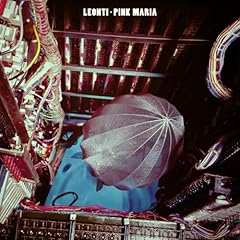
Leonti, "Pink Maria"

Pink Maria is the new album by Leonti, a band from Basel led by singer-guitarist Nadia Leonti and featuring Manuel Neubauer, Beni Bürgin, and Benj Gut. I am especially proud to have written quite a few of the lyrics for Nadia. For some of them, she took poems I had already written; for some, she had sketches that I filled in. As before, it was great to work with her on the project.

For information on how to get your own copy, check the band's website here.

(There are also two lyrics of mine on the band's earlier CD Everyone/I, so you should buy that one, too, if you don't have it already.)

Wednesday, June 27, 2012

Fleet Foxes

"Helplessness Blues," by Fleet Foxes, is an impressive record with a rich sound full of harmonies and unusual arrangements of instruments. It is good enough to be disappointed: why does it leave me cold? Perhaps it celebrates its sources too openly, too proudly: a late-60s psychedelic folk sound I associate with Donovan, Fairport Convention, or the Incredible String Band. "Lorelai" even explicitly cites Dylan's "Blonde on Blonde," specifically "Fourth Time Around."

These are all great sources, so this might well grow on me. And the wild saxophone on "The Shrine/An Argument" shatters the sweet sounds with dissonance. In short, a recognizably brilliant album that still falls short of truly moving me, though I'm still hopeful that it will. (Hat tip to DMB.)

Sunday, February 26, 2012

Mr. Memory

In 1997, Bill Frisell released an album called Nashville, his "country" album. I took it upon myself to write words for some of the songs on the record, including the song "Mr. Memory" (click here to listen to it on Spotify):

MR. MEMORY

When you're alone with your name
what you recall is your self

Shoulders hunched up with the rain
no umbrella lost again
Mr. Memory heads for home
turns the corner and he's gone

If you forget your own name
what can you say to yourself?

The rain against the windowpane
is everything left behind
Mr. Memory waits for you
round the corner but you're gone

And you awake with no name
Bells ringing in a blue day

I just liked the expression "Mr. Memory" and let it and the melody take me places while I was writing. 

Last week, I watched Alfred Hitchock's The 39 Steps and was pleased to discover that Frisell's title might well be a reference to the character Mr. Memory, as played by Wylie Watson:


Monday, February 13, 2012

Streaming services and bands

My friend David Bauer wrote a quick defense of streaming services such as Spotify against the complaints musicians have about how little they earn from such services. It's in German here. (If you read German, the comments are worth reading, too.)

David's points are as follows:

1. Every band can choose whether or not to work with streaming services.

2. Bands earn money every single time a song is played on a streaming service. That's not comparable to the sale of a CD or other ways of earning money from selling music. (My comment: when you sell a CD, you don't earn money every time the consumer listens to each song.)

3. If a song is not available for streaming, that does not mean that you sell a CD. People can find free downloads or listen to something else.

4. Spotify is not making great profits. David provides a link to an article called "Why Spotify can never be profitable."

5. Spotify is not about making money for bands but about generating attention for their music. (My comment: it suddenly reminds me of the Grateful Dead: give away the right to record concerts and trade tapes, and the fans will come in droves, assuming the music is any good, especially if you promise a distinct concert at every show.)

David also links to this post of suggestions as to how Spotify can help musicians.

Curious what my musician friends have to say about this.

Friday, February 03, 2012

Blowin in the Wind parodies

I readthis morning that David Lee Roth has parodied Bob Dylan on the new Van Halen album: "How many roads must a man walk down / before he admits he is lost?"

Can you sue somebody for stealing a parody? After all, the Chenille Sisters got there first:


Tuesday, January 31, 2012

Stanley Jordan and Michael Hedges, plus Kaki King

One summer in the 1980s (probably the summer of 1984), I was working one Sunday afternoon at the Coffee House at Stanford, and there was a concert somebody had arranged. It was a guy named Stanley Jordan playing solo electric guitar. Shortly after he started playing (and made me take notice with his unusual touch-tapping technique), Michael Hedges, who lived in Palo Alto, happened to stop by to get a cup of coffee, as he very occasionally did at that time (once a year or so, in my experience). While I was getting his coffee, he was already not paying attention to me anymore, because he was paying attention to Stanley. I suspect he was just planning to drink his coffee and then head back off wherever he had been planning to go; instead, he sat down quite close to Stanley and watched him play, with this utterly stunned look on his face.

In the summer of 2003, I was in Seattle visiting my Dad, and we went to Jazz Alley to see Stanley play a concert. The opener was a young guitarist named Kaki King, and she played acoustic guitar like she was Michael Hedges. Now it was my turn to sit there with my jaw dropped, as I watched her channel Hedges from back in the 80s when I used to see him at the Varsity in Palo Alto. And she came out for an encore with Stanley and got into a wicked touch-tapping jam that, if I closed my eyes, made me think I was hearing something I never had the chance to see (and I don't know if it ever happened): Stanley jamming with Michael.

One of the things Stanley played that long-ago Sunday at the Coffee House was "My Favorite Things". There are no YT videos of him playing MFT, but here it is on Spotify.

Sunday, October 30, 2011

Ashes of American Flags

"I wonder why / we listen to poets," sings Jeff Tweedy in Wilco's "Ashes of American Flags." It's a somewhat odd way of putting it, since mostly poets get read, rather than listened to. But the range of possible meanings is still quite limited: it might refer to poetry readings (where we listen to poets, rather than read them), it might mean "listen to" in the sense of "do as someone tells you to do" (with poets as sources of moral guidance), or it might mean that lyricists who sing their poems are also poets (opening up the "are lyrics poetry?" can of worms). The rest of the lyric might help one decide among these three readings, if that's what one is inclined to do.

When I said that "Art of Almost" seemed primarily "suggestive" and not much more, I meant that the lyrics were so open to interpretation that even such an enumeration of the straightforward readings would not be possible. "Ashes of American Flags" is more than "suggestive," in this sense, because its text is more limiting in its possible interpretations.


Ashes of American Flags

the cash machine
is blue and green
for a hundred in twenties
and a small service fee
I could spend three dollars
and sixty-three cents
on diet coca-cola
and unlit cigarettes

I wonder why
we listen to poets
when nobody gives a fuck
how hot and sorrowful
this machine begs for luck
all my lies are always wishes

I know I would die
if I could come back new

I want a good life
with a nose for things
a fresh wind and bright sky
to enjoy my suffering
a hole without a key
if I break my tongue
speaking of tomorrow
how will it ever come
all my lies are always wishes

I know I would die
if I could come back new

I'm down on my hands and knees
every time the doorbell rings
I shake like a toothache
when I hear myself sing
all my lies are only wishes

I know I would die
if I could come back new

I would like to salute
the ashes of American flags
and all the falling leaves
filling up shopping bags

Saturday, October 29, 2011

The Art of Almost

It's great to hear bands push the envelope of what is expected of them, and that's what Wilco does with "The Art of Almost," the first song on their latest CD, The Whole Love. It sounds to me, in fact, like this song is the best Radiohead song released this year (better than anything on King of Limbs, at least).

If the music of the song is fantastic, the lyrics settle for being suggestive. But most lyrics do (not every songwriter is Conor Oberst, not even Jeff Tweedy).

While searching for the lyrics, I discovered that the Wilco website has all their lyrics, and that you can request songs for concerts. So I requested "Hummingbird" and "Impossible Germany" for Basel. You can even dedicate your requests!

Here's a live video of "The Art of Almost," followed by the lyrics:


The Art of Almost

No!
I froze
I can’t be so
Far away from my wasteland
I never know when I might
Ambulance
Hoist the horns with my own hands
Almost
Almost

I heard a faint olé
True love but
I had other ways to hurt myself
Like calling
I could open up my heart
And fall in and
I could blame it all on dust
The Art of Almost
Almost
Almost
Almost

I’ll hold it up
I’ll shake the grail
Disobey across the waves
Tomorrow
I’ll have all the love I could ever ache
And I’ll leave almost with you
All of almost
Almost

Thursday, October 13, 2011

Wilco, "A.M."

In anticipation of Wilco's concert in Basel on November 7, I picked up almost all the Wilco albums I did not already have, and now I am listening to them in chronological order. Their first album was A.M., from 1995, released right after I moved to Basel (which is neither here or there, of course). This one I did not have before, and on a first listening, I'm impressed by how they seemed to be channeling the Rolling Stones of Exile on Main Street at times, especially when they get more rocking, as on "Casino Queen":


(This version doesn't quite do the Stones comparison as much justice as the studio version, actually.)

Some might think an "altcountry" band should not be compared to "the world's greatest rock and roll band," but as my friend Geoff once pointed out to me, on Exile, the Stones also proved that they are the world's greatest country band, and reminded us all that country and rock-and-roll come from the same sources, and that the original distinctions between them were all about marketing and radio formats ...

Sunday, October 09, 2011

Cleanse Song

See the new pyramids down in old Manhattan
From the roof of a friend's I watched an empire ending

Bright Eyes, "Cleanse Song"

A few months ago, I was listening to Bright Eyes, as I was obsessively doing at the time, and up came "Cleanse Song," a beautiful ballad from their album Cassadaga. While I love the song, I had to differ with Conor Oberst about the above lines: it was not the end of an empire. Nor was it the beginning, of course. It was an opportunity for the leaders of the empire to reassert and even vastly expand their empire's reach, both abroad and, especially, at home.