Thursday, September 23, 2010

Garbage, Beautiful Garbage


Garbage, Beautiful Garbage

I've had this album on my iPhone for several weeks; a friend of mine gave it to me with a bunch of other stuff a while back. It's on my "songs" playlist, which I often listen to on shuffle, and as occasional Garbage songs kept coming up, I made a note to myself to listen to the whole album. And then shuffle presented with "Shut Your Mouth," and I liked the song so much that the album moved to the top of my listening list, and I listened to it while running yesterday.

"Shut Your Mouth" is the opener, and it is really good. The lyrics move at a fairly simply level, but they are biting, bitter and ironic enough to make more out of the simple text: "And the world spins by / With everybody moaning / Pissing, bitching and everyone is shitting / On their friends / On their love / On their oaths / On their honor / On their graves / Out their mouths / And their words say nothing / Shut your mouth / Try not to panic / Just shut your mouth / If you can do it." And the music: a thumping beat, effective distorted guitar, well-mixed vocals, a sinister overall feel. Good stuff.

But the rest of the album, frankly, makes "Shut Your Mouth" seem like an accident. The music is less interesting, the lyrics remain simple and sink into the worst kind of clichéd phrases, and the mix puts the words front and center so that you can't just ignore them and get into the groove. If Iron and Wine's lyrics are good enough to deserve more prominence in the mix, Garbage's lyrics should be downplayed, rather than emphasized!

Final analysis: one great song (I've been listening to it again while typing, and it's a great song!), and an otherwise boring record that even makes the great song seem weaker. (And the live video is nowhere near as good as the recording.)


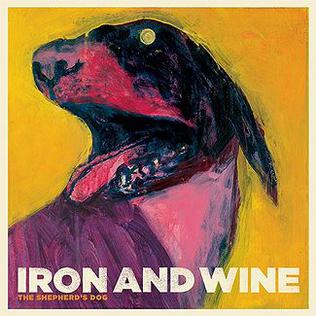
Iron and Wine, "The Shepherd's Dog"

Simfy listening: Iron and Wine, The Shepherd's Dog

With its layers of mostly acoustic instruments and a touch of electric guitar, and with its haunting melodies and hypnotic mid-tempo grooves, this is a record for me to love. If I'm ambivalent about it, it has to do with the vocals: with how they are sung and how they are recorded. Samuel Beam (who is Iron and Wine; it's not a band name but his stage name) has a very soft, dreamy voice; he doesn't slur his words as many singers do, but he doesn't clearly articulate them either. And the vocals are recorded with a touch of reverb and closely sung background harmonies that further wash out the words. This singing and recording style contributes hugely to the album's trance-inducing effect—but the lyric love in me feels shortchanged. The bits that I do catch make it clear that there's some excellent lyric writing going on here—but in a sense the lyrics are sacrificed to the overall sound. That sound is wonderful, but I would still like to hear more of the words.

And presenting the lyrics less dreamily would not actually detract from the effect: on Iron and Wine's Around the Well, which I talked about here recently, it was the clarity of the words that made "Belated Promise Ring" stand out for me, without the song being any less hypnotic than the other songs on the album.)

Tuesday, September 14, 2010

John Gallaher, Map of the Folded World

"You know the secret language," John Gallaher writes in "Your Golden Ticket," but the poems in Map of the Folded World are not in a secret language. There's nothing esoteric about them; they do not gesture towards hidden depths that demand subtle interpretation. Instead, they are surfaces on which a train of thought is skating, "suggestions, not depictions," as Gallaher writes in "What & Who & Where & What." The beginning of "The Universe is Incapable of Disappearance" strikes me as exemplary, as a statement leads to a series of qualifications and hedgings that generate a quite singular humor:

They keep talking about a road, but there never is a road,
and if there was, it would always be ending,
the way everything is always ending
unless you're of the mind that everything is always some sort of middle,
or some continual beginning
that rises and falls from a never quite completed something
that we're continually waking from
in a kind of polite vagueness.


Saturday, September 11, 2010

Bright Eyes, "Lifted, or The Story is in the Soil, Keep Your Ear to the Ground"

Bright Eyes, Lifted, or the Story is in the Soil, Keep Your Ear to the Ground

The real reason that I have been commenting on albums lately is not that I started listening to albums on Simfy but that I started running regularly, and while I run I listen to albums on my iPhone (some on the iPod, some on Simfy). Since I keep making asides about Conor Oberst and Bright Eyes, I thought I'd listen to a Bright Eyes album while running and see whether I could come up with some coherent comments about it without just gushing about how fantastic I think CO and BE are. I chose the earliest CD I have by Bright Eyes as a starting point.

This turned out to be more difficult than I thought it would be, simply because I found so many things to comment on that I could not keep them all in mind while running! So I found the lyrics to the album on-line and put them all in a Word file and printed it out and read them, looking for themes I had noticed while running. Even then, I had too many passages to comment on! If Conor Oberst was a poet (well, he is, but that's a different issue), and I was doing literary criticism, I would look for the exemplary passages that stand for all the others, but this is my blog, so I don't have to be rigorous, and I've just picked out a few of my favorite bits.

In the first song, "The Big Picture," I laughed out loud at the line "don't go blaming your knowledge on some fruit you ate." Over and over again, Oberst picks up on Christian imagery to look at it from all sides and challenge it, and he almost always does so with this much wit. The end of "Waste of Paint," with the singer at choir practice at the cathedral, provides a kind of summary of this theme of the CD:

But when I lift my voice up now to reach them,
the range is too high, way up in heaven,
so I hold my tongue, forget the song,
tie my shoe, and start walking off,
and just try to keep moving on,
with my broken heart and my absent God,
and I have no faith, but it is all I want,
to be loved and believe in my soul, in my soul.

Oberst was 22 when this CD came out, and there are a few moments here where he shows his age, as it were, but here the specificity of the scene allows him to arrive at a very general, quite abstract conclusion that is fully grounded in the imagery. Here, music leads him to a clear statement of the problems he keeps addressing, but the music only clarifies, even heightens, the problems, without solving them.

The last lines of the CD, though, in the song "Let's Not Shit Ourselves (To Love and To Be Loved)," return to these themes:

But where was it when I first heard a sweet sound of humility?
It came to my ears in the goddamn loveliest melody.
How grateful I was then to be part of the mystery,
to love and to be loved. Let's hope that is enough.

The "conclusion" of the CD seems a bit flat, actually: we should "love and be loved," that's all that we need to do. But that flatness is offset not only by the uncertain hope that is actually the end of the CD but also by the rich and biting writing that precedes it. There is too much irony in Oberst's lyrics to allow the conclusion to flatten out what has come before it; in fact, the irony and imagery of the lyrics as a whole tend to undermine the possibility that "to love and to be loved" is "enough."

These lines also provide a conclusion to the album's theme of what music is for: the "loveliest melody" provides access to "a sweet sound of humility" and the experience of being "part of the mystery." At times, this theme is as hopeful as it is at the end, as here in "Bowl of Oranges":

But when crying don't help,
and you can't compose yourself,
it is best to compose a poem,
an honest verse of longing or a simple song of hope.

Here, and elsewhere on the album (and in Oberst's writing in general), I'm struck by how he represents what poetry is for: here, it is poetry as therapy, as a way to make up for not being able to "compose yourself." But the song concludes with a different understanding of art:

But if the world could remain within a frame like a painting on a wall,
then I think we would see the beauty.
Then we would stand staring in awe
at our still lives posed like a bowl of oranges,
like a story told by the fault lines and the soil.

This is a much different sense of art's purpose: not as therapy for the artist but as an experience for the recipient, as a frame for the world that makes it possible to "see the beauty" that is otherwise lost in the details. The "still lives ... like bowls of oranges" provide a sense of "awe" that make one think that "the goddamn loveliest melody" might be enough to redeem the world.

But "Waste of Paint" (the song that ends with the choir practice and the "absent God") provides another understanding of what poetry is for and what it "makes happen" (to finally refer to W.H. Auden, whose lines keep crossing my mind as I think about Bright Eyes):

As I hide behind these books I read,
while scribbling my poetry,
like art could save a wretch like me,
with some ideal ideology
that no one can hope to achieve,
and I am never real;
it is just a sketch of me,
and everything I made is trite and cheap
and a waste of paint, of tape, of time.

Here, the writing of poetry is not therapy, not an attempt to make up for being unable to "compose yourself," but it does not provide a sense of awe, either. The artist cannot see the work from the outside, cannot see the "bowl of oranges" in such a way that he is awed by it. The imagery may make me, as the listener, feel that sense of awe and wonder and humility that Oberst keeps circling around, but his own work only ends up feeling like a "waste" to him.

It's when Oberst does let the "bowl of oranges" speak for itself that he does his best writing. Here's a favorite passage of mine from the beginning of "Let's Not Shit Ourselves (To Love and To Be Loved)":

I've seen a child caught in the sad trap of gravity.
He falls from the lowest branch of the apple tree
and lands in the grass and weeps for his dignity.
Next time he will not aim so high.
Yeah, next time, neither will I.

This is all just a perfectly described scene with a deft little interpretation provided, but of course the scene is full of resonances that make it much more complex than the issue of how much ambition one should have, how high one should aim: the apple tree alone manages to connect Genesis and Isaac Newton. Even as Oberst says he will reel in his ambition because of what he has seen, the lines make clear just how ambitious he is, driven by the problem of "the absent God" and the "end of the world" as described by modern physics to try to find meaning for himself and others, in art and in love, hoping that is enough.

Thursday, September 09, 2010

Trouble House

Swiss poet and rapper Jürg Halter (whose rap alias is Kutti MC) has a new band called Schule der Unruhe. I was just playing around with the idea of how to translate "Schule der Unruhe" into English with more assonance than "School of Restlessness," and I remembered my three-year-old niece telling me at great length about "Trouble House," the place you got sent if you were in trouble, and how I kept asking her if she could take me there, and how every time I asked her that it got farther and farther away.

What taxes are for

Wizard of Id

Wednesday, September 08, 2010

Amit Majmudar, "0°, 0°"


"Inevitabilities found by accident" are what one should "look for in a ghazal," according to the final line of Amit Majmudar's ghazal "By Accident," and hte interplay between the inevitable and the accidental runs through his collection 0°, 0°—or how the accidental later seems to have been (or perhaps makes itself seem?) inevitable: "You can / Make anything sound predetermined just / By rhyming on it twice," he writes in "M. C. Escher and the Art of Tessellation," which suggest that poetry produces the sense of inevitability Majmudar keeps circling around, and that he's aware that that might be the case.

But there's something else going on here, too: Majmudar keeps looking at how things might seem if seen backwards, not from the accidental to the inevitable but the other way around. The Escher poem begins with a stanza about mathematicians:

Mathematicians make the toughest audience.
Your complexity has to arabesque a chalkboard
And then, with joyful slashes, above, below,
Cancel itself before their eyes. Simply put,
They expect you to write them a Paradise Lost
And then resolve it back to Genesis.

This provides a nice twist on Jorge Luis Borges's suggestion that the Odyssey could be read as a version of Ulysses [though I just checked "Pierre Menard, Author of the Quixote" and discovered that I had misremembered it: he speculates on reading the Aeneid as having preceded the Odyssey], but it also marks how Occam's razor cuts away elaboration in favor of simplicity—sacrificing poetry to proof? Producing a reading of history based on its outcome? [Avoid Nietzsche digression here.]

Yet the source does not inevitably contain what flows from it, for accident must still play a role, and in "Merlin," Majmudar develops an elaborate conceit (Merlin living his life backwards) to arrive at a scene in which Merlin meets the first cave painter: "How will all he has witnessed / result from that stargazing hunter?" How does the accidental come to seem inevitable? "Answers for the Whirlwind" concludes with a passage that reads like an answer to that question:

Who paved roads when they found themselves blocked off
From one another by the wilderness
Who bruised their heels against the wilderness
Who named it tasted every leaf of it at least once
Who remembered which was medicine and which
Was food and which was poison shuffled with
The rest its green no different to the eye
Who sawed and sanded it to crib and casket
And who did that to the wilderness Lord God

With nothing but hands

Experimentation, memory, and technology lead from the stargazer to us; the work of hands turns accidents into inevitabilities.

But such a process does not necessarily involve progress; a dark thread of violence runs through Majmudar's book, at great length in "Letter to the Infantry" and "The Cherry Blossoms at Walter Reed," both of which address the Iraq war, and allegorically in "Michael Reminisces about the War." That's the Archangel Michael, and the war in question is the one between God's host and the fallen angels. The poem concludes with God and Michael celebrating their victory and their soldiers:

On the throne with a wineglass, He praised me
For discovering good little killers inside
Of those golden androgynous boys.

And in retrospect, of course, it seems inevitable that the "golden androgynous boys "had "good little killers" inside themselves, even it was accidents, not inevitabilities, that gave those killers life. The darkness in Majmudar's book is alleviated by his sensitivity to the accidental, unpredictable, human side of violence, all of which it makes it possible to choose or refuse it. And (even though the poem in question is called "The Miscarriage") he ends the book with "hope dry and brittle but intact." That hope is fragile, but it survives the accident that creates it, and ends up seeming inevitable.

Tuesday, September 07, 2010

Ani DiFranco, Evolve

Ani DiFranco is so prolific that I have ended up avoiding listening to her music for a long time, because I was somehow sure I would be so into it that I'd end up wanting to be a DiFranco collector (the way I am a Greg Brown collector or a Bill Frisell collector: with completist ambitions). Now I've finally started listening to her with this CD, Evolve, from 2003, and I was right: this music makes me want more. If this were a band, I could rave about the great singer and the great songwriter and the great guitarist and the great arrangements, and I'd be praising several different people, but it's all Ani D, and it's all fantastic. The songs are built around her guitar work (mostly acoustic, mostly superb fingerpicking), with some additional instruments added for most of the tracks; the instruments provide her with the foundation for her bold singing: she has a great voice, and she takes it everywhere she can. Favorite line, from "Slide":

The pouring rain is no place for a bicycle ride;
try to hit the brakes and you slide.

I was running when I listened to the album, and I heard this line and just knew the song was called "Slide." :-)

(This was not Simfy listening, but finally giving my full attention to something someone gave me a while back.)

Sunday, September 05, 2010

Iron and Wine, Around the Well

Simfy listening: Iron and Wine, Around the Well

So I've been pretty critical for the most part in my posts about what I've been listening to on Simfy, the streaming service that just started up in Switzerland two weeks ago. In part that's because I left out the one batch of music that totally thrilled me, Conor Oberst's two CDs under his own name (rather than with/as Bright Eyes). I find it hard to say anything about how utterly brilliant I think Oberst is ... It might just end up as boring gushing.

So I was listening to Iron and Wine's Around the Well while running today, and for a while, I thought, "Well, I can say good things about this: fine picking, excellent arrangements, good lyrics and melodies, the singing a bit too dreamy to really get my attention, but a strong record that makes me interested in hearing more."

But then came "Belated Promise Ring," and such cool, distanced praise went out the window. In fact, as soon as the song started, I thought, "Yes, this is a good one." Perhaps that was just because it was almost the first (or may even the first) song on the CD with drums on it, but it also just seemed fuller and richer and more complete from the start. And then the vocals come in:

Sunday morning, my Rebecca sleeping in with me again.
There's a kid outside the church kicking a can.
When the cedar branches twist, she turns her collar to the wind.
The weather can close the world within its hand.

This is just first-class writing. I've listened to the song at least three times since my run this afternoon, and it just gets better and better. And the song is good enough to make me want to hear more by this band (which, it turns out, is not a band but one guy, Samuel Beam, who goes by this name). [I tried to find an Iron and Wine version of the song on YouTube, but there are only a bunch of cover versions of it—which shows that others love the song as much as I do!]

Isobel Campbell and Mark Lonegan, Hawk

Simfy listening: Isobel Campbell and Mark Lonegan, Hawk

Here's another pairing I've heard great things about and am disappointed by. The album is atmospheric without building up any tension; it's surprising that a band with a singer (Lonegan) with such a dark voice seems so unthreatening, so bland. The beginning is especially dull, but I stuck it out and enjoyed the cover of "Time of the Season," and then things do pick up quite a bit at the end, culminating in a fine closer called "Lately." Still, given the hype, I sure expected more from these two.

Saturday, September 04, 2010

Left Behind

And here's another poem worth a comment this morning, "Left Behind," by Kristin Berkey-Abbott, from qarrtsiluni. Lots of layers of resonance here, from miracles to rapture. I'm a bit hesitant about two of the line breaks ("hungry / families"; "mystical / theology"), but these breaks between adjectives and their nouns, though not very productive in the poem, are at least not distracting.

Tracking the Hurricane

Here's "Tracking the Hurricane," by W. F. Lantry, from The New Verse News, a poem that is as calm as the calm before the storm that it describes. I do have a quibble with it, though; commas would be helpful at the ends of the third and fourth lines of the second stanza:

or a day when everything has calmed
and the silence is like glass
still glowing orange from the forge [,]
small bits of rime forming around the walls [,]
each edge waiting to shatter,

But I have gathered over the years that many poets and readers of poetry don't mind having commas omitted at the end of lines (and often even prefer to leave them out there). For me, the absence of those two commas makes it distractingly difficult to parse the lines, which breaks up the poem's calming effect.

Friday, September 03, 2010

Alison Krauss, Forget About It

Alison Krauss, Forget About It

I first heard Alison Krauss singing backing vocals on Phish's Hoist, but I never got around to listening to any of her own CDs until a friend gave me her CD with Robert Plant, Raising Sand (another album with magnificent Marc Ribot guitar work on it). And I've never listened to any of her solo or Union Station CDs until today. What a voice she has! She likes slower tempos and melodies that give her room to linger on long notes. Really beautiful stuff. My favorite line (from "Could You Lie"):

Could you lie and say you love me just a little?

And check out the personnel list at the Wikipedia link above: Jerry Douglas, Sam Bush, Lyle Lovett, Dolly Parton! Alison sure has a lot of talented friends!

Thursday, September 02, 2010

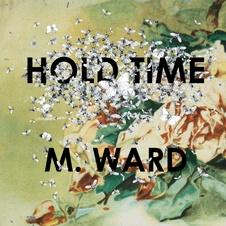
M Ward, Hold Time

Simfy listening: M. Ward, Hold Time

A friend of mine gave me a copy of M. Ward's Post-War a couple years ago (thanks, SJS!), and I liked it a lot, especially the wonderful "Rollercoaster." I'd also seen that Ward is part of Monsters of Folk with my current absolute favorite, Conor Oberst, so I thought I'd check out another CD of his. And it's a winner. The highlights for me are the gorgeous and completely startling covers of "Rave On" and "Oh Lonesome Me" (the latter featuring Lucinda Williams—I thought I recognized that voice when I heard the song while jogging today!) and Ward's "Stars of Leo" (with "Epistemology" also up there).

Ward does like to use rather stock phrases—but then he does things with them, as here in "Stars of Leo":

I get so low I need a little pick me up.
I get so high I need a bring me down.

Two poems at The Nepotist

Two poems of mine are featured today by The Nepotist. As the titles make clear, these contain explicit language (and explicit themes!): "Up Shit Creek" and "Cock and Bull." I'm flattered and humbled by the Nepotist's introduction to the two!

Wednesday, September 01, 2010

John Mellencamp, "No Better Than This"

Simfy listening: John Mellencamp, "No Better Than This"

As a kid, I was a big fan of John Cougar's "I Need a Lover," not as much because of the song itself but because of the great introduction to the song. And then he had his big moment in the limelight with "Jack and Diane," another tune I liked. But I haven't listened to anything by him in a long time. I was convinced to check out his latest when it was referred to in The New Yorker, and with Simfy I can easily check things out (simfy is something like Pandora in the US, I take it).

So I've listened to it once, and it's a very fine album that I'm going to listen to again: the sound of the record is fabulous (clean, simple folk-blues-country production), the playing is superb (somehow I knew before checking just now that Marc Ribot was on guitar here!), and the arrangements are varied enough to not get boring while also being consistent in sound and feel.

Still, my first reaction is to play with the title: "Why is 'No Better Than This' no better than this?" With one exception, my response to the lyrics was rather critical: they are good but not great. Too often, Mellencamp reaches for the standard lyrical turn from the folk-blues tradition, so that when he doesn't, on the stunning "Easter Eve" (the exception), it makes the "straightness" of the other tunes even more noticeable.

I have to admit I'm probably being unfair here, because I have been getting so into the magnificent Conor Oberst (and Bright Eyes) that almost all songwriting pales by comparison. But even without comparing Mellencamp to Oberst, I feel like he could have done "better than this" in the lyrics.

A streaming service changes how one thinks about music: do I want to own it for my collection? Do I want to listen to it again? Do I want to delete the album from my playlist right now? Those are the three basic responses. Here, at the moment, I'm with the middle of those: I'm going to listen to it again (and perhaps several more times after that, if only because of Ribot), but I don't think I'm going to buy it for my collection.

Oh, and there's also the category "songs to listen to again," and "Easter Eve" belongs in that one!

Sunday, August 29, 2010

Human Shields videos from May 2010

Here are three videos of songs my band Human Shields performed at the Rockfact Music Club in Münchenstein, Switzerland, on May 8, 2010.


Sundowning

Human Shields | MySpace Musikvideos


Long Enough

Human Shields | MySpace Musikvideos


You Know I Know

Human Shields | MySpace Musikvideos


You can also view these videos on the band's Facebook page.

Friday, August 27, 2010

Stevie Ray Vaughan in 1983

It was a Sunday evening, and I had already gone to Grateful Dead shows at Frost Amphitheater at Stanford on the Saturday and Sunday afternoons, and I was exhausted and wired, but I went to see Stevie Ray Vaughan at the Keystone Palo Alto anyway. I was right at the stage, to the left of SRV's mic in the middle of the stage, and quite close to his wah-wah pedal. After he played two of his fast instrumentals, he stepped over to that pedal and started doing this crazy stuff with it, and I could not really see him, but I watched his left-handed shadow playing on the back wall. Here's what he did (from a different 1983 performance):


And the moral of Stevie's story is: don't ride helicopters during storms.

Monday, August 23, 2010

Beyond Genes


Here's the next book I'm translating, due out next year: Gottfried Schatz, Jenseits der Gene. It's a collection of columns on science that Schatz wrote for the Neue Zürcher Zeitung; it was a best-seller in Switzerland. It's an honor to be translating a book by such a prestigious scientist ("co-discoverer of mitochrondrial DNA"? I'm impressed!).

Tuesday, August 17, 2010

Five articles in one newspaper

Today's International Herald Tribune contains not the usual one or two interesting articles but, count 'em, five!

There's an article about five neuroscientists taking a kayaking trip off the grid (and off-line), in which they reflect on the ways that the brain responds to the information society and to their temporary escape from it. (It's a little ironic that my response to this article is to want to provide a link to it for my friends.) My small version of the same is that I did not go on-line at all on Sunday (not even with my iPhone), and that it is always a bit of relief to "disconnect" myself.

Robert Pinsky's review of Andrew Pettegree's The Book in the Renaissance, a new study of the first century or so of movable type and the central problem printers faced: how can you make money from publishing? Pinsky praises Pettegree for refraining from comparisons between then and now, but it's certainly easy to do so, given that Pettegree argues that printers only made money when they focused on "news, sensation, and excitement." So there was no Golden Age of printing when people bought classic literature and philosophy and read them; sensationalism has always been the best way to make money with printing and publishing.

Timothy E. Williamson's opinion piece on the imagination has a dozen or so fascinating points in it, but for me the best point is his brief discussion of the contemporary philosophical contrast between "contexts of discovery" and "contexts of justification":

In the context of discovery, we get ideas, no matter how — dreams or drugs will do. Then, in the context of justification, we assemble objective evidence to determine whether the ideas are correct.

I've come across this idea quite a few times before, but I've never seen it explained so tightly and clearly. (Well, my student Michael Luscher explained the distinction in my verse-novels seminar in 2009, but we were discussing Christoph Ransmayr's Der fliegende Berg, so that discussion was in German, and I did not register that he was using the German equivalents of these terms. Now, in retrospect, I can see how appropriate and precise his use and explanation of the terminology was!)

Then there's Lawrence E. Joseph's article on the threat caused by solar storms, which can produce huge bursts of electricity that destroy transformers on Earth, and Paul Krugman's vigorous defense of the Social Security system in the U.S. against its detractors.

This post is an excercise in multi-tasking, in a way, with all the different points it has to make, and is thus subject to the analysis that appears in the first article I linked to, about the kayaking neuroscientists. But it's worth noting that I read all these articles in the newspaper, and not on-line, in the old-fashioned way—that is, in a desperate search for "news, sensation, and entertainment". :-)

Monday, August 16, 2010

On the Night Watch

Here are three poems by Ciaran Carson from his collection On the Night Watch, which has just come out in North America with Wake Forest University Press (and which was first published in Ireland by Gallery Press). It's another winner from Carson, a radical change in approach and tone that is completely successful. (Just as an aside: of his many compelling works, I find his verse novel For All We Know to be the most compelling of all; I wrote about it here.)

Saturday, August 14, 2010

Music as skin

There are passages in Göran Sonnevi's Mozart's Third Brain (translated by Rika Lesser) that are just exactly perfect, such as this one:

Music covers us with skin, touches with skin
We are painfully described there, even in great delight

The feeling of being surrounded by music, and touched by music, as something physical, even erotic (skin on skin), and the way that overwhelming music can be painful and delightful at the same time. At my last Grateful Dead show (March 18, 1995), which was also my wife Andrea's only Dead show, she turned to me during the space jam and said, "It's really scary." But that's just why I loved it!

Friday, August 13, 2010

Diego Rivera's Deep Water Horizon

Here's another poem from New Verse News: "Diego Rivera's Deep Water Horizon," by Alan Catlin. It reads like an ekphrasis of a non-existent Rivera mural; I'm sure that's a category that somebody has written a dissertation about somewhere: descriptions, in poetry and fiction, of non-existent works of art.

Still, even though it doesn't bother me enough to keep me from appreciating the poem, I did stumble on one feature of this poem: the three lines ending with prepositions (lines 3, 5, and 8; of, of , and from). None of those breaks seem well placed to me; they interrupt the syntax of the phrases and sentences they are in. That's not necessarily a problem, but here, there's no gain in the effect of the poem as a result of the interruption. Nor is there a metrical pattern that is being followed and which has led to these particular breaks.

Saturday, August 07, 2010

The Daily Blab

And here's another poem I just read on-line and liked: Earl J. Wilcox's "The Daily Blab." Perhaps because I just returned from vacation and had had my mail held and my newspapers stopped while I was out of town. But I'm not planning on pretending to be dead.

At Lowe's Home Improvement Center

I liked Brian Turner's Here, Bullet a lot, and this poem on Poetry Daily today makes me think I'm going to like his new Phantom Noise even more. This brings the war home in multiple ways. As Neil says, "I'm living with war in my heart every day."

Friday, August 06, 2010

The Poem and Its Secret

I was on vacation last week when my translation of Durs Grünbein's essay "The Poem and Its Secret" was the Poetry Daily prose feature for the week. You can find the essay here, and you can buy the book, Bars of Atlantis, through the link there, too!

Thursday, August 05, 2010

Acht Lernschwester


I've known this painting by Gerhard Richter for a long time; I saw the original in Winterthur back in the late nineties. But I only just learned, quite by chance, that these eight student nurses were murder victims! I am reading, editing, and commenting on a manuscript of a novel by a friend of mine, and one of the characters, a nurse herself, mentions one "Richard Speck" as an example of the kind of horrible criminals that there are in the world. Curious, I googled and found a Wikipedia page about Speck and his crime, and immediately I wondered if Richter's painting was of his eight victims. For detailed information on the painting and its background, see this blog post.

Saturday, July 03, 2010

Loopholes


So here's Suarez playing goalie when he's not allowed to, which led to a last-second penalty for Ghana against Uruguay last night. But since Gyan missed the penalty, the match went to a penalty shootout, which Uruguay won.

Arguably, then, Uruguay was rewarded for Suarez's cheating. That's one way to look at it, but really it's a loophole that a player can exploit: stop a certain goal, get sent off, and hope the opponent misses the penalty. (They later showed Suarez's reaction from the tunnel when Gyan missed the penalty.)

And loopholes are inevitable: every system of rules has loopholes that people can exploit, and all attempts to close the loopholes lead to the creation of further loopholes.

Sunday, June 27, 2010

Violent Femmes in Berlin, 1992

Tom Phillips has just published a really nice short essay on the Violent Femmes over at Eyewear, and it made me remember my one VF concert. It was at the Waldbühne in Berlin in the summer of 1992, and the show opened with Lyle Lovett knocking me out with his wonderful "Church":

I went to church last Sunday, so I could sing and pray,
and something quite unusual happened on that day.

Then came Bonnie Raitt, and then the Femmes. I don't remember their set very well, but I remember being very impressed by their energy and power; as when I saw REM a few years earlier, I was surprised by how much "harder" their sound was live than in the studio.

The highlight was in Lou Reed's set, when he brought out Bonnie Raitt and the Femmes' Gordon Gano to be the "colored girls" on "Walk on the Wild Side," and then he let Gordon sing the second verse. But before he began singing, Gordon said, in pretty good German, "Erst möchte ich sagen: Lou Reed, er ist geil, ja?" ("First just let me say: Lou Reed, he's cool, isn't he?") And then Gordon sang that second verse, and it was a shock to hear Lou's half-talking, half-singing replaced by the beautiful voice of a former choir boy.

Saturday, June 26, 2010

Wallace Stevens on Language Log

I like the effect here: in a discussion of the word "operandum" and its use by B. F. Skinner, Mark Liberman brings up a Wallace Stevens poem that contains the word and imagines Skinner and Stevens "getting together of an evening to swap neologisms." (I like that use of "of an evening," too.)

(Perhaps this little note will get one of my Stevensians to comment on Liberman's post.)

Friday, June 25, 2010

The Swifts

Here's another one I first read on the Poetry Daily app on the iPhone: a dizzying poem about a huge flock of swifts, "The Swifts," by Linda Bierds. Yet another great poem from the New England Review!

One August night, ten thousand.
Four thousand now, in this long, September dusk.
Some repeaters, staying over.

Movie

Using haikus as stanzas often leads to exceptionally tight writing, as here in Norman Schwenk's "Movie," on Poetry Daily today:

the twin towers shown
as an establishing shot
saddens many films

There's something to be said for capturing something in words that others might already have noticed but never quite fully registered.

I first read the poem on PD's new iPhone app, which is excellent.

Poetry-wise on the iPhone, I've also been enjoying Poem Flow and the Poetry Foundation's new app.

World Cup note, Group G

Everybody thinks that the only issue in Group G is whether Brazil or Portugal will be in first place after the games this afternoon. But here are the standings:

TeamMPWDLGFGAPts
BrazilBrazil2200526
PortugalPortugal2110704
Côte d'IvoireCôte d'Ivoire2011131
Korea DPRKorea DPR2002190

Yes, it's unlikely that the standings will change much, but given how helpless North Korea was against Portugal, and given how explosive the Ivory Coast can be, and given that the last time Brazil and Portugal played, Brazil won 6-2, it would not be completely and utterly miraculous (it would not be like a fifth set in tennis that goes to 70-68!) for the Ivory Coast to still qualify.

Let's say Brazil beats Portugal 3-0 (which is not an extreme result). Then the Ivory Coast has to win 6-0 (which is extreme, but as I said, not utterly unlikely, given NK's weakness and IC's offensive potential). That would put IC and P in a tie, and they would have to draw lots. So any nine-goal swing, with B and IC winning, makes it possible for IC to advance (7-1 for IC and 3-0 for Brazil would have IC advancing on goals scored, for example).

I do not, repeat DO NOT, think this is what's going to happen, but I thought I'd go on the record with it, just in case it does happen, so that I can pat myself on the back about it. :-)

Wednesday, June 16, 2010

Vertical Realities

Here's a line that quickly characterizes someone:

... he always chooses his luck and clothes one size too small for him.

The whole poem, "Vertical Realities," by Luljeta Lleshanaku (translated by Henry Israeli and Shpresa Qatipi), has this sense of how the barest of brushstrokes can imply a world. The collection Child of Nature is available from New Directions.

Sunday, June 13, 2010

Claudia Roth Pierpont's "Black, Brown, and Beige" is a review of several recent books about Duke Ellington, but it concludes with an image of Charles Mingus that brought tears to my eyes:

Two years before Ellington died, in 1972, Yale University held a gathering of leading black jazz musicians in order to raise money for a department of African-American music. Aside from Ellington, the musicians who came for three days of concerts, jam sessions, and workshops included Eubie Blake, Noble Sissle, Dizzy Gillespie, Charles Mingus, Max Roach, Mary Lou Williams, and Willie (the Lion) Smith. During a performance by a Gillespie-led sextet, someone evidently unhappy with this presence on campus called in a bomb threat. The police attempted to clear the building, but Mingus refused to leave, urging the officers to get all the others out but adamantly remaining onstage with his bass. “Racism planted that bomb, but racism ain’t strong enough to kill this music,” he was heard telling the police captain. (And very few people successfully argued with Mingus.) “If I’m going to die, I’m ready. But I’m going out playing ‘Sophisticated Lady.’ ” Once outside, Gillespie and his group set up again. But coming from inside was the sound of Mingus intently playing Ellington’s dreamy thirties hit, which, that day, became a protest song, as the performance just kept going on and on and getting hotter. In the street, Ellington stood in the waiting crowd just beyond the theatre’s open doors, smiling.

Who else but Mingus would have come up with an act like that? Well, maybe Charlie Haden, who dedicated "Song for Che" to freedom fighters in Angola and Mozambique while performing in Lisbon in 1971. See here for his version of the story.

Astonishing Confidence in the Self

In Mark Lilla's recent article on the Tea Partiers in the New York Review of Books, he comes up with one of his wonderful summations of a situation:

The new Jacobins have two classic American traits that have grown much more pronounced in recent decades: blanket distrust of institutions and an astonishing—and unwarranted—confidence in the self. They are apocalyptic pessimists about public life and childlike optimists swaddled in self-esteem when it comes to their own powers.

But I would add that these "new Jacobins" are not just American, as I have seen the same combination of public pessimism and private optimism in Switzerland as well. Many Swiss are just as skeptical of public institutions as Americans are (especially of what they call "Schulmedizin," that is, mainstream medicine) and just as optimistic about their own perceptions of the world ("the homeopathic treatment worked for me"). So while Lilla has perhaps correctly diagnosed the Tea Partiers here, he has limited the scope of his observation too much: what he identifies as "classic American traits" may once have been uniquely or at least especially American, but they have gone global as well—or at least Swiss. (Or does this have something to do with democracy?)

Perhaps someone will say, "Well, Andrew, what about your own 'astonishing confidence' in yourself?" But I am not skeptical about public institutions, and I try to understand my own experience as anecdotal (no matter how fun or funny the anecdotes are) and not representative of how people are and how the world is.

Monday, June 07, 2010

I See the Sea


It looks like a metaphor, but it's not:

I see
the sea
shrink,
then shrink again,
and I
float farther
from the invisible shore.

(Shams Langroodi, "I See the Sea ...", tr. Sholeh Wolpé)

The shrinking of the Caspian Sea ... although the page I found the satellite photo on says the following:

Along with increasing pollution, the Caspian Sea has also seen its water level fluctuate in past decades, at least partly due to human activity. As dams were constructed on rivers feeding the Sea its water level fell during the 1960s and 1970s, leading to construction on newly exposed shorelines. But since the late 1970s the water level began to rise again and has now risen by around 2.5 metres. Today it has stabilised and may even be falling again.

Sunday, June 06, 2010

The Sixth Daily Poem Project, Final Round Results

THE SIXTH DAILY POEM PROJECT, FINAL ROUND RESULTS

The winner of the final round of my sixth Daily Poem Project is Winter's Tale, by Maxine Kumin, which received 9 votes out of 44 cast.

Adjectives of Order, by Alexandra Teague, came in second with 8 votes, while Trick, by Sam Willetts, and Ecclesiastes, by Khaled Mattawa, tied for third with 6 votes each. All 12 poems received at least one vote.

I would like to thank everyone who participated, especially those of you who took the time to vote almost every week!

The winners of the first five Daily Poem Projects:

1DPP: "The Shout," by Simon Armitage
2DPP: "Fragment," by A. E. Stallings.
3DPP: "Inside the Maze (II, III, and IV)", by Hadara Bar-Nadav (blog vote)
3DPP: "Friends", by Laure-Anne Bosselaar (class vote)
4DPP: "Come to Me, His Blood," by Martha Rhodes
5DPP: "Cataract op," by Edward Field

Sunday, May 30, 2010

The Sixth Daily Poem Project, Final Round call for votes

THE SIXTH DAILY POEM PROJECT, FINAL ROUND

Here are the poems to vote for in the final round of the sixth Daily Poem Project. They are the winners of the twelve rounds from Monday, March 1, to Sunday, May 23 (each week's poems being those that appeared on Poetry Daily that week).

1. Trick, by Sam Willetts.
2. Ecclesiastes, by Khaled Mattawa.
3. To a Jornalero Cleaning Out My Neighbor’s Garage, by Eduardo C. Corral.
4. In the Men's Room at the Café Provence, by F. D. Reeve.
5. The Bus Driver, by Hédi Kaddour, tr. Marilyn Hacker.
6. Winter's Tale, by Maxine Kumin.
7. H1N1, by Robyn Schiff.
8. Montana Sky, by Don Welch.
9. Arcadian, by Dan Beachy-Quick.
10. War Stories, by Charles Bernstein.
11. With God in the Morning, by Aliki Barnstone.
12. Adjectives of Order, by Alexandra Teague

HOW TO VOTE: You can send your vote to me by email or as a comment on the blog (or as a comment to my Facebook link to this call for votes). If you want to vote by commenting but do not want your vote to appear on the blog, you just have to say so in your comment (I moderate all comments on my blog). If you want to vote anonymously, that's okay, but please choose some sort of pseudonym so I can keep track of different votes by anonymous voters. I will post comments as they come in.

Please make a final decision and vote for only one poem (although it is always interesting to see people's lists).

Please VOTE BY SATURDAY, JUNE 5! But I will still accept votes as long as I have not posted the final results.

Feel free to pass on this call for votes to anyone who might be interested!

The Sixth Daily Poem Project, Week 12 results

THE SIXTH DAILY POEM PROJECT, WEEK TWELVE RESULTS

The winner of the twelve week of my sixth Daily Poem Project is Adjectives of Order, by Alexandra Teague, which received 7 votes out of 15 cast.

Starlings, by James Schuyler, finished second with six votes. In the most lopsided vote in DPP history, those two poems received 13 of the 15 votes; two other poems received one vote each.

My thanks to everyone who voted. I'll be posting the call for votes for the final round shortly.

The winner of the first week was Trick, by Sam Willetts.
The winner of the second week was Ecclesiastes, by Khaled Mattawa.
The winner of the third week was To a Jornalero Cleaning Out My Neighbor’s Garage, by Eduardo C. Corral.
The winner of the fourth week was In the Men's Room at the Café Provence, by F. D. Reeve.
The winner of the fifth week was The Bus Driver, by Hédi Kaddour, tr. Marilyn Hacker.
The winner of the sixth week was Winter's Tale, by Maxine Kumin.
The winner of the seventh week was H1N1, by Robyn Schiff.
The winner of the eighth week was Montana Sky, by Don Welch.
The winner of the ninth week was Arcadian, by Dan Beachy-Quick.
The winner of the tenth week was War Stories, by Charles Bernstein.
The winner of the eleventh week was With God in the Morning, by Aliki Barnstone.

Sunday, May 23, 2010

The Sixth Daily Poem Project, Week 12 call for votes

THE SIXTH DAILY POEM PROJECT, WEEK TWELVE

Here are the poems to vote for in the twelfth and final week of the sixth Daily Poem Project (the poems on Poetry Daily from Monday, May 17, to Sunday, May 23):

May 23: After Taxes, by Graham Foust (vote only on the first poem)
May 22: Haying, by Deborah Digges
May 21: An Iris Murdoch Reader, by John Drexel
May 20: Starlings, by James Schuyler (vote only on the first poem)
May 19: A Holiday in the Same Place, by Patrick Mackie
May 18: Tramp in Flames, by Paul Farley (vote only on the first poem)
May 17: Adjectives of Order, by Alexandra Teague

HOW TO VOTE: You can send your vote to me by email or as a comment on the blog (or as a comment to my Facebook link to this call for votes). If you want to vote by commenting but do not want your vote to appear on the blog, you just have to say so in your comment (I moderate all comments on my blog). If you want to vote anonymously, that's okay, but please choose some sort of pseudonym so I can keep track of different votes by anonymous voters. I will post comments as they come in.

Please make a final decision and vote for only one poem (although it is always interesting to see people's lists).

Please VOTE BY SATURDAY, MAY 29! But I will still accept votes as long as I have not posted the final results.

Next week: the final run-off among the 12 weekly winners to determine who wins the overall Sixth Daily Poem Project. (Call for votes to be posted on Sunday, May 30.)

Feel free to pass on this call for votes to anyone who might be interested!

The winner of week one was Trick, by Sam Willetts.
The winner of week two was Ecclesiastes, by Khaled Mattawa.
The winner of week three was To a Jornalero Cleaning Out My Neighbor’s Garage, by Eduardo C. Corral.
The winner of week four was In the Men's Room at the Café Provence, by F. D. Reeve.
The winner of week five was The Bus Driver, by Hédi Kaddour, tr. Marilyn Hacker.
The winner of week six was Winter's Tale, by Maxine Kumin.
The winner of week seven was H1N1, by Robyn Schiff.
The winner of week eight was Montana Sky, by Don Welch.
The winner of week nine was Arcadian, by Dan Beachy-Quick.
The winner of week ten was War Stories, by Charles Bernstein.
The winner of week eleven was With God in the Morning, by Aliki Barnstone.

The Sixth Daily Poem Project, Week 11 results

THE SIXTH DAILY POEM PROJECT, WEEK ELEVEN RESULTS

The winner of the eleventh week of my sixth Daily Poem Project is With God in the Morning, by Aliki Barnstone, which received 4 votes out of 13 cast.

Seasonal Anxiety, by A. E. Stallings (winner of DPP2 for her poem "Fragment"), finished second with three votes.

My thanks to everyone who voted. I'll be posting the call for votes for week ten shortly.

The winner of the first week was Trick, by Sam Willetts.
The winner of the second week was Ecclesiastes, by Khaled Mattawa.
The winner of the third week was To a Jornalero Cleaning Out My Neighbor’s Garage, by Eduardo C. Corral.
The winner of the fourth week was In the Men's Room at the Café Provence, by F. D. Reeve.
The winner of the fifth week was The Bus Driver, by Hédi Kaddour, tr. Marilyn Hacker.
The winner of the sixth week was Winter's Tale, by Maxine Kumin.
The winner of the seventh week was H1N1, by Robyn Schiff.
The winner of the eighth week was Montana Sky, by Don Welch.
The winner of the ninth week was Arcadian, by Dan Beachy-Quick.
The winner of the tenth week was War Stories, by Charles Bernstein.

Sunday, May 16, 2010

Mehldau Redman Basel May 16 2010


Brad Mehldau and Joshua Redman played as a duo at the Stadtcasino in Basel tonight. They opened with a Mehldau original called "The Falcon Will Fly Again," during which I was struck by how much Redman's playing has developed since I last since him early in the millennium. He was already very good, but his phrases and phrasing tonight were so much more fluid and individual then they had been back then. In contrast, I wondered if Mehldau had any more room to develop at all: I've seen him four or five times since I first saw him in a solo show at the Basel Art Museum in 1999 or 2000, and he's always been fantastic, so good that there's little room to develop. His playing on this first piece was fabulous, but for this diehard Mehldau fan, not very surprising.

But then they played "Monk's Dream," and Mehldau proved me oh so wrong! I've always loved the way he plays that tune, but he and Redman arranged it in such a way that its usual driving rhythm only slowly developed out of an almost rubato approach. In Mehldau's long solo, one stunning passage went into the stride piano that was where Monk originally came from, but a version of stride refracted through the combination of the 80 years of jazz history since its heyday and the classical chops that have always been Mehldau's forte. Absolutely stunning—yes, he has developed since I first saw him!

The other highlight of the show for me was their arrangement of Nirvana's "Smells Like Teen Spirit." They made it sound so wonderfully melancholy, only to have it explode into something like the power of rock and roll near the end of Redman's tenor solo (Mehldau had taken the first solo). I love how Mehldau turns "pop" into jazz just as wonderfully as his predecessors did.

The Sixth Daily Poem Project, Week Eleven Call for Votes

THE SIXTH DAILY POEM PROJECT, WEEK ELEVEN

Here are the poems to vote for in the eleventh week of the sixth Daily Poem Project (the poems on Poetry Daily from Monday, May 10, to Sunday, May 16):

May 16: Woodpile, by Beth Bachmann (vote only on the first poem)
May 15: Voices from the Corners of the Sky, by Barbara Ras
May 14: Seasonal Anxiety, by A. E. Stallings
May 13: La Bouderie, by Allison Benis White
May 12: With God in the Morning, by Aliki Barnstone
May 11: Interpretation, by Martha Ronk
May 10: The Winds, by Albert Goldbarth

HOW TO VOTE: You can send your vote to me by email or as a comment on the blog (or as a comment to my Facebook link to this call for votes). If you want to vote by commenting but do not want your vote to appear on the blog, you just have to say so in your comment (I moderate all comments on my blog). If you want to vote anonymously, that's okay, but please choose some sort of pseudonym so I can keep track of different votes by anonymous voters. I will post comments as they come in.

Please make a final decision and vote for only one poem (although it is always interesting to see people's lists).

Please VOTE BY SATURDAY, MAY 22! But I will still accept votes as long as I have not posted the final results.

Feel free to pass on this call for votes to anyone who might be interested!

The winner of week one was Trick, by Sam Willetts.
The winner of week two was Ecclesiastes, by Khaled Mattawa.
The winner of week three was To a Jornalero Cleaning Out My Neighbor’s Garage, by Eduardo C. Corral.
The winner of week four was In the Men's Room at the Café Provence, by F. D. Reeve.
The winner of week five was The Bus Driver, by Hédi Kaddour, tr. Marilyn Hacker.
The winner of week six was Winter's Tale, by Maxine Kumin.
The winner of week seven was H1N1, by Robyn Schiff.
The winner of week eight was Montana Sky, by Don Welch.
The winner of week nine was Arcadian, by Dan Beachy-Quick.
The winner of week ten was War Stories, by Charles Bernstein.

The Sixth Daily Poem Project, Week Ten Results

THE SIXTH DAILY POEM PROJECT, WEEK TEN RESULTS

The winner of the tenth week of my sixth Daily Poem Project is War Stories, by Charles Bernstein, which received 3 votes out of 12 cast.

In a very close week with low voter turnout, four poems tied for second with two votes.

My thanks to everyone who voted. I'll be posting the call for votes for week ten shortly.

The winner of the first week was Trick, by Sam Willetts.
The winner of the second week was Ecclesiastes, by Khaled Mattawa.
The winner of the third week was To a Jornalero Cleaning Out My Neighbor’s Garage, by Eduardo C. Corral.
The winner of the fourth week was In the Men's Room at the Café Provence, by F. D. Reeve.
The winner of the fifth week was The Bus Driver, by Hédi Kaddour, tr. Marilyn Hacker.
The winner of the sixth week was Winter's Tale, by Maxine Kumin.
The winner of the seventh week was H1N1, by Robyn Schiff.
The winner of the eighth week was Montana Sky, by Don Welch.
The winner of the ninth week was Arcadian, by Dan Beachy-Quick.

Sunday, May 09, 2010

The Sixth Daily Poem Project, Week Ten Call for Votes

THE SIXTH DAILY POEM PROJECT, WEEK TEN

Here are the poems to vote for in the tenth week of the sixth Daily Poem Project (the poems on Poetry Daily from Monday, May 3, to Sunday, May 9):

May 9: A Walk on Long Beach Island, by Eamon Grennan
May 8: War Stories, by Charles Bernstein
May 7: Of What Is Good Enough and Finished First, by Dick Allen
May 6: A Childhood Memory of Wordsworth's, Yves Bonnefoy, tr. Hoyt Rogers
May 5: The Dew-Tasters, by Lola Haskins (vote only on the first poem)
May 4: Survivor, by Tadeusz Różewicz, tr. Joanna Trzeciak (vote only on the first poem)
May 3: Winter Grasses, by Mary Leader

HOW TO VOTE: You can send your vote to me by email or as a comment on the blog (or as a comment to my Facebook link to this call for votes). If you want to vote by commenting but do not want your vote to appear on the blog, you just have to say so in your comment (I moderate all comments on my blog). If you want to vote anonymously, that's okay, but please choose some sort of pseudonym so I can keep track of different votes by anonymous voters. I will post comments as they come in.

Please make a final decision and vote for only one poem (although it is always interesting to see people's lists).

Please VOTE BY SATURDAY, MAY 15! But I will still accept votes as long as I have not posted the final results (which I might not be able to do until Monday, May 17).

Feel free to pass on this call for votes to anyone who might be interested!

The winner of week one was Trick, by Sam Willetts.
The winner of week two was Ecclesiastes, by Khaled Mattawa.
The winner of week three was To a Jornalero Cleaning Out My Neighbor’s Garage, by Eduardo C. Corral.
The winner of week four was In the Men's Room at the Café Provence, by F. D. Reeve.
The winner of week five was The Bus Driver, by Hédi Kaddour, tr. Marilyn Hacker.
The winner of week six was Winter's Tale, by Maxine Kumin.
The winner of week seven was H1N1, by Robyn Schiff.
The winner of week eight was Montana Sky, by Don Welch.
The winner of week nine was Arcadian, by Dan Beachy-Quick.

The Sixth Daily Poem Project, Week Nine Results

THE SIXTH DAILY POEM PROJECT, WEEK NINE RESULTS

The winner of the ninth week of my sixth Daily Poem Project is Arcadian, by Dan Beachy-Quick, which received 4 votes out of 15 cast.

Two poems tied for second place with three votes: Fin, by Wyn Cooper, and What Was Missing, by Susan Tichy. All the poems received at least one vote.

My thanks to everyone who voted. I'll be posting the call for votes for week ten shortly.

The winner of the first week was Trick, by Sam Willetts.
The winner of the second week was Ecclesiastes, by Khaled Mattawa.
The winner of the third week was To a Jornalero Cleaning Out My Neighbor’s Garage, by Eduardo C. Corral.
The winner of the fourth week was In the Men's Room at the Café Provence, by F. D. Reeve.
The winner of the fifth week was The Bus Driver, by Hédi Kaddour, tr. Marilyn Hacker.
The winner of the sixth week was Winter's Tale, by Maxine Kumin.
The winner of the seventh week was H1N1, by Robyn Schiff.
The winner of the eighth week was Montana Sky, by Don Welch.

Friday, May 07, 2010

On Furthur

On Facebook, a friend asked what her Deadhead friends thought about John Kadlecik from the Dark Star Orchestra playing lead guitar with Phil Lesh and Bob Weir in their new band Furthur. Here's what I wrote in response to her question:

I've listened to all the Furthur shows on the archive, and at times Kadlecik does an excellent Jerry (one particular example is "Sugaree," where he's got the phrasing and fluidity of Jerry's signature runs for that song down). But he's at his best when he does something completely different than what Jerry usually did (there are several brilliant ... See Moreversions of "Candyman") or when he plays something Jerry rarely or never played ("Unbroken Chain" or Ratdog tunes or the Ryan Adams tunes).

But for me, the highlights of Furthur shows are, over and over again, Jeff Chimenti's piano solos (especially on "Unbroken" and "Eyes of the World").

Wednesday, May 05, 2010

Human Shields podcast

My band Human Shields played on the English Show on Radio X in Basel last night (Tuesday, May 4), and you can check out the podcast of the show here. (We're at the beginning, with three songs in all.)

Sunday, May 02, 2010

The Sixth Daily Poem Project, Week Nine Call for Votes

THE SIXTH DAILY POEM PROJECT, WEEK NINE

Here are the poems to vote for in the ninth week of the sixth Daily Poem Project (the poems on Poetry Daily from Monday, April 26, to Sunday, May 2):

May 2: The Fever, by Kimiko Hahn (vote only on the first poem)
May 1: Fin, by Wyn Cooper
April 30: What Was Missing, by Susan Tichy
April 29: Another June & Journey, by Steven Heighton
April 28: Fire, by C. K. Williams (vote only on the first poem)
April 27: Arcadian, by Dan Beachy-Quick
April 26: Pussy Willow, by Paula Bohince

HOW TO VOTE: You can send your vote to me by email or as a comment on the blog (or as a comment to my Facebook link to this call for votes). If you want to vote by commenting but do not want your vote to appear on the blog, you just have to say so in your comment (I moderate all comments on my blog). If you want to vote anonymously, that's okay, but please choose some sort of pseudonym so I can keep track of different votes by anonymous voters. I will post comments as they come in.

Please make a final decision and vote for only one poem (although it is always interesting to see people's lists).

Please VOTE BY SATURDAY, MAY 8! But I will still accept votes as long as I have not posted the final results (which I will do by Sunday, May 9, at the latest).

Feel free to pass on this call for votes to anyone who might be interested!

The winner of week one was Trick, by Sam Willetts.
The winner of week two was Ecclesiastes, by Khaled Mattawa.
The winner of week three was To a Jornalero Cleaning Out My Neighbor’s Garage, by Eduardo C. Corral.
The winner of week four was In the Men's Room at the Café Provence, by F. D. Reeve.
The winner of week five was The Bus Driver, by Hédi Kaddour, tr. Marilyn Hacker.
The winner of week six was Winter's Tale, by Maxine Kumin.
The winner of week seven was H1N1, by Robyn Schiff.
The winner of week eight was Montana Sky, by Don Welch.

The Sixth Daily Poem Project, Week Eight Results

THE SIXTH DAILY POEM PROJECT, WEEK EIGHT RESULTS

The winner of the eight week of my sixth Daily Poem Project is Montana Sky, by Don Welch, which received 4 votes out of 17 cast.

In a very tight vote, three poems tied for second place with three votes: Beer, by Lee Upton; Summer without Summering, by Teresa Cader; and The Hammock Knot, by Keith Ratzlaff.

My thanks to everyone who voted. I'll be posting the call for votes for week eight shortly.

The winner of the first week was Trick, by Sam Willetts.
The winner of the second week was Ecclesiastes, by Khaled Mattawa.
The winner of the third week was To a Jornalero Cleaning Out My Neighbor’s Garage, by Eduardo C. Corral.
The winner of the fourth week was In the Men's Room at the Café Provence, by F. D. Reeve.
The winner of the fifth week was The Bus Driver, by Hédi Kaddour, tr. Marilyn Hacker.
The winner of the sixth week was Winter's Tale, by Maxine Kumin.
The winner of the seventh week was H1N1, by Robyn Schiff.