Turned in Time
Here's a tune from my Human Shields duo gig at the Open Mic at Parterre in Basel on January 14.
This one was written by my friend Markus Bachmann. He wrote it in Basel German, then recorded it with me in High German on our CD "Noch und noch." I did the English version two or three years ago.
(Added later for easier surfing: a video of "Rumpus," another song from the same gig, is here.)
Sunday, January 18, 2009


Saturday, January 17, 2009
Rumpus live at Parterre
Rumpus
Here's a tune from my Human Shields duo gig at the Open Mic at Parterre in Basel on January 14. (Without our bassist, unfortunately. You just have to imagine the contrabass ...)
This tune is a survivor: I wrote it for my band Petting Zoo at Stanford in about 1985!
(Added later for easier surfing: a video of "Turned in Time," another song from the same gig, is here.)
Here's a tune from my Human Shields duo gig at the Open Mic at Parterre in Basel on January 14. (Without our bassist, unfortunately. You just have to imagine the contrabass ...)
This tune is a survivor: I wrote it for my band Petting Zoo at Stanford in about 1985!
(Added later for easier surfing: a video of "Turned in Time," another song from the same gig, is here.)
Thursday, January 15, 2009

Human Shields at Parterre Open Mic, January 14, 2009
 Two-thirds of Human Shields played at the Parterre Open Mic last night (January 14, 2009). The setlist:
Raining (With the Sun in the Sky)
Turned in Time
Third Base
Better Never Than Late
Rumpus
More photos here (of the other groups as well).
Monday, January 12, 2009
The Toss of a Lemon 3
So Hanumarathnam has laboured to create a middle ground: a detailed map of the holdings for Sivakami to walk through with her eyes and mind. Hanumarathnam has accurately portrayed those properties: real and perceived distances, sizes, and productive capacity of each plot. It is not simply a matter of drawing a map to scale; one must choose what sort of scale: physical? psychological? This map has to show how a property relates to its owners, to itself, to tenants, to the community. This is business—not geography, not math.
(Padma Viswanathan, The Toss of a Lemon)
As in my previous post about The Toss of a Lemon, the context is astrological: Hanumarathnam's horoscope has predicted his death, and he is preparing his wife Sivakami for her widowhood.
The "detailed map of the holdings" described here is for someone who will never see the land described by the map: at the time when the novel begins (around 1900) a respectable Brahmin widow remained in total seclusion from the public eye, so Sivakami could not walk the lands to inspect them.
The reader of a novel is not forbidden by custom to inspect the landscape a novel describes, but the novelist is no less involved in an "accurate portrayal" of the "real and perceived" and the relationship between them than Hanumarathnam is. The novelist may not do so for "business" purposes, but here, the novelist is closer to the businessman than to the geographer or the mathematician.
There are echoes here of the starting point of my last post on this novel: "He finds knowledge more interesting than ignorance." But I'll just let them remain echoes for now.
Thursday, January 08, 2009
Carter, Bush, Clinton, Bush, Obama
 This picture was in the International Herald Tribune this morning and it almost made me cry. There's Obama, and he's really going to be President in 12 days. It was the first time since election night that the full impact of that fact hit home again. I felt like Jesse Jackson, moved by the whole thing once again.
There's Probably No God

This was in the New York Times today (I read it in the International Herald Tribune, with a different photograph). I like the idea that a comedian came up with the idea for the campaign, after seeing something like this:
 My take on athletes who thank Jesus is here; my own militant Darwinist convictions are here. Full disclosure: I'm an atheist who had his kids baptized!
The truth about teens and sex
That's the title of this article by Ellen Goodman, whose narrow focus is the effect (or lack thereof) of abstinence pledges on the sexual activity of teenagers, but whose broader point is that politically-motivated programs that are demonstrably ineffective should be discontinued!
I also like the amusing way she connects New Year's resolutions and abstinence pledges by pointing out that the latter are about as likely to be successful as the former.
She also mentions that Sarah Palin is for abstinence pledges—which did not keep her daughter from getting pregnant, of course.
All this reminds me of this article from a recent New Yorker, "Blue Sex, Red Sex," which develops similar points in greater depth. One point I had meant to quote from the article but forgot to is this:
Symbolic commitment to the institution of marriage remains strong there, and politically motivating—hence the drive to outlaw gay marriage—but the actual practice of it is scattershot.
I also like the amusing way she connects New Year's resolutions and abstinence pledges by pointing out that the latter are about as likely to be successful as the former.
She also mentions that Sarah Palin is for abstinence pledges—which did not keep her daughter from getting pregnant, of course.
All this reminds me of this article from a recent New Yorker, "Blue Sex, Red Sex," which develops similar points in greater depth. One point I had meant to quote from the article but forgot to is this:
Symbolic commitment to the institution of marriage remains strong there, and politically motivating—hence the drive to outlaw gay marriage—but the actual practice of it is scattershot.
A Grateful Dead Analysis
Deadheads will enjoy this statistical analysis of the relationship between the Grateful Dead's performance of songs and the fans' listening habits. (Thanks to Ron Silliman for the link.)
One thing I noted in my comment on Silliman's blog is that the most-played songs are all Weir tunes, but the most popular tunes are largely Garcia tunes. This might not be statistically significant, though, since Garcia simply had more tunes in the repertoire, so he did not have to repeat songs as often as Weir did.
One thing I noted in my comment on Silliman's blog is that the most-played songs are all Weir tunes, but the most popular tunes are largely Garcia tunes. This might not be statistically significant, though, since Garcia simply had more tunes in the repertoire, so he did not have to repeat songs as often as Weir did.
The Toss of a Lemon 2
He finds knowledge more interesting than ignorance.
I posted this as my Facebook status while reading The Toss of a Lemon, by Padma Viswanathan, because I could identify with this, too (as with the moment of identification I already commented on).
The context: the Brahmin Hanumarathnam, a man who is both a healer and an aristocrat with lands to manage, has read in his horoscope (and that of his wife) that he will die soon. He has found a boy in his village, Muchami, to train as an overseer of his lands after his death.
Knowledge is more interesting than ignorance: the immediate point of the statement is that both Hanumarathnam and Muchami enjoy the work of keeping track of the goings on on Hanumarathnam's lands—all the information about their tenants, who they are, how they work, what they are growing, which plots should be fallow, and so on.
But a further nuance of this for Hanumarathnam is that he prefers to know that he is going to die, because then he can prepare things for his wife and children. This nuance is ironized for the contemporary reader, however, by the fact that Hanumarathnam's knowledge of his forthcoming death comes from astrology; that is, his knowledge is based on superstition, which we now consider ignorance.
That irony is further ironized by the fact that he does die at the predicted time! So his knowledge may have been based on ignorance, but because he knew he was going to die, he was able to prepare the administration of his wealth for his family.
I posted this as my Facebook status while reading The Toss of a Lemon, by Padma Viswanathan, because I could identify with this, too (as with the moment of identification I already commented on).
The context: the Brahmin Hanumarathnam, a man who is both a healer and an aristocrat with lands to manage, has read in his horoscope (and that of his wife) that he will die soon. He has found a boy in his village, Muchami, to train as an overseer of his lands after his death.
Knowledge is more interesting than ignorance: the immediate point of the statement is that both Hanumarathnam and Muchami enjoy the work of keeping track of the goings on on Hanumarathnam's lands—all the information about their tenants, who they are, how they work, what they are growing, which plots should be fallow, and so on.
But a further nuance of this for Hanumarathnam is that he prefers to know that he is going to die, because then he can prepare things for his wife and children. This nuance is ironized for the contemporary reader, however, by the fact that Hanumarathnam's knowledge of his forthcoming death comes from astrology; that is, his knowledge is based on superstition, which we now consider ignorance.
That irony is further ironized by the fact that he does die at the predicted time! So his knowledge may have been based on ignorance, but because he knew he was going to die, he was able to prepare the administration of his wealth for his family.
Wednesday, January 07, 2009
Hindsight
I don't remember where I came across this the other day, and I was unable to find out who put the image together (sorry, whoever you are), but I laughed out loud about it:

Phil Lesh on the Grateful Dead
"All we did was steal what jazz musicians did and apply it to rock 'n' roll. If we didn't do it, someone else would have," he says.
That's Phil Lesh from this interview about the Dead's forthcoming tour. His comment reminded me of the reaction of Deadheads when Branford Marsalis first sat in with them on March 29, 1990.
The Deadheads were blown away by Branford's brilliance, and by the fact that he seemed to play along so well, even though he openly stated that he had never heard the Dead's music before.
And all I could say was, "Duh!" Of course Branford fit in with the Dead; any jazz musician would have, because the Dead applied jazz methods to rock and roll, which is admittedly harmonically and rhythmically simpler than jazz, and thus a piece of cake for jazzers!
That's Phil Lesh from this interview about the Dead's forthcoming tour. His comment reminded me of the reaction of Deadheads when Branford Marsalis first sat in with them on March 29, 1990.
The Deadheads were blown away by Branford's brilliance, and by the fact that he seemed to play along so well, even though he openly stated that he had never heard the Dead's music before.
And all I could say was, "Duh!" Of course Branford fit in with the Dead; any jazz musician would have, because the Dead applied jazz methods to rock and roll, which is admittedly harmonically and rhythmically simpler than jazz, and thus a piece of cake for jazzers!
The Toss of a Lemon
Today, I finished two novels. This afternoon, I finished was my friend Padma Viswanathan's The Toss of a Lemon, and this evening I finished Christoph Ransmayr's Der fliegende Berg. I had started the Ransmayr first, back in December, because it is one of four books I'm teaching in my verse novels course next semester, but I put it aside over Christmas and New Year's because I had been planning to read Padma's novel "between the years" since she sent it to me in September.
There is a great deal of say about the excellent Toss of a Lemon, but let me begin with one small, very personal response:
Rukmini ... is tall, with broad shoulders, and an exceptionally good cook, which her in-laws appreciate, though they're more likely to tell others this than tell her.
That was the first thing I marked in the book, right near the beginning, a description of one of the novel's minor characters (the neighbor of the main character, Sivakami). The phrase that struck me was the last bit I quoted; it reminded me of my father's tendency to never praise his children directly, but only indirectly, by praising them to others. My mother (my father's second wife) is not like that; she praises openly—but apparently, my dad's first wife is just like him, and over the years I heard at least one story about her praising her children and concluding by explicitly asking that the praise not be passed on to the children in question.
There is a great deal of say about the excellent Toss of a Lemon, but let me begin with one small, very personal response:
Rukmini ... is tall, with broad shoulders, and an exceptionally good cook, which her in-laws appreciate, though they're more likely to tell others this than tell her.
That was the first thing I marked in the book, right near the beginning, a description of one of the novel's minor characters (the neighbor of the main character, Sivakami). The phrase that struck me was the last bit I quoted; it reminded me of my father's tendency to never praise his children directly, but only indirectly, by praising them to others. My mother (my father's second wife) is not like that; she praises openly—but apparently, my dad's first wife is just like him, and over the years I heard at least one story about her praising her children and concluding by explicitly asking that the praise not be passed on to the children in question.
Tuesday, January 06, 2009
Human Shields, Parterre Open Mic, January 14, Basel
My band Human Shields (well, part of it, singer Dany Demuth and I will be performing as a duo, without our bassist Christoph Meneghetti, as the Open Mic is only for duos or solo performers) will be playing at the Open Mic at Parterre in Basel on Wednesday, January 14, along with several other performers:
Phil Dolby
Evelyne Péquignot & Raphael Neubauer
Julia Grütter
Angel
Blauson
Kelly and Micha
The concert is free and starts at 8:30 p.m., with the order of the acts to be determined shortly before the show starts.
Parterre is at Klybeckstr. 1b in Kleinbasel!
Phil Dolby
Evelyne Péquignot & Raphael Neubauer
Julia Grütter
Angel
Blauson
Kelly and Micha
The concert is free and starts at 8:30 p.m., with the order of the acts to be determined shortly before the show starts.
Parterre is at Klybeckstr. 1b in Kleinbasel!
Monday, January 05, 2009
Virgil's Sixth Eclogue
One theme in Horace's poetry is that he does not want to write epics, but only his poems of everyday life. Since I read Virgil backwards (first the Aeneid, then the Eclogues and Georgics), I found it especially amusing to come across Virgil making the same claim in the Sixth Eclogue:
When I began to write, my Muse did not
Disdain to play Sicilian games nor did
She blush to live in the woods, and when I thought
Of singing of kings and battles, the god Apollo
Tweaked my ear and said to me, "A shepherd
Should feed fat sheep and sing a slender song."
So now—since there are plenty to sing your praise
And plenty to celebrate grim deeds of war—
I'll study how to play the pastoral reed
And win the favor of the country Muse.
I'll will not sing what I'm not supposed to sing.
But of course Virgil went on to write a great epic of praise of the Muses and the "grim deeds of war," so this is probably more a matter of "sing what you want to sing now and don't force yourself to sing things that aren't really what you want to sing now just because you think you ought to." :-)
David Ferry's translation again.
So now—since there are plenty to sing your praise
And plenty to celebrate grim deeds of war—
I'll study how to play the pastoral reed
And win the favor of the country Muse.
I'll will not sing what I'm not supposed to sing.
But of course Virgil went on to write a great epic of praise of the Muses and the "grim deeds of war," so this is probably more a matter of "sing what you want to sing now and don't force yourself to sing things that aren't really what you want to sing now just because you think you ought to." :-)
David Ferry's translation again.
Top 5 songs of 2008
Once I factor out the Grateful Dead tunes, here are my top five tracks from my last.fm charts for 2008:
Greg Brown, Canned Goods
World Saxophone Quartet, Hattie Wall
Miles Davis, Bitches Brew
Greg Brown, If I Had Known
Greg Brown, Cold and Dark and Wet
The next highest one that is not by one of those guys/bands is Dylan's "Stuck Inside of Mobile with the Memphis Blues Again," followed by Chris Smither's "Leave the Light On."
An old Deadhead who loves jazz and folk, that's me. :-)
Greg Brown, Canned Goods
World Saxophone Quartet, Hattie Wall
Miles Davis, Bitches Brew
Greg Brown, If I Had Known
Greg Brown, Cold and Dark and Wet
The next highest one that is not by one of those guys/bands is Dylan's "Stuck Inside of Mobile with the Memphis Blues Again," followed by Chris Smither's "Leave the Light On."
An old Deadhead who loves jazz and folk, that's me. :-)
Sunday, January 04, 2009
Virgil's Third Eclogue
One of my posts last summer about Virgil's Aeneid was about trash talking, and his Third Eclogue begins with a vigorous exchange of insults between Damoetas and Menalcas, before concluding with their singing competition, which their judge, Palaemon, ends up calling a draw. Here's a nice example of the trash, from Damoetas:
Maybe it was the day, right here, near these beeches,
When you broke Daphnis' bow and his arrows, too,
Because you couldn't stand the idea, you prick,
That that boy was given them as a song prize.
You were dying to get back at him.
As for me, I vote for Damoetas as the winner (which will of course lead Menalcas to shower me with insults), for this couplet:
Pollio loves my songs, however clumsy;
Muses, offer a calf to placate readers.
All this in David Ferry's translation, by the way.
Maybe it was the day, right here, near these beeches,
When you broke Daphnis' bow and his arrows, too,
Because you couldn't stand the idea, you prick,
That that boy was given them as a song prize.
You were dying to get back at him.
As for me, I vote for Damoetas as the winner (which will of course lead Menalcas to shower me with insults), for this couplet:
Pollio loves my songs, however clumsy;
Muses, offer a calf to placate readers.
All this in David Ferry's translation, by the way.
Dead people voting
This cartoon from the New Yorker in November made me wonder how many people who voted early were dead by Election Day. Shouldn't the Republicans have been up in arms about that? Did Obama's grandmother vote for him before she died the day before the election?
*
Some people are disappointed by Obama already, and he's not even in office yet! I'd rather be disappointed by Obama than surprised by McCain any day.
*
Some people are disappointed by Obama already, and he's not even in office yet! I'd rather be disappointed by Obama than surprised by McCain any day.
Monday, December 22, 2008
Anne Blonstein reading in Basel, January 8, 2009
Vernissage with Poetry Reading
ellectrique press is proud to invite you to a vernissage with poetry reading and apéro. The poet anne blonstein will read from
Date Thursday, 8 January 2009
Time starting 18:30, reading begins at 19:00
Place Quartierzentrum Bachletten, Bachlettenstrasse 12, 4054 Basel
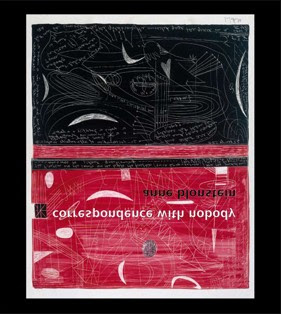 correspondence with nobody is a project in notarikon with the twenty-one sonnets of Shakespeare translated into German by Paul Celan.
“Blonstein’s text is thus produced by a double process like the one that transcribes DNA into RNA and translates RNA into protein – the stuff of life. This double process can be seen as analogous to the Kabbalistic transformation of thought into word, and the Christian doctrine of Word become Flesh. correspondence with nobody begins with the expression «words and silences». If we track this back to Celan, we find that the first word of his Einundzwanzig Sonette is «Was», German for «What». . . . Interpreted not word-for-word, but word-for-letter, W-A-S gives «words and silences». This, then, is the end product of Blonstein’s formula; it is also an apt beginning for her latest sequence.” Diana Collecott
There will be a book table at the vernissage (CHF 38). As of 9 January 2009 correspondence with nobody can be purchased via www.ellectriquepress.com.
(*Cover image Grace (1952) by Sonja Sekula, courtesy of kaba roessler / margrit schmid)
ellectrique press is proud to invite you to a vernissage with poetry reading and apéro. The poet anne blonstein will read from
correspondence with nobody
Date Thursday, 8 January 2009
Time starting 18:30, reading begins at 19:00
Place Quartierzentrum Bachletten, Bachlettenstrasse 12, 4054 Basel
 correspondence with nobody is a project in notarikon with the twenty-one sonnets of Shakespeare translated into German by Paul Celan.
“Blonstein’s text is thus produced by a double process like the one that transcribes DNA into RNA and translates RNA into protein – the stuff of life. This double process can be seen as analogous to the Kabbalistic transformation of thought into word, and the Christian doctrine of Word become Flesh. correspondence with nobody begins with the expression «words and silences». If we track this back to Celan, we find that the first word of his Einundzwanzig Sonette is «Was», German for «What». . . . Interpreted not word-for-word, but word-for-letter, W-A-S gives «words and silences». This, then, is the end product of Blonstein’s formula; it is also an apt beginning for her latest sequence.” Diana Collecott
There will be a book table at the vernissage (CHF 38). As of 9 January 2009 correspondence with nobody can be purchased via www.ellectriquepress.com.
(*Cover image Grace (1952) by Sonja Sekula, courtesy of kaba roessler / margrit schmid)
Sunday, December 14, 2008
Seven years ago today
It was a Friday. I was driving back from shopping in Lörrach, the Wiese river to my right. I was listening to a Grateful Dead tape, one I had not listened to in a long time, from my first pair of shows (so either October 9 or 10, 1982). At that time, "Touch of Grey" was new not only to me but to all Deadheads, as the band had debuted the song only shortly before. When the chorus started, with Jerry singing "I will survive," I became so sad about his passing (then only six years previously) that I had to pull over, because I was crying.
On Monday morning, I read in the Basler Zeitung that W. G. Sebald had died in a car accident on that same Friday afternoon. I later found out that the accident was at around 4:30 p.m. or so—that is, about 5:30 in the Basel area. Pretty much the same time when I pulled over to cry.
To me, this is another example of the kind of "touching but meaningless" coincidence that Sebald referred to in Austerlitz. Others may want to interpret it more mystically.
On Monday morning, I read in the Basler Zeitung that W. G. Sebald had died in a car accident on that same Friday afternoon. I later found out that the accident was at around 4:30 p.m. or so—that is, about 5:30 in the Basel area. Pretty much the same time when I pulled over to cry.
To me, this is another example of the kind of "touching but meaningless" coincidence that Sebald referred to in Austerlitz. Others may want to interpret it more mystically.
Tuesday, December 09, 2008
National Disaster
From TPM:
Obama's poll numbers are up to 79/18 approve/disapprove, prompting CNN's Bill Schneider to quip: "That's the sort of rating you see when the public rallies around a leader after a national disaster. To many Americans, the Bush Administration was a national disaster."
Obama's poll numbers are up to 79/18 approve/disapprove, prompting CNN's Bill Schneider to quip: "That's the sort of rating you see when the public rallies around a leader after a national disaster. To many Americans, the Bush Administration was a national disaster."
Cosell on Lennon
I saw this 28 years ago yesterday. Shocked, I turned on KFOG. Beatles song. Could be a coincidence. Tried another station. Beatles song. A third. Another.
Back to KFOG, waited. More Beatles, then the announcement. But it was only when it became clear that a madman had done it that I flipped out and, in a fit of anger, kicked a metal filing cabinet by the front door. I was jumping up and down, laughing and crying, and holding my toe (yes, I was jumping on one foot)—and my Dad walked in the front door.
"What's going on?" he asked.
"John Lennon was murdered," I sputtered.
"But what does that have to do with your foot?" he asked.
Back to KFOG, waited. More Beatles, then the announcement. But it was only when it became clear that a madman had done it that I flipped out and, in a fit of anger, kicked a metal filing cabinet by the front door. I was jumping up and down, laughing and crying, and holding my toe (yes, I was jumping on one foot)—and my Dad walked in the front door.
"What's going on?" he asked.
"John Lennon was murdered," I sputtered.
"But what does that have to do with your foot?" he asked.
Saturday, December 06, 2008
Dylan in Basel
What more do I need to say? I am very excited that Bob Dylan will be playing in Basel on April 14! I'll be there!
Wednesday, November 26, 2008
Another Random Walk
So Luisa was drawing a picture of a Pilzhaus (a mushroom house), whatever that is, and she took an orange pencil and scribbled all over it, and said, "Feuer!" "Fire!" made me think of REM's "The One I Love," whose chorus I misunderstood as "I am!" when the song was first out, back in, what was it, 1987? I went to see the "Green" tour with my friend Linda Christie from KZSU that fall in Oakland, and boy did they blow the house down. Their jangly, somewhat light sound in the studio was complemented by their incredible power on stage, especially Peter Buck's electric guitar. But my favorite tune was and is "You Are the Everything."
Back then I did not know that Michael Stipe is gay. In fact, I only found that out earlier this year. And just this week, Facebook got me back in touch with Linda. Now if I could only find my KZSU buddy Clint.
Back then I did not know that Michael Stipe is gay. In fact, I only found that out earlier this year. And just this week, Facebook got me back in touch with Linda. Now if I could only find my KZSU buddy Clint.
Monday, November 24, 2008
Don Brown on Seidel
Readers of Frederick Seidel might enjoy Don Brown's post about Ooga-Booga. I've only read the occasional Seidel poem here and there, but Don's comments whet my appetite!
Saturday, November 22, 2008
Brand New Dodge
Whenever it's November 22, and I happen to notice that it is, I think of Greg Brown's "Brand New '64 Dodge":
Money comes out of Dad's billfold.
Hankies come out of Mom's purse.
The engine hardly makes a sound
even when you put it in reverse.
It's got a push-button transmission,
hardtop convertible, 4-door.
It's November of '63
and the brand new Dodge is a '64.
And we're rolling slow down Main Street.
The asphalt and gravel crunch.
Church is finally over
and we're going to have our Sunday lunch.
And then I will play football
with my buddies down in park.
Later I'll dream about my girlfriend
as I lie alone in the dark.
She's got short red hair and blue eyes
and her swimsuit's also blue
and her little brother is retarded,
but Jesus loves him, too.
And Jesus loves our president,
even though he is a Catholic.
There's a lot for a boy to think about
as he walks along the railroad tracks.
And my sister won't get carsick
'cause we're going only half a mile
and the car still has that new car smell
and dad looks like he might smile
and the world is big and full of Autumn
and I'm hungry as can be
and we're in our brand new '64 Dodge
in November of '63
(If you are into Bob Dylan or Neil Young, and you don't know Greg Brown, then do yourself a favor and check him out! This one's from his wonderful CD "The Poet Game," but almost all of his CDs are wonderful; you can hardly go wrong.)
Money comes out of Dad's billfold.
Hankies come out of Mom's purse.
The engine hardly makes a sound
even when you put it in reverse.
It's got a push-button transmission,
hardtop convertible, 4-door.
It's November of '63
and the brand new Dodge is a '64.
And we're rolling slow down Main Street.
The asphalt and gravel crunch.
Church is finally over
and we're going to have our Sunday lunch.
And then I will play football
with my buddies down in park.
Later I'll dream about my girlfriend
as I lie alone in the dark.
She's got short red hair and blue eyes
and her swimsuit's also blue
and her little brother is retarded,
but Jesus loves him, too.
And Jesus loves our president,
even though he is a Catholic.
There's a lot for a boy to think about
as he walks along the railroad tracks.
And my sister won't get carsick
'cause we're going only half a mile
and the car still has that new car smell
and dad looks like he might smile
and the world is big and full of Autumn
and I'm hungry as can be
and we're in our brand new '64 Dodge
in November of '63
(If you are into Bob Dylan or Neil Young, and you don't know Greg Brown, then do yourself a favor and check him out! This one's from his wonderful CD "The Poet Game," but almost all of his CDs are wonderful; you can hardly go wrong.)
Friday, November 21, 2008
A Random Walk
I just picked up Style: The Basics of Clarity and Grace, by Joseph M. Williams, which was recommended on Language Log a while back. After reading the first chapter, I wondered about the author and looked through the book for a bio. There was not one, so I checked the acknowledgments, which were signed "South Haven, Michigan." That's where my Dad grew up, so I was amused by that, and I thought I would see if Williams has an email address online anywhere. Google led me to the Wikipedia page linked above, and I found out he had died in February. He was born in 1933, the same year as my Dad, so I briefly wondered if my Dad might have known him, but Williams was born in Cleveland, and only died in South Haven, so he may have only moved to South Haven as an adult. My Dad has the good fortune of having been born in South Haven and of probably not dying in Cleveland, assuming he doesn't make the mistake of moving back to Ohio after having finally escaped Toledo in 1999, nineteen years after I managed to get away from there.
Monday, November 17, 2008
Sunday, November 16, 2008
Lost submissions
Am I the only poet submitting work to magazines whose submissions get lost on a semi-regular basis? So I send in an inquiry about a submission and get told (as I just was this morning) that "We have no record of your April submission."
I have not kept statistics (who would want to?), but it seems to happen to me several times a year that an inquiry leads to a result like that. I wonder sometimes if it's a matter of rejections that don't make it from North America to Switzerland for some reason (am I not putting enough return postage on the envelopes?), but this last one was an email submission!
I have not kept statistics (who would want to?), but it seems to happen to me several times a year that an inquiry leads to a result like that. I wonder sometimes if it's a matter of rejections that don't make it from North America to Switzerland for some reason (am I not putting enough return postage on the envelopes?), but this last one was an email submission!
Monday, November 10, 2008
Feltrinelli's Ashtray II
Yet another of my translations of poems by Dieter M. Gräf is up at lyrikline. This one is called "Feltrinelli's Ashtray II".
Someday I'll make some time to update my links on the right of this page!
Someday I'll make some time to update my links on the right of this page!
Sunday, November 09, 2008
More Obama photos
Here's a great set of photos of Obama during the campaign, from the Boston Globe website.
November 9
As George Szirtes reminds us in a post today, November 9 is the anniversary of Kristallnacht.
A very ambiguous day in German history:
In 1918, there was Revolution. (With Kaiser Wilhelm abdicating.)
In 1923, the Beer Hall Putsch (the date chosen because of 1918).
In 1938, Kristallnacht.
In 1989, the opening of the Berlin Wall.
A day to ponder many things ...
A very ambiguous day in German history:
In 1918, there was Revolution. (With Kaiser Wilhelm abdicating.)
In 1923, the Beer Hall Putsch (the date chosen because of 1918).
In 1938, Kristallnacht.
In 1989, the opening of the Berlin Wall.
A day to ponder many things ...
Saturday, November 08, 2008
Not enough marriages in CA now
I would have been amused by the irony of this article in the Herald Tribune this morning (from the Times), if I weren't so upset about the passage of Prop. 8 in California: "Demise of Same-Sex Weddings Disheartens Business."
Friday, November 07, 2008
Obama's Slideshow
Anyone excited about Obama's election should check out the slideshow that has been posted on the Obama Flickr page!
Thursday, November 06, 2008
Le Roi des Cons
I wanted to find Georges Brassens doing this himself, but I couldn't find one on Youtube of an original performance by him. But this is close enough for this week (the Tonton Georges Trio): Obama proved that you can "dethrone the king of fools"!
Election Poetry
The Times published five poems for the election, on the opinion page. The McClatchy poem was in the International Herald Tribune. I hope they continue to publish poems!
I've only skimmed the poems, but their different approaches made me wonder about how they might be received by those who do not otherwise read poetry. Since I do read poetry regularly, the poems are all in styles that are relatively familiar to me, but I can imagine that August Kleinzahler's poem will leave a lot of people who do not read contemporary poetry shaking their heads!
I've only skimmed the poems, but their different approaches made me wonder about how they might be received by those who do not otherwise read poetry. Since I do read poetry regularly, the poems are all in styles that are relatively familiar to me, but I can imagine that August Kleinzahler's poem will leave a lot of people who do not read contemporary poetry shaking their heads!
Wednesday, November 05, 2008
Inside Straight
On Tuesday morning, William Kristol wrote in the Times about McCain's chances: "It’s an inside straight. But I’ve seen gamblers draw them."
The metaphor was not quite right, though. Drawing an inside straight means you've got AKJ10 and you cut the Q, say. But McCain was only holding the Ace and the Ten, and he would have to draw the Jack, the Queen, and the King.
I can't help quoting the Dead here:
Everybody's bragging and drinking that wine
I can tell the Queen of Diamonds by the way she shines
Come to daddy on an inside straight
Well I got no chance of losing this time
And that song is called ... "Loser."
The metaphor was not quite right, though. Drawing an inside straight means you've got AKJ10 and you cut the Q, say. But McCain was only holding the Ace and the Ten, and he would have to draw the Jack, the Queen, and the King.
I can't help quoting the Dead here:
Everybody's bragging and drinking that wine
I can tell the Queen of Diamonds by the way she shines
Come to daddy on an inside straight
Well I got no chance of losing this time
And that song is called ... "Loser."
Tuesday, November 04, 2008
November 4, 2008
NOVEMBER 4, 2008
A man is waking up in some hotel
this Tuesday morning, well before the time
he set his clock for. Pulling back the curtain,
he looks across the city, wondering
if this will be the day he's waited for.
There are so many men like him, who wake
in some hotel on yet another morning.
They wonder if today will be the day
that they've been working toward for months or years.
The sky begins to lighten with dawn's question.
If there's an answer, it won't come 'til dusk.
A man is waking up in some hotel
this Tuesday morning, well before the time
he set his clock for. Pulling back the curtain,
he looks across the city, wondering
if this will be the day he's waited for.
There are so many men like him, who wake
in some hotel on yet another morning.
They wonder if today will be the day
that they've been working toward for months or years.
The sky begins to lighten with dawn's question.
If there's an answer, it won't come 'til dusk.
Friday, October 31, 2008
Count Me In as a Socialist
Justin Evans's post "Kall Me Karl Marx" vigorously addresses the idea that Barack Obama is a "Socialist."
The Aughts
I've often wondered what to call this decade, so I was struck by Sasha Frere-Jones's use of "the aughts" to refer to it in his article on Timbaland in the Oct. 6, 2008, issue of The New Yorker.
Interestingly, he seems to waver on the issue; first, he writes this:
A duo called the Neptunes, childhood friends of Mosley’s from Virginia Beach, gave Timbaland a run for his money at the beginning of the aughts but have been harder to find in the past few years ...
Later, he writes this:
There is a long list of fervid, breathtaking productions from the nineties and the early two thousands ...
So just when Frere-Jones is going to refer to both the nineties and the aughts, he chickens out, as if he did not really like the name after all!
Interestingly, he seems to waver on the issue; first, he writes this:
A duo called the Neptunes, childhood friends of Mosley’s from Virginia Beach, gave Timbaland a run for his money at the beginning of the aughts but have been harder to find in the past few years ...
Later, he writes this:
There is a long list of fervid, breathtaking productions from the nineties and the early two thousands ...
So just when Frere-Jones is going to refer to both the nineties and the aughts, he chickens out, as if he did not really like the name after all!
Thursday, October 30, 2008
Feltrinelli Gives an Ashtray as a Wedding Present
Here's Feltrinelli Gives an Ashtray as a Wedding Present, one more of my translations of Dieter M. Gräf, just up on lyrikline. Here's some information about Feltrinelli.
Election Interview
Raphael Albisser, a student of mine, interviewed me for his radio show. The topic: the American elections. He got the idea for interviewing me because of my Obama baseball cap!
The interview is in German and will be broadcast on Radio 3fach this evening (October 30) from 9 to 11 p.m. More info (all in German) is available here.
You can do a live-stream of the broadcast here. It will be repeated on Saturday, November 1, from 11 a.m. to 1 p.m.
The interview is in German and will be broadcast on Radio 3fach this evening (October 30) from 9 to 11 p.m. More info (all in German) is available here.
You can do a live-stream of the broadcast here. It will be repeated on Saturday, November 1, from 11 a.m. to 1 p.m.
Sunday, October 26, 2008
Obama's Mental Dexterity
Barack Obama is noted for his powerful intellect, but I don't think he gets nearly enough credit for the mental dexterity it takes to be simultaneously an Islamic theocrat, atheistic communist and national socialist while posing as a center left candidate. Those must be the compartmentalization skills they taught him at that Manchurian madrasah in Indonesia. (David Kurtz)
Leonard Cohen, Zurich, October 25, 2008
I got a ticket for Leonard Cohen at the last minute because someone couldn't go with my friends Peter and Sophie. I had heard from many sources that his concerts this year have been extraordinary, and all the sources were right.
I have long liked Cohen's songs without particularly liking the albums of his that I have heard (except for the first one, and I admit to not having heard them all). The production of "The Tower of Song," for example, made me not like the song very much, even though it was clear what a great song it is.
But the arrangements with his current band are fabulous, always serving each song so wonderfully, and without any leanings toward the "poppiness" that I found annoying on some of his recordings.
And (in Zurich last night at least) the lyrics were mixed just right, so you could hear all the words really well. Cohen articulates quite clearly when he sings, and the mix and his clear articulation made the poetry of his work come through all the more powerfully.
Further, the concert was enough of a "show" to be satisfying, without its getting too "showy." The "show" side of the concert never got in the way of the music. In this, it was reminiscent of the early eighties concerts by Talking Heads that were turned into the movie "Stop Making Sense": the show served the music.
And finally, there were the songs I knew well already, especially "Suzanne," which has long been one of my favorite songs to play on the guitar and sing (despite my weak voice).
What can I say? I've seen a lot of great concerts, and this was one of them.
Other great memories: those Talking Heads concerts in the early eighties, Grateful Dead at the Greek Theater in Berkeley in July 1984 (and the two shows at Ventura County Fairgrounds the following week), the World Saxophone Quartet and the Dave Holland Quintet at the Great American Music Hall in the mid-eighties, various shows by the Paul Motian Trio with Bill Frisell and Joe Lovano (especially in Berlin in 1992), the Tom Harrell Quintet in Basel in 1996, Dylan in Freiburg in 2003, Lovano with Hank Jones in Basel a couple years ago, and several Dave Holland Quintet shows in Basel over the years. And then there was Chris Smither and Greg Brown at the Great Waters Folk Festival!
I'd go see Holland in Zurich next week, in fact, if I weren't exhausted from the events I attended this week: FC Basel against FC Barcelona on Wednesay, the Swiss Indoors on Thursday (with Nalbandian, Blake, Del Potro, and Federer winning), and Cohen last night. Time to focus on work! :-)
I have long liked Cohen's songs without particularly liking the albums of his that I have heard (except for the first one, and I admit to not having heard them all). The production of "The Tower of Song," for example, made me not like the song very much, even though it was clear what a great song it is.
But the arrangements with his current band are fabulous, always serving each song so wonderfully, and without any leanings toward the "poppiness" that I found annoying on some of his recordings.
And (in Zurich last night at least) the lyrics were mixed just right, so you could hear all the words really well. Cohen articulates quite clearly when he sings, and the mix and his clear articulation made the poetry of his work come through all the more powerfully.
Further, the concert was enough of a "show" to be satisfying, without its getting too "showy." The "show" side of the concert never got in the way of the music. In this, it was reminiscent of the early eighties concerts by Talking Heads that were turned into the movie "Stop Making Sense": the show served the music.
And finally, there were the songs I knew well already, especially "Suzanne," which has long been one of my favorite songs to play on the guitar and sing (despite my weak voice).
What can I say? I've seen a lot of great concerts, and this was one of them.
Other great memories: those Talking Heads concerts in the early eighties, Grateful Dead at the Greek Theater in Berkeley in July 1984 (and the two shows at Ventura County Fairgrounds the following week), the World Saxophone Quartet and the Dave Holland Quintet at the Great American Music Hall in the mid-eighties, various shows by the Paul Motian Trio with Bill Frisell and Joe Lovano (especially in Berlin in 1992), the Tom Harrell Quintet in Basel in 1996, Dylan in Freiburg in 2003, Lovano with Hank Jones in Basel a couple years ago, and several Dave Holland Quintet shows in Basel over the years. And then there was Chris Smither and Greg Brown at the Great Waters Folk Festival!
I'd go see Holland in Zurich next week, in fact, if I weren't exhausted from the events I attended this week: FC Basel against FC Barcelona on Wednesay, the Swiss Indoors on Thursday (with Nalbandian, Blake, Del Potro, and Federer winning), and Cohen last night. Time to focus on work! :-)
Sunday, October 19, 2008
James Fallows on "Obama's Steadiness"
James Fallows of the Atlantic (whose blog I recommend in general) has some insights into Obama's "steadiness," with this final, tangential remark:
And, as a subject for a later day, I remember how often, how vehemently, and with what certainty Obama's detractors during the Democratic primaries said that he could not, possibly, in any way, in any real world, withstand the onslaught of GOP negative campaigning once it geared up against him.
A very interesting post overall!
And, as a subject for a later day, I remember how often, how vehemently, and with what certainty Obama's detractors during the Democratic primaries said that he could not, possibly, in any way, in any real world, withstand the onslaught of GOP negative campaigning once it geared up against him.
A very interesting post overall!
lyrikline update for October
Among the many new poems and translations on lyrikline in the past few months have been the following English translations of poets:
Ali Abdollahi (Iran), Dieter M. Gräf (Germany) and Nâhid Kabiri (Iran)
And I just found this list of new poets who write in English:
Erín Moure
Karen Solie
Paul Vermeersch
Ken Babstock
Suzanne Buffam
Tim Lilburn
Ali Abdollahi (Iran), Dieter M. Gräf (Germany) and Nâhid Kabiri (Iran)
And I just found this list of new poets who write in English:
Erín Moure
Karen Solie
Paul Vermeersch
Ken Babstock
Suzanne Buffam
Tim Lilburn
Saturday, October 18, 2008
Dropped Gs
Next time you notice Sarah Palin "drop a G"—read this post from Language Log. And start listenin' to the way you talk, cuz you're droppin' Gs, too—and you're doing it just as tactically as Palin is!
(Wouldn't it be great if linguistics were taught in high schools?)
*
Coda: More on the etymology of -ing in a more recent Language Log post here.
(Wouldn't it be great if linguistics were taught in high schools?)
*
Coda: More on the etymology of -ing in a more recent Language Log post here.
Tuesday, October 14, 2008
Talk To Your Parents About John McCain
The satires of McCain and Palin are just too good to be true! (Of course, they would not amuse me as much if Gollum, I mean McCain, were ahead in the polls.)
Somebody should do "This is your brain. This is your brain on John McCain." :-)
(Thanks to PWADJ for posting this.)
Somebody should do "This is your brain. This is your brain on John McCain." :-)
(Thanks to PWADJ for posting this.)
Monday, October 13, 2008
Krugman
Well, at least one writer whose work I have read a lot of won a Nobel Prize this year: Paul Krugman!
McCain and Gollum
This is only one of the passages from Gail Collins's column that made me laugh out loud this morning:
Remember how we used to joke about John McCain looking like an old guy yelling at kids to get off his lawn? It’s only in retrospect that we can see that the keep-off-the-grass period was the McCain campaign’s golden era. Now, he’s beginning to act like one of those movie characters who steals the wrong ring and turns into a troll.
Remember how we used to joke about John McCain looking like an old guy yelling at kids to get off his lawn? It’s only in retrospect that we can see that the keep-off-the-grass period was the McCain campaign’s golden era. Now, he’s beginning to act like one of those movie characters who steals the wrong ring and turns into a troll.
During that last debate, while he was wandering around the stage, you almost expected to hear him start muttering: “We wants it. We needs it. Must have the precious.”

Credit where credit is due: apparently, Jon Stewart first made the comparison on the Daily Show.
Sunday, October 12, 2008
Poetry Calendar 2009
Alhambra Publishing in Belgium has just announced the publication of their wonderful poetry calendars for 2009. This year, they are available not only in English, French, and German (as they have been for several years), but also in Italian and Spanish! I've finally gotten around to ordering the French and German calendars (I'd order the Italian and Spanish ones, too, but I can't read those languages!); like the English calendars, I'm sure they will be a great way to come across names one has not encountered before.
The 2009 calendar in English includes my poem "Final Exam," so get yourself a copy now!
The 2009 calendar in English includes my poem "Final Exam," so get yourself a copy now!
The Sound of the Shots on Lake Como
There's another of my translations of poems by Dieter M. Gräf up at lyrikline: "The Sound of the Shots on Lake Como." Click on the English title in the right-hand frame to see the translation.
My Daughter Considers Her Body
Recently, I said I wanted to get myself a collection of poems by Floyd Skloot. Then I ordered three of his books (two collections of poems and a memoir). This is from his Selected Poems: 1970-2005 (Tupelo Press, 2007):
MY DAUGHTER CONSIDERS HER BODY
She examines her hand, fingers spread wide.
Seated, she bends over her crossed legs
to search for specks or scars and cannot hide
her awe when any mark is found. She begs
me to look, twisting before her mirror,
at some tiny bruise on her hucklebone.
Barely awake, she studies creases her
arm developed as she slept. She has grown
entranced with blemish, begun to know
her body's facility for being
flawed. She does not trust its will to grow
whole again, but may learn that too, freeing
herself to accept the body's deep thirst
for risk. Learning to touch her wounds comes first.
Two things struck me about this poem. First, it reminded me of my daughter Luisa. And when I showed it to my wife she just now, she said, "That's Luisa."
Secondly, only after I read and enjoyed the poem did I notice that it is a sonnet. According to some understandings of how rhyme and meter should work, that makes this an excellent sonnet: the claim is that one should not notice rhyme and meter while reading a rhymed, metrical poem; one should not notice the artifice. So my not noticing that this is a sonnet until I looked at it a second time would be great praise.
Now I do think this is a wonderful poem, and in particular a wonderful sonnet. But why is the idea so prevalent that one should not notice a poem's artifice?
*
I wondered about posting Skloot's poem without asking him for permission, but the poem was already online (here, among other places), so I figured it would not be a problem to quote it in full again.
MY DAUGHTER CONSIDERS HER BODY
She examines her hand, fingers spread wide.
Seated, she bends over her crossed legs
to search for specks or scars and cannot hide
her awe when any mark is found. She begs
me to look, twisting before her mirror,
at some tiny bruise on her hucklebone.
Barely awake, she studies creases her
arm developed as she slept. She has grown
entranced with blemish, begun to know
her body's facility for being
flawed. She does not trust its will to grow
whole again, but may learn that too, freeing
herself to accept the body's deep thirst
for risk. Learning to touch her wounds comes first.
Two things struck me about this poem. First, it reminded me of my daughter Luisa. And when I showed it to my wife she just now, she said, "That's Luisa."
Secondly, only after I read and enjoyed the poem did I notice that it is a sonnet. According to some understandings of how rhyme and meter should work, that makes this an excellent sonnet: the claim is that one should not notice rhyme and meter while reading a rhymed, metrical poem; one should not notice the artifice. So my not noticing that this is a sonnet until I looked at it a second time would be great praise.
Now I do think this is a wonderful poem, and in particular a wonderful sonnet. But why is the idea so prevalent that one should not notice a poem's artifice?
*
I wondered about posting Skloot's poem without asking him for permission, but the poem was already online (here, among other places), so I figured it would not be a problem to quote it in full again.
Thursday, October 09, 2008
Nobel Prize comments
B. J. Epstein was one of the first to post something about Le Clézio, and I wrote the following comments on her post:
Comment 1:
Comment 1:
Americans: I certainly don't think Americans are too insular to deserve a world-literature prize. Many poets think John Ashbery would deserve the Nobel, and given his influence on poetry in other languages (French and German being the two that I know about), that would be justifiable. Then we always hear of Roth and DeLillo and Pynchon as candidates, and all of them would be worthy. If Engdahl explicitly said that Pynchon is too insular, then he gets an F in Pynchon class; I may not be a Pynchon fanatic, but his work is global in its reach and its ambition.
As for Le Clézio, that is a nice surprise (even though he was listed at 14-1 on the odds list that Jonathan Mayhew posted on his blog)! I've never read his work but he is a major figure in France.
Comment 2:
Well, the Academy seems to agree with Engdahl: since the last American won the Prize (Morrison in 1993), only three prizes have gone to non-Europeans (Oe, Xingjian, and Coetzee), unless you say that Pamuk is not European.
Morrison, though, was the last of an eight-year run in which only Cela was European (unless you count Brodsky as European).
Engdahl could also say that poets are not doing good work, at least as far as the Academy is concerned: the last writer who won it for poetry was Szymborska in 1996. BUT before that there was a small semi-cluster of poets: Heaney, Walcott, Paz, and, if we go back a bit further, Seifert in 1983 and Milosz and Elytis a few years earlier.
I just spent more time thinking about that than I should have! :-)
Wednesday, October 08, 2008
Poems at Nth Position
I've got six poems in the October issue of Nth Position. I like the range of work represented: the oldest one is from the early 1990s, and the most recent from last year. My thanks to Todd Swift for showcasing so much of my work!
White Privilege
Here's my favorite line from a post by Tim Wise on "White Privilege":
"White privilege is being able to attend churches over the years whose pastors say that people who voted for John Kerry or merely criticize George W. Bush are going to hell, and that the U.S. is an explicitly Christian nation and the job of Christians is to bring Christian theological principles into government, and who bring in speakers who say the conflict in the Middle East is God’s punishment on Jews for rejecting Jesus, and everyone can still think you’re just a good church-going Christian, but if you’re black and friends with a black pastor who has noted (as have Colin Powell and the U.S. Department of Defense) that terrorist attacks are often the result of U.S. foreign policy and who talks about the history of racism and its effect on black people, you’re an extremist who probably hates America."
(Hat tip to Poet with a Day Job!)
"White privilege is being able to attend churches over the years whose pastors say that people who voted for John Kerry or merely criticize George W. Bush are going to hell, and that the U.S. is an explicitly Christian nation and the job of Christians is to bring Christian theological principles into government, and who bring in speakers who say the conflict in the Middle East is God’s punishment on Jews for rejecting Jesus, and everyone can still think you’re just a good church-going Christian, but if you’re black and friends with a black pastor who has noted (as have Colin Powell and the U.S. Department of Defense) that terrorist attacks are often the result of U.S. foreign policy and who talks about the history of racism and its effect on black people, you’re an extremist who probably hates America."
(Hat tip to Poet with a Day Job!)
Tuesday, October 07, 2008
Poem sort of in Sports Illustrated
A poem has appeared in Sports Illustrated, at least in the online version. Well, at least as a link in Jon Wertheim's online column! Page down a bit! (Thanks to my Mom for pointing this out.)
Everything That Happens Will Happen Today
John Gallaher tipped me off to the new David Byrne & Brian Eno CD Everything That Happens Will Happen Today a while back, and I just thought I would openly thank him for the great tip! Get yourself a copy here. A must for all fans of Talking Heads, Eno, and My Life in the Bush of Ghosts!
Sunday, October 05, 2008
Susana Gardner and Nicholas Manning: A Poetry Reading in Basel, November 19, 2008
[Click on the image to see the poster in a larger format.]

Saturday, October 04, 2008
Official American Sadism, by Anthony Lewis
This is from Anthony Lewis's "Official American Sadism," an essay in the September 25 issue of the New York Review of Books. The book he is referring to here is Jonathan Mahler's The Challenge: Hamdan v. Rumsfeld and the Fight over Presidential Power. Hamdan is the plaintiff in the famous Hamdan v. Rumsfeld case in which the Supreme Court ruled that Bush's military commissions were unconstitutional.
One of the remarkable facts exposed in this book is that Hamdan was first questioned in Guantánamo by an FBI agent who carefully built up a relationship with him and, in time, got detailed statements from him about al-Qaeda and some of its leaders. The agent had ample evidence for Hamdan to be prosecuted in a federal court; he thought he could persuade Hamdan to testify against more important al-Qaeda figures in return for a reduced sentence. But to his dismay Hamdan was designated for trial before a military commission; the FBI was immediately cut off from him and lost a potentially important witness.
This confirms something I started being worried about in September 2001: the militarization of the "war on terror" meant that criminal trials would not be one of the principal means used to combat terrorism. And this proves it: the military commissions clearly hinder the battle against bin Laden and company!
Lewis also quotes Major General Anthony Taguba:
After years of disclosures by government investigations, media accounts, and reports from human rights organizations, there is no longer any doubt as to whether the current administration has committed war crimes. The only question that remains to be answered is whether those who ordered the use of torture will be held to account.
Taguba, "who was appointed to investigate the torture at Abu Ghraib and found that there had been 'wanton criminal abuse' of detainees, was forced into retirement."
One of the remarkable facts exposed in this book is that Hamdan was first questioned in Guantánamo by an FBI agent who carefully built up a relationship with him and, in time, got detailed statements from him about al-Qaeda and some of its leaders. The agent had ample evidence for Hamdan to be prosecuted in a federal court; he thought he could persuade Hamdan to testify against more important al-Qaeda figures in return for a reduced sentence. But to his dismay Hamdan was designated for trial before a military commission; the FBI was immediately cut off from him and lost a potentially important witness.
This confirms something I started being worried about in September 2001: the militarization of the "war on terror" meant that criminal trials would not be one of the principal means used to combat terrorism. And this proves it: the military commissions clearly hinder the battle against bin Laden and company!
Lewis also quotes Major General Anthony Taguba:
After years of disclosures by government investigations, media accounts, and reports from human rights organizations, there is no longer any doubt as to whether the current administration has committed war crimes. The only question that remains to be answered is whether those who ordered the use of torture will be held to account.
Taguba, "who was appointed to investigate the torture at Abu Ghraib and found that there had been 'wanton criminal abuse' of detainees, was forced into retirement."
Tuesday, September 30, 2008
Gopnik on Magic
Magicians are, in their relations with one another, both extremely generous and extremely jealous. Just as chefs know that recipes are of little value in themselves, magicians know that learning the method is only the beginning of doing the trick. What they call “the real work” isn’t the method, which anyone can learn from a book (and, anyway, all decent magicians know roughly how most tricks are done), but the whole of the handling and timing and theatrics of the effect, which are passed along from magician to magician and from generation to generation. The real work is the complete activity, the accumulated practice, the total summing up of tradition and ideas. The real work is what makes a magic effect magical. (Adam Gopnik, "The Real Work: Modern Magic and the Meaning of Life," The New Yorker, March 17, 2008)
Of course, I really should have commented on this back in March or April, but this article is not as timely as the Hilary Clinton article in the same issue of The New Yorker!
Anyway, this was an excellent article by Adam Gopnik on magicians and how they understand what they do, and it was full of passages like this that seem to touch on the magic of other arts as well, including poetry. The "real work" is what separates the great magicians from the decent ones, and one could argue that it is a similar "real work" of "handling and timing and theatrics" that makes a great poet.
And that "real work" involves not just the timing of the individual performance (read, the individual poem), but a sense of "the complete activity, the accumulated practice, the total summing up of tradition and ideas"—that is, an understanding of what magic (or poetry) has already done, and what one's own contribution to that activity, that practice, that tradition, and its ideas is.
*
In the process of looking up that article, I discovered that one of my all-time favorite New Yorker profiles is also online: this one about the magician and actor Ricky Jay, from 1993. Now if only they had the David Mamet profile online, too (and there's a connection here, since Jay was in at least two of Mamet's movies, "The Spanish Prisoner" and "House of Games").
"Man is the animal who dreams. And when he dreams, he dreams of money." (Ricky Jay in "The Spanish Prisoner")
Of course, I really should have commented on this back in March or April, but this article is not as timely as the Hilary Clinton article in the same issue of The New Yorker!
Anyway, this was an excellent article by Adam Gopnik on magicians and how they understand what they do, and it was full of passages like this that seem to touch on the magic of other arts as well, including poetry. The "real work" is what separates the great magicians from the decent ones, and one could argue that it is a similar "real work" of "handling and timing and theatrics" that makes a great poet.
And that "real work" involves not just the timing of the individual performance (read, the individual poem), but a sense of "the complete activity, the accumulated practice, the total summing up of tradition and ideas"—that is, an understanding of what magic (or poetry) has already done, and what one's own contribution to that activity, that practice, that tradition, and its ideas is.
*
In the process of looking up that article, I discovered that one of my all-time favorite New Yorker profiles is also online: this one about the magician and actor Ricky Jay, from 1993. Now if only they had the David Mamet profile online, too (and there's a connection here, since Jay was in at least two of Mamet's movies, "The Spanish Prisoner" and "House of Games").
"Man is the animal who dreams. And when he dreams, he dreams of money." (Ricky Jay in "The Spanish Prisoner")
Monday, September 29, 2008
Slavery as Basis for an Ideology of Deregulation
The following is from "Jefferson's Concubine," Marie Morgan and Edmund S. Morgan's review of Annette Gordon-Reed's book The Hemingses of Monticello: An American Family (the review is in the latest issue of the New York Review of Books, dated October 9, 2008—as usual, the NYRB is published in the future ...):
What is important to the Hemings family's story is the harsh and nearly inescapable nature of the "peculiar institution" in the time of Thomas Jefferson. Racial identification was its sine qua non, and specifically race as legislated by slave masters, whose primary goal was "the maximum protection of property rights—with little or no intervention by the state or other third parties." (The quotations are apparently from Gordon-Reed's book.)
What struck me here is something that I perhaps should have noticed ages ago, but it is something that I have never seen commented on: the historical starting point for an ideology of deregulation and non-intervention by government is slavery. More precisely, it is the attempt by slave-owners to defend their property rights.
I would be an idiot if I had not noticed that "states' rights" derives from the defense of slavery, but this is the first time I have ever noticed the connection between deregulation and the defense of slavery.
So from now on, when I hear someone support "deregulation," I'll think "slaveholder ideology," just as I long have done on hearing "states' rights."
What is important to the Hemings family's story is the harsh and nearly inescapable nature of the "peculiar institution" in the time of Thomas Jefferson. Racial identification was its sine qua non, and specifically race as legislated by slave masters, whose primary goal was "the maximum protection of property rights—with little or no intervention by the state or other third parties." (The quotations are apparently from Gordon-Reed's book.)
What struck me here is something that I perhaps should have noticed ages ago, but it is something that I have never seen commented on: the historical starting point for an ideology of deregulation and non-intervention by government is slavery. More precisely, it is the attempt by slave-owners to defend their property rights.
I would be an idiot if I had not noticed that "states' rights" derives from the defense of slavery, but this is the first time I have ever noticed the connection between deregulation and the defense of slavery.
So from now on, when I hear someone support "deregulation," I'll think "slaveholder ideology," just as I long have done on hearing "states' rights."
Dowd on Kissinger
My favorite line from the International Herald Tribune this morning is from Maureen Dowd on Friday's McCain-Obama debate:
"And who cares what Henry Kissinger thinks? He was wrong 35 years ago, and it’s only gotten worse since then."
"And who cares what Henry Kissinger thinks? He was wrong 35 years ago, and it’s only gotten worse since then."
Harp Guitar, Pat Metheny
I received a note from my Mom about an old post of mine with a video of Michael Hedges playing Bach on a harp guitar. She asked me about the instrument, so I thought I'd post a link to a description of it, along with a video of Pat Metheny playing one:
Saturday, September 27, 2008
Lousy Govt. = Lousy Economy
My favorite line from the Presidential debate last night was from McCain (from the CNN transcript):
"The Iranians have a lousy government, so therefore their economy is lousy."
I'm sure Obama noted the irony (he's far too smart not to), but I suspect he thought it would be a bad tactic to point out that McCain had just described the current state of the United States. (Tactic, not strategy, and Obama knows the difference, I'm sure.)
"The Iranians have a lousy government, so therefore their economy is lousy."
I'm sure Obama noted the irony (he's far too smart not to), but I suspect he thought it would be a bad tactic to point out that McCain had just described the current state of the United States. (Tactic, not strategy, and Obama knows the difference, I'm sure.)
Miles plays the drums
Miles had another open house at the drum school Basel last week. This time he did not play with me (as he did last year); instead, he played a drum duet with his drum teacher Lorenz Hunziker (whom you can't see in the video):
Paul Newman
Back in the seventies, my favorite movie was "The Sting," and another favorite was "Cool Hand Luke." So I guess Paul Newman was one of my favorite actors back then. I had kind of forgotten about him, so I was surprised to be so sad at hearing of his death. Here are two of my favorite scenes from "Cool Hand Luke":
"What we have here is failure to communicate" is a line that crosses my mind many times every year!
"What we have here is failure to communicate" is a line that crosses my mind many times every year!
Friday, September 26, 2008
Not Exactly Woody Guthrie
Here's one I like by Mark Halliday, "Not Exactly Woody Guthrie."
*
I like the two explanations of the simple act of checking "to see whether the field goal was good," the simple one in the first stanza (a social explanation), and the more complex aesthetic explanation in the second, which captures so cleanly one difference between sport and art.
*
I like the two explanations of the simple act of checking "to see whether the field goal was good," the simple one in the first stanza (a social explanation), and the more complex aesthetic explanation in the second, which captures so cleanly one difference between sport and art.
Thursday, September 25, 2008
Shakespeare parodies
There are three fun Shakespeare parodies up at New Verse News:
McCoriolanus, by Bill Costley
William Shakespeare's Obameo and Johniette, by Olga Wayne
Johniette's Soliloquy, by Aaron Gillego
Nice coincidence that both Wayne and Gillego came up with those names!
McCoriolanus, by Bill Costley
William Shakespeare's Obameo and Johniette, by Olga Wayne
Johniette's Soliloquy, by Aaron Gillego
Nice coincidence that both Wayne and Gillego came up with those names!
Tuesday, September 23, 2008
No on 8, you Californians!
Thanks to C. Dale Young for posting this one (and as I said in his comments, I'm 44, I like to write poems, and my sister just married her girlfriend in San Diego last weekend):
Sunday, September 21, 2008
Idroscalo. Ostia
There's another new translation of mine up at lyrikline, of Dieter M. Gräf's poem "Idroscalo. Ostia."
Saturday, September 20, 2008
DMB on HST and other things
My friend Don Brown quoted Hunter S. Thompson here:
"McGovern made some stupid mistakes, but in context they seem frivolous compared to the things Richard Nixon does every day of his life, on purpose, as a matter of policy and a perfect expression of everything he stands for."
(Don and I, we're just linking back and forth to each other!)
"McGovern made some stupid mistakes, but in context they seem frivolous compared to the things Richard Nixon does every day of his life, on purpose, as a matter of policy and a perfect expression of everything he stands for."
(Don and I, we're just linking back and forth to each other!)
Jazz for Obama
I suspect that New York City is full of people who are jazz fans and who plan to vote for Barack Obama. If you are one of them, kill two birds with one stone and get yourself down to the Jazz for Obama concert on October 1. A great lineup, wish I could be there! Mehldau! Lovano! Stanley Jordan! Hank Jones!


Monday, September 15, 2008
Swerve, in Horizon Review
My poem "Swerve" is in the first issue of Salt's new online journal Horizon Review. It's nice to be there with such a fine list of poets (hi, Rob; hi, George; hi, James; hi, everyone).
Understanding the election
Justin Evans posted a funny, somewhat scary list of points that will help anyone understand the American election.
Here's the first, to give you a taste of it:
* If you grow up in Hawaii, raised by your grandparents, you're 'exotic, different.'
* Grow up in Alaska eating mooseburgers, a quintessential American story.
Here's the first, to give you a taste of it:
* If you grow up in Hawaii, raised by your grandparents, you're 'exotic, different.'
* Grow up in Alaska eating mooseburgers, a quintessential American story.
Don Brown on DFW
Don Brown has written a thoughtful piece on (literary) suicide in response to David Foster Wallace's suicide on Friday.
Update: There's also a nice DFW piece on Caleb Crain's blog, with long quotations from an interview Crain did with DFW in 2003.
Update: There's also a nice DFW piece on Caleb Crain's blog, with long quotations from an interview Crain did with DFW in 2003.
Sunday, September 14, 2008
Johnny Cash, by David Bauer
[My friend David Bauer wrote this article for the Basler Zeitung on Friday, September 11. I liked it so much, I asked him to do an English version, which I edited for him and am now posting here. I am not actually such a Johnny Cash fan as he has become, but I have always liked his singing and his songs, and I like the way David marks how a particular singer can become a touchstone for one's own life—for me, Jerry Garcia and Greg Brown most of all.]
What makes Johnny Cash so essential
By David Bauer (from the Basler Zeitung, September 12, 2008)
When Johnny Cash died, I did not care. Five years ago it was, but I did not remember until I looked it up. Johnny Cash was a name to me. A name that one knew, but that meant nothing to me. Love is a burning thing...nanana...ring of fire. And that was it.
Today, Johnny Cash is to my soul what oxygen is to my lungs - even though I discovered him only one year ago, by accident, in awkward circumstances. I watched the movie about his life, Walk The Line, on my laptop. The audio track was crap, so Cash started stuttering every few seconds. That was it: My "Hello, I'm Johnny Cash" moment. Johnny Cash introduced himself to me, but the man I saw was Joaquin Phoenix. I got to know his songs, but Joaquin Phoenix sung them. But still, it triggered something. I craved to learn more about this person and his music.
Pretty late I was. Cash had started his career some fifty years ago, and even the late milestones that made him known in my generation had already occurred a few years back: the movie and his late work, the "American Recordings" produced by Rick Rubin. Singing cover versions of some very well-known songs, Cash made a sweet offer to all those to whom even the word "Country" smelled a little funny. So Cash took the stage at the 1994 Glastonbury Festival amidst Britpop madness and was invited to be part of a Simpsons episode (where he gave his voice to a coyote). Yet it was his cover version of the Nine Inch Nails classic "Hurt" that eventually secured Cash a place in the 21st century. Today, Coldplay regularly cover his "Ring of Fire" at their concerts, and you even get to hear it when you wait on call-centre hotlines.
But what exactly is it that makes Johnny Cash so compelling, so essential? Even today, or maybe even more so today.
First of all, it is the music, of course. Country minus cowboy kitsch. Cash was a genius at making his songs easy with his guitar, while at the same time adding some true severity with his voice. A voice that did not fail to be haunting even when it became fragile in Cash's late years. His version of "Hurt" is simply one of the most touching songs ever sung.
Cash's song are not complex; instead, they come down to a kind of musical trinity: a melody, a voice, a story. This is true of his whole discography, from his earliest songs like "Walk the Line" and "Folsom Prison Blues" to the last songs recorded shortly before his death. True mastery lies in reduction, as only few understand.
Yet it is not only the music that makes Cash unique, but just as much where it came from.
Cash's biography is full of cracks, sparkling highs and dark lows. And there's a love story that easily matches the great dramas of world literature: His relationship with June Carter is a recurrent theme running through Cash's life. Their paths crossed early, in music and in private, and after some twists and turns, the musical duet turned into a love affair for eternity. Shortly before his seventieth birthday, Cash sang: "Love is love and doesn't change in a century or two."
This is another secret: Cash's songs are deeply rooted in life, so they just keep growing and growing.
Today, bands are disposable commodities. The music industry has turned into a rushing merry-go-round where you jump on only to be thrown off the next second. Everyone gets their 15 minutes of fame, but that's it. You rarely find true personalities in music, whose biography and work develop together, musicians that have something to say.
But why Cash? Why not Presley, why not Dylan, why not Cohen? I don't know. Comparing quality does not help. Music is not either good or bad, it's only about one thing: Does it touch you? Cash touches me to the quick, while with Elvis, I feel nothing.
What makes the difference is this je-ne-sais-quoi that you cannot describe, only experience. Like the other day, when I came across Johnny Cash again.
On the very evening I have to let my personal June Carter go, I zap through glimmering TV programmes, lost in thought, and suddenly, I come across Walk the Line. Johnny Cash and June Carter singing "Jackson." No further evidence is needed: You do not look for Johnny Cash; he finds you.
I switch off the telly, pull everything from Johnny Cash out of my record collection and let song after song have its effect on me. It's at moments like these that all the power of Johnny Cash's music unfolds. His music is the good friend that comforts you without pity. The friend who lays his hand on your shoulder and says: You're right; life's a monster that eats you. But if you're tough enough, if you believe in yourself and the good in life, it will spit you out again.
Learning from Johnny Cash is learning about life. If you listen very closely, you might even understand it one day, that strange thing, life.
What makes Johnny Cash so essential
By David Bauer (from the Basler Zeitung, September 12, 2008)
When Johnny Cash died, I did not care. Five years ago it was, but I did not remember until I looked it up. Johnny Cash was a name to me. A name that one knew, but that meant nothing to me. Love is a burning thing...nanana...ring of fire. And that was it.
Today, Johnny Cash is to my soul what oxygen is to my lungs - even though I discovered him only one year ago, by accident, in awkward circumstances. I watched the movie about his life, Walk The Line, on my laptop. The audio track was crap, so Cash started stuttering every few seconds. That was it: My "Hello, I'm Johnny Cash" moment. Johnny Cash introduced himself to me, but the man I saw was Joaquin Phoenix. I got to know his songs, but Joaquin Phoenix sung them. But still, it triggered something. I craved to learn more about this person and his music.
Pretty late I was. Cash had started his career some fifty years ago, and even the late milestones that made him known in my generation had already occurred a few years back: the movie and his late work, the "American Recordings" produced by Rick Rubin. Singing cover versions of some very well-known songs, Cash made a sweet offer to all those to whom even the word "Country" smelled a little funny. So Cash took the stage at the 1994 Glastonbury Festival amidst Britpop madness and was invited to be part of a Simpsons episode (where he gave his voice to a coyote). Yet it was his cover version of the Nine Inch Nails classic "Hurt" that eventually secured Cash a place in the 21st century. Today, Coldplay regularly cover his "Ring of Fire" at their concerts, and you even get to hear it when you wait on call-centre hotlines.
But what exactly is it that makes Johnny Cash so compelling, so essential? Even today, or maybe even more so today.
First of all, it is the music, of course. Country minus cowboy kitsch. Cash was a genius at making his songs easy with his guitar, while at the same time adding some true severity with his voice. A voice that did not fail to be haunting even when it became fragile in Cash's late years. His version of "Hurt" is simply one of the most touching songs ever sung.
Cash's song are not complex; instead, they come down to a kind of musical trinity: a melody, a voice, a story. This is true of his whole discography, from his earliest songs like "Walk the Line" and "Folsom Prison Blues" to the last songs recorded shortly before his death. True mastery lies in reduction, as only few understand.
Yet it is not only the music that makes Cash unique, but just as much where it came from.
Cash's biography is full of cracks, sparkling highs and dark lows. And there's a love story that easily matches the great dramas of world literature: His relationship with June Carter is a recurrent theme running through Cash's life. Their paths crossed early, in music and in private, and after some twists and turns, the musical duet turned into a love affair for eternity. Shortly before his seventieth birthday, Cash sang: "Love is love and doesn't change in a century or two."
This is another secret: Cash's songs are deeply rooted in life, so they just keep growing and growing.
Today, bands are disposable commodities. The music industry has turned into a rushing merry-go-round where you jump on only to be thrown off the next second. Everyone gets their 15 minutes of fame, but that's it. You rarely find true personalities in music, whose biography and work develop together, musicians that have something to say.
But why Cash? Why not Presley, why not Dylan, why not Cohen? I don't know. Comparing quality does not help. Music is not either good or bad, it's only about one thing: Does it touch you? Cash touches me to the quick, while with Elvis, I feel nothing.
What makes the difference is this je-ne-sais-quoi that you cannot describe, only experience. Like the other day, when I came across Johnny Cash again.
On the very evening I have to let my personal June Carter go, I zap through glimmering TV programmes, lost in thought, and suddenly, I come across Walk the Line. Johnny Cash and June Carter singing "Jackson." No further evidence is needed: You do not look for Johnny Cash; he finds you.
I switch off the telly, pull everything from Johnny Cash out of my record collection and let song after song have its effect on me. It's at moments like these that all the power of Johnny Cash's music unfolds. His music is the good friend that comforts you without pity. The friend who lays his hand on your shoulder and says: You're right; life's a monster that eats you. But if you're tough enough, if you believe in yourself and the good in life, it will spit you out again.
Learning from Johnny Cash is learning about life. If you listen very closely, you might even understand it one day, that strange thing, life.
DFW
I have only ever read one piece by David Foster Wallace ("Roger Federer as Religious Experience"), but that was such a beautiful piece of writing about one of my favorite subjects (tennis) that I find myself deeply saddened by the news of his death by hanging on Friday.
My friend Ulrich Blumenbach is in the last stages of writing the German translation of Infinite Jest. How odd it must be to have the author of something you are translating die while you are doing so. (Perhaps like having the author you are writing criticism on die while you are writing the criticism, something that has also never happened to me.)
Perhaps I am struck as much by the deaths of Reginald Shepherd and DFW because they are both of my generation (DFW was 46; Reginald 44; and I am 44).
My friend Ulrich Blumenbach is in the last stages of writing the German translation of Infinite Jest. How odd it must be to have the author of something you are translating die while you are doing so. (Perhaps like having the author you are writing criticism on die while you are writing the criticism, something that has also never happened to me.)
Perhaps I am struck as much by the deaths of Reginald Shepherd and DFW because they are both of my generation (DFW was 46; Reginald 44; and I am 44).
Thursday, September 11, 2008
A Campaign of Lies
"... John McCain is running a campaign almost entirely based on straight up lies."
If you're not sure what to do about the horror of McCain's campaign, then follow the advice of Josh Marshall:
"This is clearly a testing time for Obama supporters. But I want to return to a point I made a few years ago during the Social Security battle with President Bush. Winning and losing is never fully in one's control -- not in politics or in life. What is always within our control is how we fight and bear up under pressure. It's easy to get twisted up in your head about strategy and message and optics. But what is already apparent is that John McCain is running the sleaziest, most dishonest and race-baiting campaign of our lifetimes. So let's stopped being shocked and awed by every new example of it. It is undignified. What can we do? We've got a dangerously reckless contender for the presidency and a vice presidential candidate who distinguished her self by abuse of office even on the comparatively small political stage of Alaska. They've both embraced a level of dishonesty that disqualifies them for high office. Democrats owe it to the country to make clear who these people are. No apologies or excuses. If Democrats can say at the end of this campaign that they made clear exactly how and why these two are unfit for high office they can be satisfied they served their country."
McCain may win, but those who have seen through him have to do their best to expose him as the liar he is.
If you're not sure what to do about the horror of McCain's campaign, then follow the advice of Josh Marshall:
"This is clearly a testing time for Obama supporters. But I want to return to a point I made a few years ago during the Social Security battle with President Bush. Winning and losing is never fully in one's control -- not in politics or in life. What is always within our control is how we fight and bear up under pressure. It's easy to get twisted up in your head about strategy and message and optics. But what is already apparent is that John McCain is running the sleaziest, most dishonest and race-baiting campaign of our lifetimes. So let's stopped being shocked and awed by every new example of it. It is undignified. What can we do? We've got a dangerously reckless contender for the presidency and a vice presidential candidate who distinguished her self by abuse of office even on the comparatively small political stage of Alaska. They've both embraced a level of dishonesty that disqualifies them for high office. Democrats owe it to the country to make clear who these people are. No apologies or excuses. If Democrats can say at the end of this campaign that they made clear exactly how and why these two are unfit for high office they can be satisfied they served their country."
McCain may win, but those who have seen through him have to do their best to expose him as the liar he is.
Reginald Shepherd
"I write because I would like to live forever."
Reginald Shepherd, "Why I Write"
Rest in peace, Reginald.
*
"A poem has never oppressed anyone ..." ("The Other's Other")
"But literature is one of the few areas of life in which I do not feel oppressed, in which I have experienced true freedom." ("The Other's Other")
"I have an intense desire to rescue these things that have touched me and place them somewhere for safekeeping, which is both impossible and utterly necessary." ("Why I Write")
Reginald Shepherd, "Why I Write"
Rest in peace, Reginald.
*
"A poem has never oppressed anyone ..." ("The Other's Other")
"But literature is one of the few areas of life in which I do not feel oppressed, in which I have experienced true freedom." ("The Other's Other")
"I have an intense desire to rescue these things that have touched me and place them somewhere for safekeeping, which is both impossible and utterly necessary." ("Why I Write")
Tuesday, September 09, 2008
A Darwinian Vision
Have you made the trip to Dayton, TN, yet to see the image of Charles Darwin on a wall?
(Some say it's Stephen Jay Gould. Some say it's Carl Sagan. Some say it's a stain.)
(Some say it's Stephen Jay Gould. Some say it's Carl Sagan. Some say it's a stain.)
Sunday, September 07, 2008
Avantgarde Times
Two of my poems appeared in the June 2008 issue of the online journal Avantgarde Times. You can go straight to the section with poems here. You have to search for "Daylight Savings" to find mine (or "Moths," which is the second poem), but you can also find it by just reading from the beginning until you find them!
An Artist's Text Book, by Jan Svenungsson
My friend Jan Svenungsson recently published an excellent book about writing for artists that will surely be of interest to all creative people who are thinking about writing about their own work: An Artist's Text Book.
The book is available from the Finnish Academy of Fine Arts (because that's where he taught the course that led to the book):
Finnish Academy of Fine Arts
att: Anna Herlin
Kasarmikatu 36
00130 Helsinki
Finland
or by email: anna.herlin@kuva.fi
I proofread the book for Jan, and I assure you that it is an excellent read! (There's a quote from it here.)
The book is available from the Finnish Academy of Fine Arts (because that's where he taught the course that led to the book):
Finnish Academy of Fine Arts
att: Anna Herlin
Kasarmikatu 36
00130 Helsinki
Finland
or by email: anna.herlin@kuva.fi
I proofread the book for Jan, and I assure you that it is an excellent read! (There's a quote from it here.)
See Something Different: Joe Biden
I like this line from Joe Biden about speeches at the Republican convention:
"... their America is not the America I live in. They see something different than I see."
"... their America is not the America I live in. They see something different than I see."
Saturday, September 06, 2008
Baker Street
Marc Krebs writes a column in the Basler Zeitung every Wednesday subtitled "Yesterday's Pop on Today's iPod." This past Wednesday he wrote about Gerry Rafferty's "Baker Street," so that was the song going through my head all afternoon. Since I hardly ever listen to the radio, and I don't own the song on CD, the only place I have perhaps heard it in the past three decades, if at all, is the supermarket. ("New Kid on Town" by the Eagles is the one I always seem to hear there that I find at least listenable.) But I still have most of the song in my head.
Two other songs that came up in the course of Wednesday afternoon as Rafferty's song rambled through my brain were Al Stewart's "Year of the Cat" and Steely Dan's "Deacon Blues." Perhaps because of the saxophones, perhaps because they were all hits at approximately the same time. Of the three, "Deacon Blues" is the absolute masterpiece, but the other two are songs I'm always glad to hear (and I actually own both the Al Stewart and the Steely Dan).
I was trying hard to remember the name of Rafferty's previous band, and the name of their big hit, but I couldn't; I had to go to Wikipedia to find out. But the song is a good one: "Stuck in the Middle with You," by Stealers Wheel (Stealers ... Steely!). Like "Baker Street," it's one I have not heard for ages but that still comes to mind relatively often (how well one remembers songs from one's early teens!).
Two other songs that came up in the course of Wednesday afternoon as Rafferty's song rambled through my brain were Al Stewart's "Year of the Cat" and Steely Dan's "Deacon Blues." Perhaps because of the saxophones, perhaps because they were all hits at approximately the same time. Of the three, "Deacon Blues" is the absolute masterpiece, but the other two are songs I'm always glad to hear (and I actually own both the Al Stewart and the Steely Dan).
I was trying hard to remember the name of Rafferty's previous band, and the name of their big hit, but I couldn't; I had to go to Wikipedia to find out. But the song is a good one: "Stuck in the Middle with You," by Stealers Wheel (Stealers ... Steely!). Like "Baker Street," it's one I have not heard for ages but that still comes to mind relatively often (how well one remembers songs from one's early teens!).
Friday, September 05, 2008
Crain on Palin
Caleb Crain has an excellent post on the "mythography," if you will, of Sarah Palin (and GWB, too).
The Ensemble, by Floyd Skloot
It seems like every time I read a poem by Floyd Skloot I like it. Today's example is on Poetry Daily: "The Ensemble."
I love the way it approaches Shakespeare without too much awe and reverence, but also without too much ambition; the poem seems pitched at just the right level. And, as Rob points out, the rhymes are delicious, as are the line breaks.
Gonna have to get me a Skloot collection one of these moons.
I love the way it approaches Shakespeare without too much awe and reverence, but also without too much ambition; the poem seems pitched at just the right level. And, as Rob points out, the rhymes are delicious, as are the line breaks.
Gonna have to get me a Skloot collection one of these moons.
Donny O'Rourke and Padraig Rooney: a poetry reading in Basel, September 17, 2008
[Click on the image to see the poster in a larger format.]

Chris Smither in the UK
The wondrous Chris Smither will be touring the UK in October (starting in Worcester on Sept. 30, actually). I saw him in the summer of 2007 at the Great Waters Folk Festival in New Hampshire and was utterly floored by his guitar playing and by his songwriting. "Leave the Light On" is still one of the best new songs I have heard in years.
So for you readers of this blog who live in the UK: check out the list of shows below, and go check out Chris if he's playing near you!
You Londoners, that's October 6 at the Luminaire!
And Rob in Glasgow: that's October 12 at the Tall Ship in Glasgow Harbor!
UK TOUR DATES
9/30
WORCESTER, UK
Huntingdon Hall
01905 611427
8pm, £12/10
10/1
READING, UK
South Street Arts
0118 9606060
8pm, £12
10/2
LITCHFIELD, UK
The Garrick
01543 412121
7:30pm, £12
10/3
CIRENCESTER, UK
Sundial Theatre
01285 654228
7:30pm, £10/12
10/4
MYLOR, UK
Tremayne Hall
01872 262466
8pm, £10
10/5
TORRINGTON, UK
Plough Arts Centre
01805 624624
7:30pm, £12/10
10/6
LONDON, UK
The Luminaire
020 7372 7123
£14
10/7
BANBURY, UK
The Mill Arts Centre
01295 279002
10/9
HEBDEN BRIDGE, UK
Hebden Bridge Trades Club
01422 845265
8:30pm, £8/10
10/10
NEWCASTLE, UK
Little Theatre, Gateshead
The Jumpin Hot Club
£12, 0191 2 605 605
10/11
BROOKFIELD, UK
Brookfield Hall
01505 706346
£12
10/12
GLASGOW, UK
The Tall Ship at
Glasgow Harbour
0870 220 1116
£12, Doors at 7:30pm
So for you readers of this blog who live in the UK: check out the list of shows below, and go check out Chris if he's playing near you!
You Londoners, that's October 6 at the Luminaire!
And Rob in Glasgow: that's October 12 at the Tall Ship in Glasgow Harbor!
UK TOUR DATES
9/30
WORCESTER, UK
Huntingdon Hall
01905 611427
8pm, £12/10
10/1
READING, UK
South Street Arts
0118 9606060
8pm, £12
10/2
LITCHFIELD, UK
The Garrick
01543 412121
7:30pm, £12
10/3
CIRENCESTER, UK
Sundial Theatre
01285 654228
7:30pm, £10/12
10/4
MYLOR, UK
Tremayne Hall
01872 262466
8pm, £10
10/5
TORRINGTON, UK
Plough Arts Centre
01805 624624
7:30pm, £12/10
10/6
LONDON, UK
The Luminaire
020 7372 7123
£14
10/7
BANBURY, UK
The Mill Arts Centre
01295 279002
10/9
HEBDEN BRIDGE, UK
Hebden Bridge Trades Club
01422 845265
8:30pm, £8/10
10/10
NEWCASTLE, UK
Little Theatre, Gateshead
The Jumpin Hot Club
£12, 0191 2 605 605
10/11
BROOKFIELD, UK
Brookfield Hall
01505 706346
£12
10/12
GLASGOW, UK
The Tall Ship at
Glasgow Harbour
0870 220 1116
£12, Doors at 7:30pm
Thursday, September 04, 2008
Wednesday, September 03, 2008
Monday, September 01, 2008
McCain is a pain
May McCain go bowl
with Dukakis and Dole.
May he end up as pale
as Walter Mondale.
May he be as bored
as Gerald R. Ford.
(A few lines in response to my friend Don's post.)
with Dukakis and Dole.
May he end up as pale
as Walter Mondale.
May he be as bored
as Gerald R. Ford.
(A few lines in response to my friend Don's post.)
Red-Green in Basel
A statement by my friends Mirjam Ballmer and Peter Jossi:
– Red-green in Basel is a success story that should continue!
In Basel and Switzerland, there is no place for giant election campaigns like those in the USA—and there are no Obamas... The little "sister republic" of the USA only needs small election campaigns. However small they may be, though, for many Swiss with English-speaking backgrounds the local political system is still not easy to understand. As a result of the elections in 2004, there is a red-green majority in the government of Kanton Basel-Stadt, as well as (almost) in the parliament (Grosser Rat).
Mirjam Ballmer, born in the USA and a US citizen (Grossrätin GRÜNE), and Peter Jossi, father of two girls with dual Swiss and American citizenship (Grossratskandidat and board member of the Sozialdemokratische Partei Basel-Stadt, SP BS) provide a number of good reasons why Basel-Stadt must stay red-green in the future – and why both of them should be given 3 X's on every election list.
Integration for all people in Basel
An open and tolerant mindset has a long tradition in Basel. For centuries, immigrants have contributed to the cultural identity and economic success of our region. This ability to interact with different cultures and backgrounds has become very useful and important in a global world.
Red-green Basel stands for the long Swiss tradition of openness and development. We know that immigrants from all over the world have helped to build the Swiss success story. The basic rule has to be equal opportunities for everybody – to the benefit of each person and of society as a whole.
Basel – a strong center of business and research – to the benefit of all
The Basel region has a dynamic economy. Innovative businesses, highly qualified employees, and a well-developed infrastructure offering a range of services, along with openness and a high standard of living, are the basis for a successful future for all of us.
Red-green Basel is the driving force to make sure that economic development will include social and ecological sustainability.
Renewable energy – for the future of our children and grandchildren
Fossil fuels like petroleum, petrogas and other non-renewable sources are dead ends. The future lies in renewable energy: the power of water, wind, sun and geothermic sources.
Red-green Basel was the driving force in Basel-Stadt in making sure that the non-use of atomic energy has been made a binding obligation in the new consitution of Kanton Basel-Stadt. As a result, Basel uses (almost) exclusively renewable energies.
High quality of state services – responsible tax reductions for all
Under the leadership of SP Finance Minister Eva Herzog, Basel-Stadt has managed to reduce its state debt. In order to stay attractive, Basel needs to make many significant investments in the coming years. It will require strong cooperation with the neighbouring cantons and countries to address the challenges in such areas as the Universities (Universität und Fachhochschule), the health-care system and public and private transportation.
Red-green Basel has established a new tax law that gives serious tax reductions to low and middle incomes and to families, while not increasing the tax level on high incomes.
A wide variety of culture for every taste and for all ages
Basel is the social and economic center of a trinational region with about a million people. To life up to this role, we need more "freshness” and a downtown Basel full of life and culture.
Red-green Basel calls for a wide variety of culture. Besides the established institutions, we also need to actively promote new creative approaches to culture and to support the young professionals who offer them.
Strong state schools for a family-friendly Basel
The children are our future. Basel therefore has to be a city that families like to move to, where children like to grow up und where they get optimal support in our public schools. Our "Volksschulen” are the integration centers of our neighbourhoods . This is where our children get to know and respect each other, before social and/or cultural differences can cause separation.
Red-green Basel calls for early support for immigrant children to learn German. Strong "Quartierschulen mit Tagesstrukturen" support the integration process and offer children a good learning infrastructure, while taking pressure off their families.
Attractive housing and low-traffic neighbourhoods with open areas and parks
Attractive housing is in great demand in Basel. To establish new and attractive neighbourhoods is one of the most important goals of red-green Basel. At the same time, we have to make sure that there are enough open areas and parks for the whole population of Basel.
Red-green Basel is working on significantly improving public transit for the benefit of the local people and commuters. The street network for pedestrians and bikers has to be massively improved in close cooperation with the officially recognized "Quartiervertretungen,” which coordinate and communicate the needs and demands of the local people.
Mirjam Ballmer, Grossrätin GRÜNE (Liste 8, Wahlkreis Kleinbasel)
- Projektleiterin Naturschutzpolitik bei Pro Natura
- Vorstand Grüne Partei und junges grünes bündnis
- Kulturstadt Jetzt
- Pfadi
Links:
www.mirjamballmer.ch
www.jungesgrünesbündnis.ch
http://bs.gruene.ch
Peter Jossi, Grossratskandidat SP (Liste 5, Wahlkreis Grossbasel-West)
- Koordinator SP KMU-Netzwerk (BS), selbständiger Berater / www.bionetz.ch
- GL-Mitglied SP BS (QV-Koordination)
- Vizepräsident Primarschulinspektion Basel,
- Vizepräsident Quartierkoordination St.Johann
Links:
http://www.sp-bs.ch/de/index.php
www.sp-bs.ch/de/db/showportrait.php?id=58
www.smartvote.ch/smartvote/popups/candidate_portrait/portrait_overview.php?cid=10108&eid=22&visible=1&ext=0
– Red-green in Basel is a success story that should continue!
In Basel and Switzerland, there is no place for giant election campaigns like those in the USA—and there are no Obamas... The little "sister republic" of the USA only needs small election campaigns. However small they may be, though, for many Swiss with English-speaking backgrounds the local political system is still not easy to understand. As a result of the elections in 2004, there is a red-green majority in the government of Kanton Basel-Stadt, as well as (almost) in the parliament (Grosser Rat).
Mirjam Ballmer, born in the USA and a US citizen (Grossrätin GRÜNE), and Peter Jossi, father of two girls with dual Swiss and American citizenship (Grossratskandidat and board member of the Sozialdemokratische Partei Basel-Stadt, SP BS) provide a number of good reasons why Basel-Stadt must stay red-green in the future – and why both of them should be given 3 X's on every election list.
Integration for all people in Basel
An open and tolerant mindset has a long tradition in Basel. For centuries, immigrants have contributed to the cultural identity and economic success of our region. This ability to interact with different cultures and backgrounds has become very useful and important in a global world.
Red-green Basel stands for the long Swiss tradition of openness and development. We know that immigrants from all over the world have helped to build the Swiss success story. The basic rule has to be equal opportunities for everybody – to the benefit of each person and of society as a whole.
Basel – a strong center of business and research – to the benefit of all
The Basel region has a dynamic economy. Innovative businesses, highly qualified employees, and a well-developed infrastructure offering a range of services, along with openness and a high standard of living, are the basis for a successful future for all of us.
Red-green Basel is the driving force to make sure that economic development will include social and ecological sustainability.
Renewable energy – for the future of our children and grandchildren
Fossil fuels like petroleum, petrogas and other non-renewable sources are dead ends. The future lies in renewable energy: the power of water, wind, sun and geothermic sources.
Red-green Basel was the driving force in Basel-Stadt in making sure that the non-use of atomic energy has been made a binding obligation in the new consitution of Kanton Basel-Stadt. As a result, Basel uses (almost) exclusively renewable energies.
High quality of state services – responsible tax reductions for all
Under the leadership of SP Finance Minister Eva Herzog, Basel-Stadt has managed to reduce its state debt. In order to stay attractive, Basel needs to make many significant investments in the coming years. It will require strong cooperation with the neighbouring cantons and countries to address the challenges in such areas as the Universities (Universität und Fachhochschule), the health-care system and public and private transportation.
Red-green Basel has established a new tax law that gives serious tax reductions to low and middle incomes and to families, while not increasing the tax level on high incomes.
A wide variety of culture for every taste and for all ages
Basel is the social and economic center of a trinational region with about a million people. To life up to this role, we need more "freshness” and a downtown Basel full of life and culture.
Red-green Basel calls for a wide variety of culture. Besides the established institutions, we also need to actively promote new creative approaches to culture and to support the young professionals who offer them.
Strong state schools for a family-friendly Basel
The children are our future. Basel therefore has to be a city that families like to move to, where children like to grow up und where they get optimal support in our public schools. Our "Volksschulen” are the integration centers of our neighbourhoods . This is where our children get to know and respect each other, before social and/or cultural differences can cause separation.
Red-green Basel calls for early support for immigrant children to learn German. Strong "Quartierschulen mit Tagesstrukturen" support the integration process and offer children a good learning infrastructure, while taking pressure off their families.
Attractive housing and low-traffic neighbourhoods with open areas and parks
Attractive housing is in great demand in Basel. To establish new and attractive neighbourhoods is one of the most important goals of red-green Basel. At the same time, we have to make sure that there are enough open areas and parks for the whole population of Basel.
Red-green Basel is working on significantly improving public transit for the benefit of the local people and commuters. The street network for pedestrians and bikers has to be massively improved in close cooperation with the officially recognized "Quartiervertretungen,” which coordinate and communicate the needs and demands of the local people.
Mirjam Ballmer, Grossrätin GRÜNE (Liste 8, Wahlkreis Kleinbasel)
- Projektleiterin Naturschutzpolitik bei Pro Natura
- Vorstand Grüne Partei und junges grünes bündnis
- Kulturstadt Jetzt
- Pfadi
Links:
www.mirjamballmer.ch
www.jungesgrünesbündnis.ch
http://bs.gruene.ch
Peter Jossi, Grossratskandidat SP (Liste 5, Wahlkreis Grossbasel-West)
- Koordinator SP KMU-Netzwerk (BS), selbständiger Berater / www.bionetz.ch
- GL-Mitglied SP BS (QV-Koordination)
- Vizepräsident Primarschulinspektion Basel,
- Vizepräsident Quartierkoordination St.Johann
Links:
http://www.sp-bs.ch/de/index.php
www.sp-bs.ch/de/db/showportrait.php?id=58
www.smartvote.ch/smartvote/popups/candidate_portrait/portrait_overview.php?cid=10108&eid=22&visible=1&ext=0
Subscribe to:
Posts (Atom)


