Friday, April 26, 2013

Which terrorist group bombed Hiroshima?


This cartoon was published in 2005, on the 60th anniversary of Hiroshima, but I only just saw it today. A boy, who must have been born in the 90s, given the publication date of the cartoon, sits on the lap of his grandfather (or father, but I'll just call him a grandfather) and sees a huge explosion on television. The biography of such a boy would make such a question completely natural: it's quite likely that he would associate films of explosions with terrorism, so of course he might well ask his grandfather, "which terrorist group did that?" A boy at that time would have little reason to have the Second World War as a frame of reference, and even less reason to really be able to give much meaning to such expressions as "Pearl Harbor," "Holocaust," or "Hiroshima." His question is an attempt to understand what he sees in terms of what he knows.
The grandfather would certainly understand the question quite differently than that, though, especially if we assume that the man depicted here is an American. After all, he would then most likely see the dropping of the atomic bomb on Hiroshima in the conventional fashion: it was a necessary step to force the Japanese to surrender; the alternative would have been a horrible war of attrition, with deaths at least an order of magnitude more than those caused by the atomic bombs dropped on Hiroshima and Nagasaki. Without addressing the debates about the historical accuracy of these tactical and strategic considerations (debates among historians who have looked at the primary sources), this grandfather would perhaps try to explain to the boy that this explosion was not an act of terrorism because it was part of a war. Explosions in wars are not terrorism, he might explain.
A 2005 reader of the cartoon might see the humor in it in such terms: a boy interprets what he sees in terms of what he knows, and his grandfather explains the not entirely straightforward distinctions to him. But such a reader might also respond to the boy's question without taking the rest of the picture into consideration. Such a reader might well get very upset about how the picture opens up the possibility of equating Hiroshima (a legitimate action as part of a formally declared war) and 9/11 (a violent act of what is legitimately called terrorism). Alternatively, a reader vehemently against the Iraq War might appreciate how the raising of this possibility calls the legitimacy of war in general and particular wars into question, even though such a reader would likely still consider the Second World War a just war (and even fully agree with the interpretation of Hiroshima that the grandfather might use to explain the situation to the boy).
Seeing the cartoon in 2013, I can see all these possible layers in it, but I also see it from the perspective of the current military actions of the United States. Whatever completely legitimate distinctions might be made between them, Hiroshima and 9/11 share at least one feature: they were attacks directed against civilians. The current American government justifies its ongoing missile attacks in Pakistan, Yemen, and elsewhere as part of a "War on Terror" and hence as militarily legitimate. The Bureau of Investigative Journalism has a web page that summarizes known attacks using drone-based missiles in such countries; their reporting makes clear that the attacks are not solely directed at "military" targets that are part of the "war on terror." They also provide extensive evidence of the apparent American policy of attacking rescuers and funerals, a tactic which the American government justifiably condemns when it is used by those it calls "terrorists."
Given this context, the cartoon has an additional layer of meaning today: the current military actions undertaken by the United States are much harder to distinguish from "terrorism" than the bombings of Hiroshima and Nagasaki are. In fact, many of them are indistinguishable from terrorism, and their straightforward effect is not to defeat "terror" through a supposed "war on terror," but actually to generate more potential terrorists. Today, a well-informed grandfather asked such a question by a clever grandson might find it much harder to clarify to the boy how it is that military actions taken by the United States are not "terrorism." 
There's an easy way for the United States to get out of the trap it has put itself and its grandfathers in. It could do what every other country that has been faced with terrorist attacks this century has done: it could use the criminal justice system to pursue and prosecute terrorists. It could demilitarize its response to "terrorism" and use the rule of law — again, as every other country has done — to bring the criminal perpetrators of terrorism to justice — justice, and not vengeance.

Sunday, April 21, 2013

Violence in America

President Obama wondered: "Why did these young men who grew up and studied here as part of our communities and our country resort to such violence?" And everyone looks to their background for answers. But the United States is rife with violence at home and perpetrates a great deal of violence abroad. "These young men" might well have learned some of what they know about violence precisely as a result of "growing up and studying here."

Saturday, April 13, 2013

Television static; how science works

"Front Row at the Dawn of Time," Lawrence M. Krauss's wonderfully titled editorial in the International Herald Tribune today, has two tidbits I wanted to note, both of them a little too long for a tweet. (At least for me, Twitter has become the replacement of blog posts that mostly just refer to an interesting article.)

The first has to do with cosmic background radiation, and it teaches "those of us old enough" something we might not have known:
... for those of us old enough to remember television before cable, when the TV stations went off the air and the screen filled with static, about 1 percent of the static visible on the screen was due to this radiation from the Big Bang.
So on the few occasions when I woke up in the middle of the night after falling asleep in front of the TV, mostly in the summer when time seemed to behave differently during the school vacation, and I would sometimes get into a rhythm of staying up until dawn to avoid the heat and humidity of the long days — on those few occasions, almost lost in the white noise, I was a witness to the Big Bang.

*

The second point is a reminder about the grain of salt necessary when reading science journalism in newspapers:

It is an unfortunate facet of science reporting that it isn’t often made clear that most anomalies in experiments tend to go away, just as most theoretical ideas turn out to be wrong.
Instead of attributing significance to potentially strange results, it is the business of science to try and prove them wrong before we blindly move forward. Skepticism is the business of the day, and it is wise to remember this next time you read an astounding discovery claimed in the press.
Science is about results, and proving things, but it approaches proof as much by disproving as it does by proving.

Tuesday, March 19, 2013

Rummy's Player

In "honor" of the tenth anniversary of "Shock and Awe," here's a little ditty I wrote back in early 2003.

RUMMY'S PLAYER

He are a drunken driver with a silver spoon
his Junker father spat into his tomcat mouth
(they is an old-time family founded on appointments,
an oily bunch of skull-and-boney schoolyard bullies).

He are no self-made man, no rocket scientist,
but just a five-to-four minority pretender,
a spastic spoiler of subject-verb agreement,
a legacy admission threatening to use

tactical atomic weapons to destroy
reinforced Iraqi bunkers underground. 

*

When you hear the Serious People all agreeing about something, whether it's a war in Iraq or Iran, a "debt crisis," or the impending doom of Social Security—BEWARE.

*

And Rummy still can't admit he was wrong:


Friday, March 15, 2013

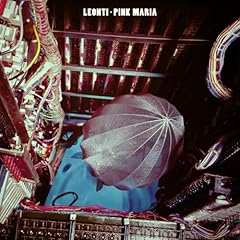
Leonti, "Pink Maria"

Pink Maria is the new album by Leonti, a band from Basel led by singer-guitarist Nadia Leonti and featuring Manuel Neubauer, Beni Bürgin, and Benj Gut. I am especially proud to have written quite a few of the lyrics for Nadia. For some of them, she took poems I had already written; for some, she had sketches that I filled in. As before, it was great to work with her on the project.

For information on how to get your own copy, check the band's website here.

(There are also two lyrics of mine on the band's earlier CD Everyone/I, so you should buy that one, too, if you don't have it already.)

Saturday, March 02, 2013

Plath crying for America

Paging through Birthday Letters, by Ted Hughes, which I read in June 1998 (shortly after it was published), I stopped at an underlined sentence in the poem "Fever": "You cried for America / And its medicine cupboard." I must have underlined this line from this book of poems for Sylvia Plath because it rang so true to me: America as the place where people take medicines that relieve the symptoms of colds and the flu, which is so much less common in Europe even today.

But I notice something else now, partly because of several recent conversations: Plath was a writer in exile, or if that sounds too dramatic, at least a writer who lived abroad for a long time, and died abroad. I'll be sure to consider this perspective the next time I return to her work. It even suggests an angle for a seminar in her poems, or at least a seminar topic that could use her poems for a week or three. (And yes, I am well aware that my own biography makes me so interested in the issue.)

Friday, March 01, 2013

Three versions of a paragraph

In my Intensive Composition course this morning, I gave the students an exercise that I took from Thomas Basbøll: they had 27 minutes to write one paragraph of no more than 200 words on a passage of their choice from Simon Armitage's poem "The Shout" (video below):


We went out
into the school yard together, me and the boy
whose name and face

I don't remember. We were testing the range
of the human voice:
he had to shout for all he was worth,

I had to raise an arm
from across the divide to signal back
that the sound had carried.

He called from over the park — I lifted an arm.
Out of bounds,
he yelled from the end of the road,

from the foot of the hill,
from beyond the look-out post of Fretwell's Farm —
I lifted an arm.

He left town, went on to be twenty years dead
with a gunshot hole
in the roof of his mouth, in Western Australia.

Boy with the name and face I don't remember,
you can stop shouting now, I can still hear you.

The Universal Home Doctor, 2002
(The poem is also the title poem of Armitage's American selected poems from 2005)

I did the exercise myself, too. The first time I tried this exercise in November, we were working on Dickinson's "Because I Could Not Stop for Death," and I had enough time in the 27 minutes to do three versions (see below). This time I was able to do three versions as well.

One feature of the development of the versions is how they begin. The first begins with a descriptive introduction to the passage, but the second and the third take material from the end of the first and second versions, respectively, and use that material to introduce the passage more analytically than descriptively. I have not edited the versions beyond what I wrote in those 27 minutes.

Version 1
In the experiment described in "The Shout", two boys take advantage of the difference between the speed of sound and speed of light to "test the range / of the human voice":

he had to shout for all he was worth,

I had to raise an arm
from across the divide to signal back
that the sound had carried.

If the signals (a shout and a gesture; one acoustic, the other visual) that the two boys pass to each other both reach their destination, then the two boys are still within "range / of the human voice" from each other. Since sound is significantly slower than light, the shout will take more time to reach the other boy than the gesture will. The sound "carries," but the arm signal "carries" even faster. The experiment depends on this distinction to work: if at some point the shouting boy cannot be heard anymore, then the two boys will still be in sight of each other. They expect the "divide" to always be small enough for them to still see each other; that is, they expect "the range / of the human voice" to be less than the range of human vision.

Version 2

In the experiment, two boys take advantage of the difference between the speeds of sound and light to "test the range / of the human voice":

he had to shout for all he was worth,

I had to raise an arm
from across the divide to signal back
that the sound had carried.

There are two signals here: not only the shout but also the speaker's gesture in return. The former is acoustic, the latter visual. As long as these signals both reach their destination, the two boys are still within "the range / of the human voice". As sound is slower than light, the shout takes more time to "carry" than the gesture, even though the boy shouts as loud as he can ("for all he was worth"). The sound "carries," but the gesture "carries" faster. The experiment depends on this distinction: the two boys expect the "divide" to always be small enough for them to still see each other; that is, they implicitly assume that "the range / of the human voice" is less than the range of human vision, while also assuming that the voice's range is best measured by shouting.

Version 3

The experiment the two boys devise depends on an implicit assumption: that the loudest voice possible is necessary to "test the range / of the human voice":

he had to shout for all he was worth,

I had to raise an arm
from across the divide to signal back
that the sound had carried.

But there are two signals here, one loud and one silent: not only the shout (a matter of sound), but also the speaker's gesture in return (a matter of vision). As long as these signals both reach their recipients, the two boys are still within "the range / of the human voice". Sound is slower than light, so the shout takes longer to "carry" than the gesture, even though the boy shouts as loud as he can ("for all he was worth"). The sound "carries," but the gesture "carries" faster. The experiment depends on this distinction: the two boys expect the "divide" to always be small enough for them to still see each other. That is, they not only assume that shouting will measure the voice's range, but also expect that range to be less than the range of human vision.

*

In the course of the semester, I'll be doing this exercise with the students six more times, on poems by Adrienne Rich, Rob A. Mackenzie, Katy Evans-Bush, Andrea Cohen, Don Paterson, and Elizabeth Bishop.

Here's Armitage reading "The Shout":


*

And here are the three versions of the Dickinson paragraph (as I wrote them in November, without further editing):


Version 1
The third stanza of "Because I could not stop for Death" describes the scenery that Death and the speaker pass by as they ride along in Death's "Carriage":

We passed the School, where Children strove
At Recess – in the Ring –
We passed the Fields of Gazing Grain –
We passed the Setting Sun –

From the "School" to the "Fields" to the "Setting Sun," the scene follows the course of human life from childhood to adulthood to old age (in this, it is reminiscent of the riddle of the Sphinx). The stages of life are bound together with the anaphora of "We passed" that begins the first, third, and fourth lines; the phrase is used transitively here, but its repetition opens up the possibility of reading it intransitively as a euphemism for death as well: "we passed" in the sense of "we died." This play of the transitive and intransitive is mirrored in the enjambment of the phrase containing the verb "strove" between the first and second lines of the stanza: read by itself, the children's "striving" points toward their efforts to learn at school; read with the next line, the "striving" is now a matter of both play ("At Recess") and struggle (the wrestling implied by "in the Ring"). Thus, the two verbs in the stanza, "passed" and "strove," are both made ambiguous by the poem's form: "passed" refers to both death and the passage of life; "strove" refers to both work and play.

*
Version 2
The third stanza of "Because I could not stop for Death" describes the scenery that Death and the speaker see as they ride along in Death's "Carriage." The stanza contains only two verbs, "passed" (anaphorically repeated at the beginning of lines one, three, and four) and "strove," which is emphasized by its enjambed position at the end of line 1:

We passed the School, where Children strove
At Recess – in the Ring –
We passed the Fields of Gazing Grain –
We passed the Setting Sun –

From the "School" to the "Fields" to the "Setting Sun," the scene "we pass" follows the course of human life from childhood to adulthood to old age; the anaphora links those stages while also drawing attention to the isolated phrase "we passed" as a euphemism for death itself. Thus, the anaphora connects the passage of human life and the passing of human life into one figure of "riding with Death." This formal construction of an ambiguity is repeated in the enjambment between the first and second lines of the stanza: read by itself, "Children strove" points toward their efforts to learn at school; read with the next line, the "striving" is now a matter of play ("At Recess") as well as playful struggle (the wrestling implied by "in the Ring"). Just as "passed" refers to both death and the course of life, "strove" refers to both work and play—and both of these ambiguities are created by the poem's form.

*
Version 3
The third stanza of "Because I could not stop for Death" contains only two verbs, "passed" (anaphorically repeated in lines one, three, and four) and "strove," in an enjambment at the end of line 1:

We passed the School, where Children strove
At Recess – in the Ring –
We passed the Fields of Gazing Grain –
We passed the Setting Sun –

From the "School" to the "Fields" to the "Setting Sun," the scene "we pass" figures human life from childhood to adulthood to old age. The anaphora links those stages while also isolating the phrase "we passed" as a euphemism for death itself; the passing of human life is thus contained in the passage of human life. The enjambment with "strove" repeats this formal construction of an ambiguity: read by itself at the end of the first line, "Children strove" refers to their efforts to learn at school; read with the next line, the "striving" becomes a matter of play ("At Recess") and of playful struggle (the wrestling implied by "in the Ring"). Again, one perspective is embedded in another, contradictory perspective; here, the striving of work is contained in the striving of childhood play.


Sunday, February 24, 2013

On Seminar Papers

ON SEMINAR PAPERS
FOR MY ENGLISH-LITERATURE SEMINARS AT THE UNIVERSITY OF BASEL
with thanks for inspiration to Thomas Basbøll

1

A seminar paper is supposed to be 6000 words long. At approximately 200 words per paragraph, that comes to about 30 paragraphs. A basic approach to those paragraphs would entail 2-4 paragraphs of introduction, around 24 paragraphs of discussion, and 2-4 paragraphs of conclusion.

Those 24 paragraphs of discussion need to be organized on the basis of the material at hand. Generally, each paragraph should be built around some evidence, usually a citation from your primary text (or one of your primary texts), but sometimes a citation from secondary literature. So one part of researching your paper is that you have to choose 24-30 quotations that you are going to work with.

In addition, each of your paragraphs will make one main claim, so the paper as a whole involves making 30 claims. These claims do not all have the same value, so you have to create a hierarchy of claims: the main claim of the whole paper, as well as the main claims of sets of paragraphs within the paper, and the claims of each paragraph.

This consideration of how a paper works makes an assumption: you may begin with an overall idea that you want to work on, but in the working out of the paper, you will move from the examples you choose to your ideas (and not from ideas to examples). Further, this approach assumes that your paper will present the results of your thought process (the "drama of ideas") and not a narrative of your thought process (the "drama of experience").

With a selection of 24-30 quotations in hand, you can write paragraphs. If each paragraph takes 30 minutes to write (and in that time, you should be able to write a very polished paragraph), then it will take you about 15 hours in all to write a very good first draft that then needs only some cleaning up to fit everything together (or adapt paragraphs written earlier to the development of your ideas in the writing process). So the actual writing of a draft can take anywhere from 2 days (at 8 hours a day) to 30 days (at 1 paragraph per day).

Once you have a first complete version, you need to read it through twice: first to revise (now that you have a complete overview), then to proofread (run a spellcheck, but then read it again). You might think that now is the time to write your bibliography, but you should have been writing it carefully all along. So all you should need to do with it now is proofread it (making sure that the citations fit the style sheet you are working with). And then you can hand your paper in.

2

The basic approach outlined above (2-4 paragraphs of introduction, 24 or so paragraphs of discussion, 2-4 paragraphs of conclusion) should be presentable without sections as one continuous series of paragraphs. Perhaps you'll find it useful to put an extra line of white space after the introduction or before the conclusion, or to give each part a number: intro as section 1; discussion as section 2; conclusion as section 3. Or perhaps you'll find that your discussion works best with further sections; if so, they will usually work best if they are roughly the same length: two sections of about twelve paragraphs each; three of about eight each; four of about six each.

But even if you use sections, it is worth writing the paper so that it could be printed without the sections and would still flow clearly from paragraph to paragraph. That is, don't use sections to replace transitions.

Alternatively, you could approach the paper as follows: begin with a carefully chosen exemplary passage from a work you are studying (whether primary or secondary), and use an interpretation of that passage to set up your main claim. In this case, your introduction might be a bit longer, and the body of the paper will develop the ideas exemplified by that opening passage. Such an approach can provide an excellent sense of closure when you return to that passage at the end of the paper and discuss it again in terms of what you have discussed in the body of the paper.

This approach can also be used with a more "theoretical" paper. You begin with a passage from a theoretical text you are focusing on; this sets up the ideas you will address in the paper as a whole. At some point, you turn from theory to specific works you want to use to exemplify or problematize the theory, and in your conclusion, you return again to the text you began with.

This brief set of suggestions about how to approach the outline of your 30 paragraphs is by no means exhaustive. Some papers will end up with quite different shapes, but the basic idea remains: you need to find around 25-30 pieces of evidence and make around 30 claims in all (that is, write 30 paragraphs in all). And along with that basic structure comes the writing time needed: 15 hours of writing in all.

Saturday, February 16, 2013

Opening for Lecturer in English Language Practice and (Applied) Linguistics

Here's a job opening for someone to be my colleague at the English Department of the University of Basel. Deadline for applications is April 1, 2013, but it's no joke!


Thursday, February 14, 2013

On Register

I posted this as a comment on Thomas Basbøll's "Popular Notions," and it got so long that I decided to post it here as well. It probably doesn't make much sense without reference to Basbøll's post, which is here.

The linguistic concept of "register" is helpful here. People speak in different ways in different contexts. The register appropriate to a university course is different than the register appropriate to a television show, and both are different than the register appropriate to Twitter, or those appropriate for scholarly articles or for books like de Botton's. Even de Botton will write differently in his books, his newspaper commentaries, and his tweets.

These differently "appropriate" forms can be understood as "arbitrary" (and hence perhaps having more to do with power than with knowledge), but they can also be seen as having evolved to fit each context (and hence having less to do with power than with knowledge). The university lecture works the way it does not because the professors are asserting their power (or at least not only because of that), but because that form (with its appropriate register) has proven to be a useful way to perform the task of communicating knowledge.

In this sense, the types of critiques you're calling out, Thomas, are missing the point in more than just the way that you point out: without the idea of appropriate registers for different contexts, the varieties of language used in each context can easily seem like arbitrary expressions of power.

I work in Basel, where the everyday language is Basel German. But the University's courses are taught in High German (or in my case, in English, as I work in the English Department). The switch from "dialect" to "standard language" that takes place as the course starts seems arbitrary, but once it seen as a matter of register (or "code switching," if you prefer), then it is completely natural. The participants in the courses make the switch without any sense of dissonance at all.

The concept of register is also useful for thinking about American speech these days in general. One feature of contemporary American public life is the loss of the formal register. Al Gore's public "stiffness" was not actually "stiffness" at all; it was just that he used a formal register that is going out of style. 

Sunday, January 27, 2013

A Boy Waiting To Be Punished

I gave my son Miles Watership Down for Christmas. I must have been about his age (13) when I first read it; I went on to read it four or five times. Yet I have only the vaguest memory of it—or so I thought. Then Miles showed me a paragraph that he liked so much that he wanted to post it on Facebook, the second paragraph of chapter 12 of the book. As I read it, it came back to me with complete vividness and familiarity, as if I had only read it the day before myself:

Here is a boy who was waiting to be punished. But then, unexpectedly, he finds that his fault has been overlooked or forgiven, and at once the world reappears in brilliant colors, full of delightful prospects. Here is a soldier who was waiting, with a heavy heart, to suffer and die in battle. But suddenly the luck has changed. There is news! The war is over and everyone bursts out singing! He will go home after all! The sparrows in the plowland were crouching in terror of the kestrel. But she has gone; and they fly pell-mell up the hedgerow, frisking, chattering and perching where they will. The bitter winter had all the country in its grip. The hares on the down, stupid and torpid with cold, were resigned to sinking further and further into the freezing heart of snow and silence. But now—who would have dreamed it?—the thaw is trickling, the great tit is scented; and the hares bound and skip in the warm wind. Hopelessness and reluctance are blown away like a fog and the dumb solitude where they crept, a place desolate as a crack in the ground, opens like a rose and stretches to the hills and the sky.

Sunday, January 06, 2013

Telling and Selling Truth and Lies: The Milkman Scene in Alfred Hitchcock's "The 39 Steps"

This is a scene near the beginning of Alfred Hitchcock's The Thirty-Nine Steps:


Here, Richard Hannay (Robert Donat) makes three attempts to convince the milkman (Frederick Piper) to help him. Hannay first tries to bribe him. This would make help a commodity that can be bought and sold. But the milkman wants to know more ("What's the big idea?"), so Hannay concludes that "I'll have to trust you." He then tells a story about a murdered spy in his apartment—which is actually what happened in the previous scene. When this truth proves unconvincing, Hannay tries again, this time preceding his story differently: "I'll tell you the truth." Even though the story of adultery that follows is pure fiction (and in fact just as cliche-ridden as and hence no more credible than the story of the murdered spy), the milkman is finally convinced to help Hannay.

When Hannay can't buy help, he has to tell a story. And given that the milkman, as the saying goes, "doesn't buy it," what Hannay has to do is sell a different story. He has to give the milkman a story he wants to hear: not "a lot of tales about murderers and foreigners," but the kind of story he likes, about adultery. As the milkman says, "I only wanted to be told"—and what Hannay learns is that what people "want to be told" is not the truth, but something that they will "buy" because it is what they want to hear.

If Hannay thus discovers the utility of an effective lie, there is still a way in which Hannay is always telling the truth: he does need to "make a getaway" from the two men who are outside in the street. His intention is true, even if the story he eventually finds to realize his intention is not. This intention remains true throughout "The 39 Steps," even as it gets complicated by a second intention: Hannay's attempt to prove that he did not commit the murder in his apartment.

In order to prove himself innocent, Hannay has to learn, as he does here, that the story of his innocence is beside the point. The truth may come out in the end, but not because he tells people the truth. Nor can he buy people's trust; rather, they have to buy him by believing his stories (true or not). In "The 39 Steps," the truth may need to be revealed, but it is best gradually revealed by the telling—and selling—of effective lies.

Sunday, October 07, 2012

On Purpose or At Random: The Engineering of Fiction in Tim Parks's "Goodness"


Independent Life
Technologies
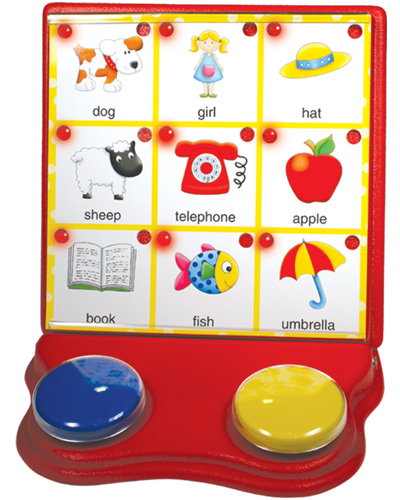
In Tim Parks's novel Goodness, the narrator, George, designs an electronic game for his severely handicapped daughter Hilary, with pedals for her feet to press that turn on music and colored lights. Though she does activate the pedals and apparently enjoy the lights, he cannot tell if she is doing it "on purpose or at random." When given such a toy (nowadays commercially available, but not in the 1980s, when the novel takes place), children without developmental difficulties may begin with random button pushing, but they will quickly figure out which buttons produce which effects. It is not clear to George and his wife Shirley whether Hilary is engaging in this kind of trial and error, so purposefulness and randomness remain indistinguishable.

When George decides to try to burn down his house in such a way that Hilary cannot be rescued and will thus die in the fire without his being blamed for her death, he learns something about arson: "The most elementary secret to a successfully designed arson is that the fire must have only one focal point." The arsonist's goal is not to make intention and accident indistinguishable. He wants to disguise intention so that it looks like accident. Something done "on purpose" should look like it happened "at random." This is surely not the case with the serial arsonist who sets fires because he is mentally ill; usually, such an arsonist wants his intentions to be clear. But the one-time arsonist like George does not want to have his creation recognized as something created; it should look like it just happened.

Later, when George has set the fire after long and careful preparation, he finds himself upstairs in his burning house, where he contemplates the position he has put himself in: "This is the moment of truth I have so expensively engineered." The moment is "expensive" not because he has spent money on the act of arson but because of his "sacrifice" of his expensive house to his desire for a life without his handicapped child.

The "engineering" of a "moment of truth" is an excellent description of the writing of fiction. And the novelist's goal is the same as that of the arsonist who does not want to get caught: the "engineering" of that "moment of truth" in the story that leads up to it should not be detectable. For a work of fiction to be credible, it should look not purposeful but random, or its "moment of truth" will not be worth the "expensive engineering" of the writing process.

This is the implicit poetics of Goodness: fiction as an elaborate construction that tries to conceal its own constructedness. There are other types of novels, of course: the long-standing tradition of novels like Tristram Shandy that revel in their fictionality. But they share something with novels like Goodness: they, too, involve the elaborate engineering of "moments of truth," such as the epiphanies in James Joyce's novels. In fiction, a game that we play in order to have intense experiences, the writer may conceal it or flaunt it, or do a little bit of both, but no matter what, the fix is always on.

*

My previous post on Goodness is "Ruthless Realism and Cloying Sentimentality." Anyone interested in even more posts about Goodness (and soon other novels by Parks) should check out the blog for my current seminar on Parks's novels, which I am giving at the University of Basel English Department this term.

Thursday, September 27, 2012

"Click Here": Rae Armantrout's "Results"


Here is the first poem in Rae Armantrout's Versed (Wesleyan, 2009):

RESULTS

1

Click here to vote
on who's ripe
for a makeover

or a takeover

in this series pilot.

Votes are registered
at the server
and sent back

as results.

2

Click here to transform

oxidation
into digestion.

From this point on,
it's a lattice
of ends
disguised as means:

the strangler fig,

the anteater.

3

I've developed the ability
to revise
what I'm waiting for

so that letter
becomes dinner
gradually

while the contrapuntal
nodding
of the Chinese elm leaves

redistributes
ennui

The poem begins with instructions: "Click here to vote." You are sitting at a computer, and you can use the mouse and its clicking to participate in an online vote. The clicks of all the users will be tallied up in "the server" to produce results. This server is a classic "black box," its input and output clear, but its internal processes unknown. The voters apparently given the power to determine something must have faith in "the server" that is supposed to be "serving" their empowerment; in fact, at the very moment when they participate in the production of power, they surrender their power to that "server."

This is not a political vote but a trivial bit of entertainment; the voters here are being given a sense that they are participating in the production of a television show. Their votes will supposedly determine which character is "ripe / for a makeover // or a takeover." As a characterization of a maturation process, "ripe" naturalizes the highly technological voting procedure as organic growth, and the illusion of empowerment is matched by an illusion of naturalization.

All this is done for a "series pilot," which makes the whole thing even more trivial: it's not even an established series but just a test run for a new program. If this whole process produces "results," their object is trivial, their provenance is obscure, and the participants' empowerment is illusory, as is any sense that this highly technologized procedure has anything "natural" about it. This may not be explicitly about politics, but as a critique of the role of voting in the production of spectacles, it ends up also being a critique of the reduction of voting to a spectacle.

When the second section then begins with an echo of the first ("Click here to transform ..."), what follows is immediately subject to the first section's critique of "clicking." So the transformation that follows is as subject to doubt as the "makeover," the "takeover," or the processing of results by "the server." In the transformation here of "oxidation / into digestion," a chemical process becomes a biological process. As one feature of digestion is oxidation, this transformation involves making a process more complex when you "click here." The complexity thus produced is that of evolution: out of chemistry comes biology. In this version of evolution, then, life is created by a "click." But given the illusionary nature of "clicking" in the poem, this turns out to be a critique of one approach to the theory of "intelligent design," in which the "intelligent designer" sets things going but then does not intervene in the evolutionary process anymore.

So "from this point on," once "oxidation" has been transformed "into digestion," evolution takes place without further intervention, without any more "clicks." The "lattice" makes evolution a network rather than the familiar "tree of life," while also associating it with the "clicking" used to navigate the World Wide Web. If this whole lattice is read backwards from one point in time, then "ends" will be seen as being "disguised as means": evolved characteristics may look like "means" used by evolution to develop later ends, but they are actually "ends" in themselves, the "results" of a random process of natural selection without the will to transformation represented by "clicking."

The unusual forms of the two organisms mentioned emphasize the unintentional quality of evolution, in which the evolutionary "end results" at any given moment will look like they followed from earlier "means" that were actually also just momentary stages in a nontelelogical process. "The strangler fig" picks up on the image of the "lattice," as such plants create a "lattice" of roots and branches overlaying the trees they "strangle." The "anteater" evolved in a unique and unpredictable fashion in response to its environment, ending up with an especially unusual appearance. In both cases, the "just-so stories" of a popular understanding of evolution depict the shapes of organisms as the "results" of an interplay of "ends" and "means," but those stories and the "results" that they explain are as illusory as the spectacle of "voting" to produce "results" earlier in the poem. This second section, then, extends the poem's critique of the illusion of "results" to the common misunderstanding of the theory of evolution as a teleological process.

The third and final section is quite different from the first two. It begins not with the imperative "click" but with the first-person: "I've developed the ability ..." There's no dependence on a black-box here, or on a process that runs itself after an initial input. A first person takes center stage and engages in a process with a clear result, a positive product whose agent can legitimately claim to have produced.

Yet the ability the speaker develops is "the ability / to revise / what I'm waiting for." The confidence of the first line continues, but not as an assertion of agency as a source of power and control. This is an adaptive agency that adjusts to developments; the ability the speaker has developed is the ability to develop while "what I'm waiting for" changes. There is a result here, but it's about sidestepping the expected, about changing one's mind, and about doing so consciously, with a full understanding of what is going on. This first stanza of the third section shifts away from a critique of results to a depiction of how to escape the desire for results.

The rest of this third and final section develops this shift from mechanisms that produce the illusion of results to an agency that relinquishes the need for that illusion. The second stanza introduces a letter-changing game in which one changes one letter in a word to produce another word, with some other particular word as a final goal. (As in this sequence: letter, latter, batter, banter, banner, tanner, tinner, dinner.) This may be a result that the person doing the puzzle desires, and such a puzzle does in fact generate an illusion of empowerment like that found in the first stanza, but it is an illusion that is recognized as an illusion from the start. Such puzzles allow for the assertion of agency without the risk of deception; they may be as inconsequential as internet voting about a spectacle (with its potential implications as a figure for politics), but the inconsequentiality is not hidden away inside a "server" that obscures the disempowerment of the agent.

The evolutionary images of the second stanza are also reworked here: evolution becomes "development," "revision," and "redistribution" that take place "gradually" and "contrapuntally." The strict determination of "results" in the first two stanzas is replaced by an emphasis on process and an image not of linear development but of the weaving together of line in counterpoint. This approach to development even allows "ennui" to be "redistributed" as one stops waiting for anything in particular and accepts what comes.

The poem's "result" is a depiction of an alternative approach to process that is not fixated on "makeovers," "takeovers," and "ends disguised as means." Still, such a result is subject to the very critique of results developed in the first two sections of the poem. From this perspective, the poem reads as if it were oriented toward the goal of not being goal-oriented. If it escapes its own critique of results, it is able to do so because "click here" is not "read here": the process of reading the poem to develop the implications of its critique of results and its proposed alternative to their illusions involves the reader as an active agent. When we read this poem, we are not just "clicking here" in an illusion of participation; we are engaging in a gradual, contrapuntal process full of revisions as we try to find our way from "letter" to "dinner." 

As depicted in this poem, the ambitions of poetry are vast. Poetry aims to displace the naturalized illusions of politics, society, and even religion not with its own naturalized spectacle but with the self-conscious and self-confident artificiality of the puzzle or the Bonsai tree (so often made with Chinese elms). In its puzzling quality, it takes the risk of becoming another "server" that obscures how its output is related to its input. But as the puzzle pieces fit together, it reveals itself completely. 

Wednesday, September 19, 2012

The Eleventh Rule

A list of "10 rules for students and teachers" has been making the rounds:


I checked to see if this was really by Cage because so many things floating around the net are misattributed. All too often, the attribution turns out to be wrong, and the supposed source clearly serves more as a marker of wisdom than anything else. I recently came across a "Chinese proverb": "A bird does not sing because it has an answer. It sings because it has a song." But that's Maya Angelou! 

In addition, these rules don't sound very much like Cage to me. Even if it does turn out to be something that quotes him (rule 10) and that he adopted as his own, the rules don't contain enough randomness to be typically "Cageian."

Still, it's a good list. I especially like Rule 1, which emphasizes that the place where learning takes place is important, as well as the role of trust in the teaching process. And Rule 9, which emphasizes the role of pleasure in learning. But perhaps Rule 7 is most important of all: "if you work it will lead to something."

Tuesday, September 11, 2012

September Rain

So here we are, three leap days later, and it's Tuesday again.


SEPTEMBER RAIN

for Dieter M. Gräf

Past autobahn construction sites,
threats

of traffic. Past television
towers

atop Hessian hills. Past
buzzards

soaring between sudden
showers,

kestrels hovering over
prey,

flocks of starlings
descending

into roadside trees. Past a freshly
plowed

field of crows. Through the
cloud

of spray from asphalt. Through
slaps

of rain from overpasses. Past
airplanes

starting and landing over the
skyscrapers

of Frankfurt. Everything standing, even
ruined

medieval castles perched
strategically

on the passing bluffs.
Passed

by a car from Cologne — how the cathedral
withstood

and withstood the air
raids.

The rain
clears;

soon we'll be home, safe as
towers.

— 16-17 September 2001

Monday, September 10, 2012

The Point of Talking and Not Talking: Tim Parks, "Dreams of Rivers and Seas"


The following paragraph appears about three-quarters of the way through Tim Parks's novel Dreams of Rivers and Seas:

John felt clarity coming and going. It is pointless saying anything, a voice told him. The words were spoken quietly and convincingly, as if across a table in a quiet room where everything is calm and reasonable. It is pointless saying anything. John listened and saw at once how true that was. It was a wise voice. Talking is pointless. He hadn't really been listening to the girl, after all, had he? And she hasn't been listening to him. Why say anything? She just wants to take advantage of you. She's been telling you lies. Elaine had certainly lied. All the messages Elaine sends are lies. Text messages were invented for lying. John soon realised that. It's too easy. Then he was overwhelmed by an image of Sharmistha's body, her golden nakedness swam into his mind. She is right beside him. Her lips covered his. Her hair is on his face. And he started at the touch of Heinrich's hand. (322)

John James has been walking through Delhi at the beginning of a sandstorm. A young man who lives in London, he has come to Delhi without telling his mother, a doctor at a Delhi clinic for the poor, but at this moment, he has decided that he will go see her right away, despite the sandstorm, and he has left his cheap hotel to walk to her house. This is his second recent trip to Delhi; the first was a few months earlier, on the occasion of the funeral of his father, Albert James.

Three women are on his mind in this paragraph. First of all, he is accompanied here by Jasmeet Singh, a young Sikh in her late teens who was not only a pupil but also the mistress of his father's; she wants John to take her back to London with him. For a few minutes, they have been sitting in an unattended autorickshaw, waiting for its driver to turn up. After John hears this mysterious voice, he first applies its "wisdom" to his conversation with Jasmeet: here, "it is pointless saying anything" because neither participant in the conversation is really listening to the other. John wants Jasmeet to leave him alone, and, as John spins it here, Jasmeet "just wants to take advantage of" him. From this perspective, whatever she says has to be parsed as part of her attempted manipulation of him. But not all of what she says as the sandstorm rises is actually part of her attempt to talk him into taking her to London; in fact, as a Delhi native, she is trying to get the naive visitor to come in out of the dangerous storm. What she is saying is neither pointless nor manipulative; it is simply the attempt to communicate potentially life-saving information to John. John's observations about language are thus ironized by the situation; language -- and specifically conversation (in literary terms, dialogue) -- can be more than only "what the characters do to each other" (as Elizabeth Bowen put it in "Notes on Writing a Novel").

The second woman on John's mind is Elaine, his girlfriend back in London, who has been texting him incessantly in Delhi, despite his never responding to her messages. His train of thought runs smoothly from Jasmeet's "lies" to Elaine's, and then to a further interpretation of the voice's "wisdom": "Text messages were invented for lying." Unbeknownst to John (as well as to the reader, who will find this out in just a few pages), Elaine herself has just arrived in Delhi at his mother's house (as she thinks he is staying there). If John sees all of Elaine's messages as lies, his non-response to her messages has also been a kind of lie, as he had told her he was going to Delhi to see his mother, whom he has not contacted at all since his arrival in the city. Again, John's reflections on language's manipulative quality neglect its role as a provider of information, in which it is not "pointless to say anything."

Not saying anything also comes up in John's memory of a young Indian woman, Sharmistha, with whom he went to bed a couple nights earlier, only to break off his foreplay with her because her impotent boyfriend, an older German man named Heinrich, touched John's foot. Sharmistha had not said anything to John about the unusual nature of her relationship with Heinrich, who apparently always watches her when she has sex with other men. In this scene, she obviously assumed that John would not agree to let Heinrich watch; it was not her speech that manipulated John, but her silence.

John agrees with the voice that "talking is pointless," then, but the interactions alluded to in this paragraph (with Jasmeet, Elaine and Sharmistha) all undermine that conclusion. As a provider of information, language is more than manipulation -- and silence can be as manipulative as speech.

*

That's a nice resonant conclusion, but there's one point in the paragraph that I want to pursue further for a moment: "Text messages were invented for lying." Ever since Destiny, Parks has explored the impact of mobile phones on fiction. In that novel, Chris Burton is unable to use his mobile because his charger in his lost luggage. In Rapids, the characters on a kayaking holiday in South Tirol constantly send texts back to friends and family in England. The "unreality" of the holiday, which I discussed in "The Delirium of the Real Thing," is highlighted by one teenage girl's sending of texts to her boyfriend back home within minutes after kissing one of the boys on the kayaking trip. In Cleaver, one reason the title character goes into the mountains in South Tirol is to get out of range of mobile-phone signals. And Parks's most recent novel, The Server (which I will be writing about soon), takes place in a meditation insitute where mobile-phone use is forbidden. Not only that, the participants in the meditiation retreats are not told that they will have no access to their mobiles during their ten-day vow of silence. Here, the silence of the organizers on this point is as much a tool of manipulation as the silence of John James in his silence at Elaine's numerous text messages to him.

In any case, there is a study to be written on the representation of mobile phones in Parks's fiction. It could begin with a consideration of how his works from before the mobile-phone era would look different if the plots were shifted to a few decades later. Cara Massimina, for example, is the tale of Morris Duckworth, a hapless expat English teacher in Verona whose kidnapping of, or elopement with, the Massimina of the title would not work at all in a mobile-phone era. Again and again in his work since Destiny, Parks has directly confronted the problems mobile phones raise for plot by making them central to his plots, just as they have become essential to the lives of so many of his readers.

Friday, September 07, 2012

"The Delirium of the Real Thing": Tim Parks, "Rapids"


Almost at the end of Tim Parks's novel Rapids, Vince, a character who has slowly emerged as the story's focus, decides not to return from his kayaking holiday in South Tirol to his job as a chief financial officer at a major bank in London. He reflects on the relationship between the holiday world and the everyday world: "Was it that all life until now had been a tired spell, from which he was suddenly released? Or was it this situation that was snatching him from reality?" (243). Here, the boundary between "all life until now" (his life back in London) and "this situation" (the kayaking experience in Italy) is identified as a boundary between the real and the unreal. This is made explicit by the second question, which identifies "reality" with the everyday existence his choice is "snatching him from." But retrospectively, it is implicit in the first question as well, in which the "tired spell" of routine is seen as something to be "released" from. From this perspective, one is enthralled by routine, in thrall to it, and the decision to not return from the holiday is a liberation into reality, an escape from the deadening enchantment of the everyday.

The idea that everyday life is not "real," while a kayaking holiday is "real," is articulated again and again in the course of the book. Early on, Clive, the head instructor on the holiday, says that "when you spend time by the river and on the river, you can't help but understand how dull and squalid a lot of so-called civilised life is" (15). When Vince's kayaking skills begin to improve, he senses it by noticing a change in how he thinks: "Never had his mind thought so intensely and lucidly" (132). And this intensity and lucidity is "the delirium of the real thing" (149).

But even here, the boundary between reality and unreality (holiday and everyday life) can flip, as in another of Vince's reflections a few pages later: "He was impatient for the parenthesis of this holiday to be over, so he could know how he really felt" (159). The intensity of the holiday experience now seems like unreality, like a parenthesis, and only back in London would he be able to identify his "real" feelings, not the heightened feelings of kayaking. Even Clive's distinction between "dull and squalid" life and the intensity of the river is inverted in his girlfriend Michaela's memory of an idea of his: "Well, Clive always says, the trouble is, after the high of getting away with it on the river, nothing has really changed. It isn't a real risk" (227). Michaela's conclusion is that "these sports are something you do instead of life" (240). The sporting experience, no matter how extreme it is, is not unambiguously "real." 

Vince summarizes this tension a few lines after the passage I began with: "Or each state was a form of enchantment, worth as much or as little as the other" (243). Here, both the everyday and the exceptional have their own "enchanting" character, and Vince reaches for an understanding of them that no longer privileges one over the other in a manner that cannot help be unstable. The intensity of the exceptional may seem more "real" than the everyday, but as long as the latter is also called "the real world," then the contrast will remain unstable. Whether "the real thing" is life at home or an adventure elsewhere, it will remain a "delirium."

(I also wrote about Rapids once before: here, in one of my earliest blog posts.)

Tuesday, September 04, 2012

Ahnen und Ergründen


Since I have so many books of poetry that I can barely imagine reading them all, I have started reading the first poem in every poetry collection I own. In each case, I make a little note about whether the poem makes me want to read the rest of the book or not, and in a few cases, I have begun blogging about these "first poems." The first two cases were my recent posts on poems by Fleur Adcock and John Agard. The third poem that I read in this project and wanted to blog about is the poem by Henning Ahrens below. I tried writing my comments in English, but it was too complicated, so I've written this post in German. (And no, I don't want to translate it into English. At most summarize it, perhaps, if anyone is interested.)

Now that I've mentioned the project publicly, I'll have to see if I continue ... In any case, here's the German discussion of Ahrens's poem "Montag, du":

*

Hier ist das erste Gedicht aus Kein Schlaf in Sicht von Henning Ahrens (Fischer 2008).

MONTAG, DU

Die Maus liegt da, von der Falle erschlagen.
Das Kätzchen schleckt die Milch vom Teller.

Ich schau auf dem Boden nach, suche im Keller,
durchstöbere Schuppen und Wäschekammer,

aber du bist verschwunden. Die Puschen
im Flur sind noch fußwarm, dein Mantel

riecht regennass, und in der Dusche
liegen drei dunkle Haare. Das Kätzchen,

inzwischen gesättigt, schlüpft schnurrend
in mein Bett—o Mann, mir war immer

blümeranter ... Ich lösche die Lampen,
stolpere unterbelichtet durchs Zimmer,

ahnend: Man kann nicht alles ergründen.
Aber am Freitag werd ich dich finden.

Der vorletzte Vers dieses Gedichts lebt von der Spannung zwischen "ahnend" und "ergründen". Stereotyp kann man das so auslegen: es gibt Gefühle (Ahnungen), die nicht rational zu erklären sind, und wenn sie rational erklärt werden, dann sind sie keine Gefühle mehr. Dieses Gedicht zeigt aber mit seinen Bildern, dass Gedichte eine solche stereotype Gegenüberstellung untergraben können.

Dieser vorletzte Vers beginnt mit "ahnend" und endet mit "nicht ... ergründen". Das Ergründen erscheint aber zuerst im Gedicht (ab dem dritten Vers), das erst später (ab etwa dem elften Vers) mit dem Ahnen anfängt. Ab dem dritten Vers sucht das Ich das Du. Die Suche führt "auf den Grund", in dem sie immer in die Tiefe und in abgelegene Plätzen im Haus führt: Boden, Keller, Schuppen, Wäschekammer. Das Ich "ergründet" also das Verschwinden des Dus, indem es auf verschiedene Arten auf "Gründe" geht. Die Zeilen sind eine Beschreibung des Ergründens und gleichzeitig eine poetische Darstellung eines Auf-den-Grund-Gehens.

Nach der Feststellung, dass das Du tatsächlich nirgends zu finden ist, sucht das Ich nach einer Erklärung für sein Verschwinden und findet Spuren von seiner Anwesenheit in den Puschen, im Mantel und in der Dusche. Alles deutet darauf hin, dass das Du erst vor kurzem verschwunden ist, aber sie lassen keine Erklärung zu, was mit ihm passiert ist. Wenn das erste Teil dieser bildlichen Ergründens eine räumliche Erfahrung des "Auf-den-Grund-Gehens" darstellt, erscheint hier das Ergründen mit der "Fusswärme", dem Geruch und den drei Haaren in der Dusche als eine körperliche Erfahrung.

Nach einem kurzen Intermezzo mit dem Kätzchen kommt eine poetische Darstellung des Ahnens: "Ich lösche die Lampen, / stolpere unterbelichtet durchs Zimmer". Das Ahnen erscheint hier vor seiner expliciten Erwähnung am Anfang des nächsten Verses (bzw. des letzten Zweizeilers) wieder als eine räumliche und körperliche Erfahrung (der Dunkelheit bzw. des Stolperns), die gleichzeitig eine Selbstentwertung mit sich bringt: man fühlt sich "unterbelichtet"—unfähig also, die Situation zu ergründen.

Bevor das Gedicht also zu der Schlussfolgerung über Ahnen und Ergründen kommt, hat es schon die Bewegung von Ergründen zum Ahnen in der Bewegung vom Ich durch das Haus poetisch dargestellt. Nur danach wird die Ahnung festgestellt, dass ein vollständiges Ergründen nicht möglich ist. Die Bildlichkeit des Gedichts beweist aber gleichzeitig das Gegenteil: mit poetischen Mitteln kann man Ergründen und Ahnen gleichermassen darstellen, und somit die Spannung zwischen den beiden sowohl ausnutzen wie auch aufheben. 

Aber die letzte Zeile fängt mit einem "Aber" an, das gleichzeitig das "aber" am Anfang dieses Satzes ist, ein "Aber" gegen diese Auslegung von Bildern von geahnter Unergründbarkeit und ergründeter Ahnung. "Aber am Freitag werd ich dich finden" ist nicht "Ahnung" sondern eine Feststellung, als ob das Ich eigentlich wissen würde, dass das Du nur von Montag bis Freitag verreist ist. Erst kippt das Gedicht vom Ergründen ins Ahnen (das aber durch seine Bildlichkeit auch ergründet wird), dann kippt es "aber" wieder in die Sicherheit von dem, was man weisst, und nicht nur ahnt.

So liegt der Schluss nahe, dass das Gedicht doch die beschriebene Situation "ergründet". Nach dieser Lesart bildet das Gedicht ab, wie man doch "alles ergründen kann", wie man eigentlich sicherer sein kann, als man ahnt—und wie Ahnen selber eine Art Ergründen ist. Aus dieser Sicht hat die Lyrik eine ungeheuere Kraft, die hier gefeiert wird: mit ihren eigenen Mitteln ergründet sie den Graben zwischen Gefühlen (Ahnen) und Vernunft (Ergründen), indem sie die beiden Seiten des Grabens verbildlicht. Rationale Erklärung kann genausogut in Bildern dargestellt werden wie die Gefühle, die sonst als das Thema für Lyrik verstanden wird.

Aber es muss noch einmal ein Aber her, da diese Lesart Maus und Kätzchen ignorieren muss. Man kann die Abwesenheit des Dus ergründen, indem man genau liest, wie das Ich die Situation beschreibt, und zum Schluss kommen, dass das vollständige Ergründen durch die Poesie doch möglich ist. Aber die tote Maus und das Kätzchen sind der Ausgangspunkt des Gedichts, und das Kätzchen erscheint später wieder. Die Tiere sind so beschrieben, dass man sie nicht als Bilder des Ahnens lesen kann. Aber sie sind auch nicht als Bilder des Ergründens zu deuten. Die tote Maus in der Falle, das Milch schleckende Kätzchen, später das "inzwischen gesättigte" Kätzchen, das "schnurrend in mein Bett schlüpft"—diese sind keine Bilder, die in der Spannung zwischen Ahnen und Ergründen zu verstehen sind. Die Bilder, die mit dem Verschwinden des Dus zu tun haben, sind alle innerhalb dieser Spannung auszulegen, aber das Gedicht als Ganzes enthält diese anderen Bilder, die der berauschenden Macht dieser Lesart widerstehen.

Wenn das heisst, das man nur ahnen kann, warum Maus und Kätzchen hier überhaupt vorkommen, dann ist man wieder beim Vers gelandet, womit diese Auslegung angefangen hat: "ahnend: man kann nicht alles ergründen." Damit hätte man aber die Tierbilder doch ergründet ...?

Friday, August 31, 2012

Talking to Plants


This is the first poem in John Agard's Alternative Anthem: Selected Poems (Bloodaxe, 2009):

TALKING TO PLANTS

Always talk to your plants.
Sit back and watch them flourish.
Good advice. Of course we presume
that all plants speak English.

Speak slowly, watch them bloom.
If necessary shout each syllable.
Their little ears are ready vessels
for a shower of the Queen's vowels.

Never mind if it's a China rose
or an African violet.
Better yet, recite a bit of English lit.
See abundance spring at your fingertip.

So I spoke like an Oxford don
to my wilting rhododendron.
It wilted more. As for my drooping shrub,
my words only seem to draw more slugs.

O plants, what is it that makes you grow?
I watch my immigrant neighbour's patio
with a sense of distant envy.
Tell me, plants, must I address you in Punjabi?

My first approach to this poem is quite simple: Agard makes fun of "talking to plants" by considering various issues about how to go about doing it (the appropriate language and volume, for example). It's a neat bit of mockery of a rather silly idea.

Given that one person who is associated with the idea is Prince Charles, this poem also takes a poke at him, whose speech is relatively close to "the Queen's vowels" (though not necessarily the same as that of an "Oxford don," who may or may not be from Britain these days). This part of the poem's humor is taken further by the contrast with the "immigrant neighbour," who is a better gardener than the speaker. That is, the poem touches on issues about what it is to be British, and what characteristics the British can be said to have. The immigrant speaking Punjabi turns out to be more connected with the environment he lives in than the speaker is, with his efforts to speak like the elite. Agard, himself an immigrant from Guyana, turns this poem about a silly idea into a serious reflection on identity, nation, and location that disrupts the standard conception of the relationship between those three categories.

*

My second approach to this poem involves how it does its work. Its five quatrains are quite regular in shape, but they never settle down into an established rhythm, nor do the end-rhymes establish a pattern like ABAB or ABBA. It does have a shape, though, that one could even imagine writing further poems in. It involves the pattern of words that develop the poem's "argument." The basic frame of the pattern involves the words "Always" (in line 1), "So" (13), and "O" (17): first comes a description of a situation (with "always"), then comes a consequence of the situation (with "so"), and then comes a final commentary on the situation, in the form of an exclamation (with "O"). This could be an exercise in a writing workshop: use these three words as the starting points of three parts of a poem; the parts need not be the same length. In fact, it's important here that the parts do not have the same length: insofar as this poem is a joke, it depends on its comic timing for its effect, and the brevity of the last two parts (the last two quatrains) is essential to its timing.

The first part of the poem's argument has internal details that are important as well: the expressions "Of course" (3), "Never mind" (9), and "Better yet" (11) relate the parts of the description of the situation to each other. In fact, they make it clear that calling this the poem's "argument" is perfectly appropriate; these are, after all, the kinds of phrases that one might use in an argument (or a speech) to develop one's points. Again, this could be the basis of a writing exercise (whether a poem or an essay): begin three successive points or perspectives with these phrases.

The argumentative structure of the poem thus looks like this (with a few more things highlighted that I have not discussed):

Always talk to your plants.
Sit back and watch them flourish.
Good advice. Of course we presume
that all plants speak English.

Speak slowly, watch them bloom.
If necessary shout each syllable.
Their little ears are ready vessels
for a shower of the Queen's vowels.

Never mind if it's a China rose
or an African violet.
Better yet, recite a bit of English lit.
See abundance spring at your fingertip.

So I spoke like an Oxford don
to my wilting rhododendron.
It wilted more. As for my drooping shrub,
my words only seem to draw more slugs.

O plants, what is it that makes you grow?
I watch my immigrant neighbour's patio
with a sense of distant envy.
Tell me, plants, must I address you in Punjabi?

*

A third approach to the poem involves looking at some of its verbs. Among others, the first stanza contains "talk," "watch," and "speak." The rest of the poem runs through variations on talking and watching: "speak," "watch," "shout," "recite," and "see" appear before the turn at the beginning of the fourth quatrain, many of them in the imperative (appropriately, since this is a set of instructions, and instructions are often given in the imperative). If the seeing theme is not as explicit in the last two quatrains (only "watch" in line 18 is a verb of seeing), the speaking theme continues to be central with "spoke" (13), "tell" (20), and "address" (20).

All this relates to the poem's titular theme: talking to plants. When one talks to plants, one wants to see results. More generally, the poem considers speech and language as having possible effects, as working a bit of magic, as it were. The content of what is said to the plants is not as important as the fact of saying something at all, and the possibility that the act of speaking can produce the desired effect. From this perspective, the poem is about "how to do things with words." And how one does things with words is related to social, political, and cultural hierarchies: it is the voice of authority (of "the Queen's vowels" and an "Oxford don") that is supposed to be able to produce the desired effects, along with "a bit of English lit."

Yet the poem undermines this authority; after all, the "proper" voice does not help the plants "flourish." Only Punjabi appears to do so—an underprivileged language, at least in a British context. Still, the poem does not privilege Punjabi as some kind of mystical "other" that actually does have the magical qualities attributed to language by the idea of talking to plants. If Punjabi were being celebrated here, it would ruin the joke by reducing the poem to a bit of exoticism.

In the end, it's necessary to remember that the poem is primarily making fun of talking to plants. By extension, it also makes fun of the beliefs behind the hierarchies it touches on: the royal family as privileged figures, contrasted with immigrants; the Oxford don and English lit as representatives of privileged culture; prestigious varieties of British English contrasted with Punjabi, an immigrant language. Insofar as these hierarchies represent sites of sociopolitical tension, the poem does not propose ways to resolve such tensions. Instead—to use a Britishism—it takes the piss out of the idea that they can be defused if we just figure out the right way to talk about them.