Remember the conscientious objectors who stood up for what they believed in.
Remember the civilians who died as "collateral damage" while the armies fought in the name of one thing or another.
Remember the gays and lesbians who wanted to fight for their country but weren't allowed to.
Remember those imprisoned for speaking out against unjust wars, or even just talking truthfully about the horrors of war. They weren't shouting "fire" in a crowded theater; they were standing outside a burning cinema telling people they shouldn't go inside.
Remember all those who struggled to retain their humanity and dignity during wartime, pity those who tried and failed to do so, and disdain those who did not even try.
Monday, May 28, 2012


Tuesday, May 22, 2012
Fleck and the Bank

The Chinese character for 'crisis', he reads,
binds together danger and extreme
caution, averse to risk and opportunity.
("The Bank" III)
Even before the Internet (remember that?), vaguely attributed quotations from "exotic" languages (for our purposes, "non-Western") made the rounds as tidbits of wisdom that could be used as guides to good living or success. Here, Rob A. Mackenzie bitingly mocks the spurious idea (see Victor Mair's dismantling of it here) that the Chinese character for "crisis" is a combination of "danger" and "opportunity."
The "he" in question is the main character of Fleck and the Bank, a banker friend of "Rob" (to whom a letter in the book is addressed) who disappeared in August 2011. These lines rebuild a cliché of contemporary "management wisdom" so as to turn it on its head: "danger + opportunity" becomes an aversion to both.
Such dismantling appears most strikingly in a prose poem called "Now and in the Hour of Our Death," which is ostensibly the note that Fleck left behind when he disappeared. Near the end of it, there is this wonderful sentence:
There's too much in life: you can't describe it, yet he who dares to speak of it, bears witness, and calls to witness him to whom he speaks.
In the notes at the back of the book, this poem is described as "a collage of cut 'n' pasted sources from the first and/or last lines of books stacked along a single shelf in Fleck's kitchen." Before the Internet, research on this would have involved a trip to the library (and one with as wide-ranging a collection as Fleck), but now I was able to quickly discover the source here—or rather, sources: "There's too much in life: you can't describe it" is the last line of Les Murray's verse novel Fredy Neptune, and the rest comes from Martin Buber's I and Thou. The "it" in Buber refers, however, to "God's existence," not the "too much in life" that can't be described in Murray. Mackenzie's revision of the orientalist cliché about "crisis" turns it upside down; here, he disorients both Murray and Buber, finding a new opportunity in their juxtaposition.
Monday, May 21, 2012
Translation Workshop in Switzerland, October 2012
Here's an announcement from the Looren Translation House in Switzerland:
October 17 – 24, 2012
ViceVersa - Fifth German and English workshop at the Translation House Looren Workshop
leaders: Karen Nölle (Germany) and Shelley Frisch (USA)
We invite translators from German to English and English to German to apply for our fifth translators’ workshop, which will provide the opportunity to present and discuss their translations-in-progress.
In addition to the work on texts, the program will include meetings with literary movers and shakers.
Applications deadline: June 30, 2012
For the application form, see the Looren web page here.
October 17 – 24, 2012
ViceVersa - Fifth German and English workshop at the Translation House Looren Workshop
leaders: Karen Nölle (Germany) and Shelley Frisch (USA)
We invite translators from German to English and English to German to apply for our fifth translators’ workshop, which will provide the opportunity to present and discuss their translations-in-progress.
In addition to the work on texts, the program will include meetings with literary movers and shakers.
Applications deadline: June 30, 2012
For the application form, see the Looren web page here.
Tuesday, May 15, 2012
A Ground-Up Millipede
Thomas Willis was a 17th-century English doctor who, among other things, coined the term "neurology" and collaborated with Christopher Wren (who did the drawings) to produce the first accurate description of the structures of the human brain. The story of Willis's research and medical practice is told in Carl Zimmer's book Soul Made Flesh: The Discovery of the Brain ... (there's more to its title, but it's just marketing ...).
Zimmer talks a great deal about the historical context of seventeenth-century England, not just to add color but because Willis's biography (like that of anyone living through it) was strongly influenced by the English Civil War. After the Restoration and the Great Fire of London, Willis moved his practice from Oxford to London and became the most famous physician in England (in part because of his work with Wren describing the brain). Zimmer writes of his medical practice as follows:
His theories about how people became sick and how the body worked were hugely popular. Yet his remedies remained, as ever, generally useless. He continued prescribing his eclectic blend of medicines—a blistering plaster for one patient, a ground-up millipede for another—and claimed success when his patients recovered and escaped blame when they didn't. If they recuperated, they usually did so in spite of his attentions.
The popularity of a medical treatment bears no necessary relationship to its effectiveness. Its popularity might well be based on other things—in this case, the fame of Willis's research—or on logical fallacies, such as the clear post hoc, ergo proper hoc moment in the above passage. Perhaps ground-up millipedes are good for something, but no matter how much he had discovered about the structure of the brain, Willis was probably just making it up when he decided that millipedes would do the job.
Monday, May 14, 2012
Germ Theory
It's hard for me to wrap my head around the idea that there might be people out there—doctors, even!—who dispute the germ theory of disease. But there are, and some of them are trying to provide medical treatment to terminally ill patients (and anyone else they can convince to put themselves into their hands), as is shown by this post about such a case.
David Gorski writes of the era when the germ theory was first developed:
Béchamp, as you may remember, was a contemporary of Louis Pasteur and proposed a competing hypothesis for the cause of infectious disease, which he dubbed the pleomorphic theory. The concept he championed was that bacteria do not cause disease but are rather a manifestation of disease. In other words, diseased tissues produce bacteria, arising from structures that Béchamp called microzymas, which to him referred to a class of enzyme. Béchamp postulated that microzymas are normally present in tissues and that their effects depended upon the cellular terrain. Of course, as we all know, ultimately Pasteur’s ideas won out based on evidence, experimentation, and clinical observation, relegating Béchamp to more or less a historical footnote. In fairness, it should be remembered that, 150 year ago, it wasn’t entirely clear who was correct, Pasteur or Béchamp. Given the technology and tools of the time, it was not a trivial matter to determine where bacteria arose, although it didn’t take long before experiments and methodology were developed that pretty much put Béchamp’s concepts to bed for good.
The point is well taken: when Pasteur was first developing his ideas, there were many other ideas in the air, and his ideas "won out" not because of some conspiracy to make them win out, but because they fit the evidence best.
If you're looking for an "alternative" doctor, at least try to find one who does not dismiss the germ theory and claim, among other things, that HIV "is not a virus but an alkaline antibody to buffer acid or antigens."
I'm not sure what I'll do when somebody comes along and says, "But Pasteur was wrong!"
David Gorski writes of the era when the germ theory was first developed:
Béchamp, as you may remember, was a contemporary of Louis Pasteur and proposed a competing hypothesis for the cause of infectious disease, which he dubbed the pleomorphic theory. The concept he championed was that bacteria do not cause disease but are rather a manifestation of disease. In other words, diseased tissues produce bacteria, arising from structures that Béchamp called microzymas, which to him referred to a class of enzyme. Béchamp postulated that microzymas are normally present in tissues and that their effects depended upon the cellular terrain. Of course, as we all know, ultimately Pasteur’s ideas won out based on evidence, experimentation, and clinical observation, relegating Béchamp to more or less a historical footnote. In fairness, it should be remembered that, 150 year ago, it wasn’t entirely clear who was correct, Pasteur or Béchamp. Given the technology and tools of the time, it was not a trivial matter to determine where bacteria arose, although it didn’t take long before experiments and methodology were developed that pretty much put Béchamp’s concepts to bed for good.
The point is well taken: when Pasteur was first developing his ideas, there were many other ideas in the air, and his ideas "won out" not because of some conspiracy to make them win out, but because they fit the evidence best.
If you're looking for an "alternative" doctor, at least try to find one who does not dismiss the germ theory and claim, among other things, that HIV "is not a virus but an alkaline antibody to buffer acid or antigens."
I'm not sure what I'll do when somebody comes along and says, "But Pasteur was wrong!"
Sunday, April 29, 2012
How There Is Something Rather Than Nothing
This article by Sean Carroll, "A Universe from Nothing?", is a very clear explication of the two primary explanations in contemporary physics of how it is that there is something (the universe) rather than nothing. Carroll begins by referring to Lawrence Krauss's book "A Universe from Nothing: Why There Is Something Rather Than Nothing" and David Albert's negative review of Krauss's book in the New York Times. Carroll also nicely lays out how Krauss and Albert are talking past each other, as they are addressing two different versions of the questions they differ on.
But the real reason to read Carroll's article is independent of its occasion (the dispute between Krauss and Albert). Even those for those with little or no background in physics, Carroll lays out the issues so clearly that you can get a sense of what possibilities are established by contemporary physical theory. I cannot recommend the article highly enough!
Wednesday, April 18, 2012
Persuasion
The article about Camus in the April 9 issue of the New Yorker (which is unfortunately only online for subscribers) contains this quotation from Camus:
We have witnessed lying, humiliation, killing, deportation, and torture, and in each instance it was impossible to persuade the people who were doing these things not to do them, because they were sure of themselves, and because there is no way of persuading an abstraction.
How does one talk to those who are so sure of themselves that they never doubt the validity of their actions, no matter what the content of those actions may be? If you perceive someone as being so full of certainty and completely unwilling/unable to be skeptical about their own beliefs, then perhaps the only thing to do is not to talk to them, but to talk to others who are not as uncertain, to help them avoid being persuaded by abstract certainties that lead to "lying, humiliation, killing, deportation, and torture."
Still, it would be nice if the people in power were not engaged in those activities quite so unreservedly.
*
Near the end of the article, Adam Gopnik paraphrases Camus's position on place as follows: No human being is more indigenous to a place than any other. This rootless cosmopolitan applauds such a point, but Camus's basis for it is quite convincing: his mother may have been a French colonist in Algeria, but she worked as a cleaning lady; she had none of the privileges of the colonial. And Camus, born and raised in Algeria, was as Algerian as anyone else born and raised there.
Speak Softly ... no, Whisper
I was planning to write a rather scathing takedown of this article by Constance Hale from the NYT Opinionator blog: "Make-or-break verbs." But Geoffrey Pullum beat me to it: "Not Rage So Much, But a Modicum of Fear." As I wanted to, Pullum went after Hale's complete misuse of the terms "active" and "passive." But he did leave me some points to make.
Hale writes: "Picking pointed verbs also allows us to forgo adverbs. Many of these modifiers merely prop up a limp verb anyway. Strike speaks softly and insert whispers." If Teddy Roosevelt had followed that advice, he would have made himself ridiculous: "Whisper and carry a big stick." Beyond that, "speaking softly" is something quite different than "whispering" anyway. And finally, there's absolutely nothing wrong with adverbs anyway!
Further, Hale also has trouble with grammatical categories that Pullum does not take her down for. She uses the opening of a short story by Jo Ann Beard to talk about "static verbs": "Here is a scene. Two sisters are fishing together in a flat-bottomed boat on an olive green lake ..." Apparently, Hale sees "is" in the first sentence and "are" in the second as "static" verbs that should be used carefully so as not to make one's writing too static. But the "are" in the second sentence is part of the phrase "are fishing", and "to fish" is surely not one of her "static" verbs.
So all in all, if you want good writing advice, avoid Constance Hale. On the evidence of this article, she does not know what she is talking about.
Sunday, April 15, 2012
A Statement of Accounts
Samuel Beckett wrote about Kafka (specifically, The Castle, which he stopped reading three-quarters of the way through): I am wary of disasters that let themselves be recorded like a statement of accounts. (I came across this in a footnote to John Banville's review of the second volume of The Letters of Samuel Beckett in The New York Review of Books.) He may have been wary of Kafka, but Beckett nicely captured one feature of Kafka's work: the lack of drama with which its dramas are presented.
I find myself increasingly put off by the way the word "Kafkaesque" is used, and Beckett's formulation makes the reason clear: all too often, the term is used to refer to events that are strange, surreal, and nightmarish — disastrous — but which are also presented as disasters, as oddities, surrealities, nightmares. But what makes Kafka's work so singular and striking is precisely its cool presentation of what others would present as dramas, or perhaps more precisely, as melodramas or tragedies. References to the Kafkaesque ought to include what they never do: the absence of the affect of disaster.
Friday, April 13, 2012
"The Lyric I"?
The other day, one of my poet friends on Facebook (I don't remember who, unfortunately) used the expression "the lyric I". This clearly derives from the German expression "das lyrische Ich", and I have always told my students and colleagues here in Basel that an appropriate translation would be "persona." But I have begun to see the expression used occasionally by English speakers far from the German-speaking world. I wonder if it has entered some parts of poetry discourse in the English-speaking word through translations of Adorno.
In any case, I am curious how my friends, acquaintances, and fellows in the poetry world in English find the expression:
- Do you use it?
- Have you heard others use it?
- Does it sound odd you?
Thursday, April 05, 2012
... was gesagt werden muss.
Günter Grass has written a bad poem. Andreas Heidtmann's analysis hits all the right points about what makes it a bad poem (in German).
But here's a little linguistic supplement to Heidtmann's remarks:
sage ich, was gesagt werden muss.
The passive voice, it is said, can be used to conceal agency. But here it's not the concealment of agency that is the problem, but the use of the passive to allow one speaker to claim to speak for many.
As with the concealment-of-agency issue, the question is who the active subject of the passive verb "gesagt werden" is. There are two valid interpretations: one is that the speaker (the "ich") is the one who "has to say this." The other is that an indeterminate group of people (in German, you could say "man"; in English, "they" or "people") "has to say this." This latter is probably the salient interpretation for most people, but it also makes clear how Grass makes his complaint seem like something that many people agree with: by not saying "sage ich, was ich sagen muss" but "sage ich, was gesagt werden muss", he lets his claim slip from something personal to something that many people will agree with.
So the passive here is not a tool of concealment of agency, but a tool for making the claims of an individual sound general, a way to make yourself sound like you speak for a silenced minority that is afraid to speak.
*****
Afterthought: The salient interpretation of the "was gesagt werden muss" construction is actually a third possibility: the implied active subject is "jemand", as in "somebody has to say it, so I will."
There are two further implications: nobody else was willing to take on the risk of saying it, and "I am the one who is courageous enough to sacrifice himself by saying it."
This is connected to the overall tenor of the poem, which focuses less on the critique of Israel than on Grass's perception of himself as a victim of the criticism that he expects to receive for having written the poem.
In this respect, all criticism of the poem for its representation of Israel fulfills one of the poem's goals (I would say "implicit" goals, but in fact, it's pretty explicit): that Grass will be criticized for it. One could call this masochism, but what it really is a rhetorical use of the passive voice to stylize oneself as a victim of the criticism one expects to attract.
The rhetoric is quite powerful, in fact, as it defuses all criticism of the poem's contents by anticipating it and putting those who do criticize the contents in the position of protecting taboos that only Grass has had the guts to break: somebody has to say it, and I will say it, and if you criticize me for it, then you are part of the reason that nobody had said it before.
*****
Afterthought: The salient interpretation of the "was gesagt werden muss" construction is actually a third possibility: the implied active subject is "jemand", as in "somebody has to say it, so I will."
There are two further implications: nobody else was willing to take on the risk of saying it, and "I am the one who is courageous enough to sacrifice himself by saying it."
This is connected to the overall tenor of the poem, which focuses less on the critique of Israel than on Grass's perception of himself as a victim of the criticism that he expects to receive for having written the poem.
In this respect, all criticism of the poem for its representation of Israel fulfills one of the poem's goals (I would say "implicit" goals, but in fact, it's pretty explicit): that Grass will be criticized for it. One could call this masochism, but what it really is a rhetorical use of the passive voice to stylize oneself as a victim of the criticism one expects to attract.
The rhetoric is quite powerful, in fact, as it defuses all criticism of the poem's contents by anticipating it and putting those who do criticize the contents in the position of protecting taboos that only Grass has had the guts to break: somebody has to say it, and I will say it, and if you criticize me for it, then you are part of the reason that nobody had said it before.
Tuesday, March 20, 2012
Gullible Dolts?
The ideal citizen of a politically corrupt state, such as the one we now
have, is a gullible dolt unable to tell truth from bullshit, writes Charles Simic in "Age of Ignorance."
But I wonder about how his discourse comes across to those who hold the beliefs he condemns as examples of ignorance (see the list at the end of the article, including "Global warming is a hoax"). They will most likely see him as yet another liberal elitist (like me, presumably) who is talking down to them and not treating them with respect.
As an American living abroad who has little contact with the kinds of people who hold such opinions, I wonder about how I would talk to them if I did have contact with them. Simic tries so hard to say "we" throughout the essay when he talks about who is being "ignorant." But at the end of the essay, even that approach breaks down: "Despite their bravado, these fools can always be counted on to vote against their self-interest." I know for myself that I react very negatively when people suggest that I am being duped in some way (say, by acting like I am a fool for not agreeing with them that vaccination is a bad thing); I can imagine that such a remark will simply end any chance of conversation.
Still, Simic is right: the ideal citizen of a politically corrupt state is a gullible dolt. But the real problem here is not the production of gullible dolts; it is the cycle of political corruption.
Sunday, March 11, 2012
Snapshots of a Daughter-in-Law, part 5
Dulce ridens, dulce loquens,
she shaves her legs until they gleam
like petrified mammoth-tusk.
(Adrienne Rich, "Snapshots of a Daughter-in-Law," part 5)
*
A woman makes her legs "gleam" like ivory. This makes her beautiful, but the resulting beauty is "like petrified mammoth-tusk." The ivory this gleam is compared to comes from a mammoth (an extinct pachyderm) and is petrified (turned to stone by the passage of time). The gleam is uncanny in its lifelessness.
This tercet begins with a bit of Latin that is often translated as "sweetly laughing, sweetly speaking" and identified as a reference to Horace (Ode XXII, from the first book of the Odes). This makes the woman here more lively, vivacious and charming in her laughter and speech. If the words used to describe her are from a dead tongue, and a man's words, they still carry the magic and charm of beauty, for in the poem in question, Horace claims that a song he had written about his beloved kept a wolf from attacking him.
Yet even as the three lines celebrate the woman's beauty, they act out how the ideal of that beauty traps women in ancient patterns (represented here by Latin, the mammoth, and petrification). The woman in the middle line of the tercet is vividly present, but she is framed by terms that she has not defined for herself.
she shaves her legs until they gleam
like petrified mammoth-tusk.
(Adrienne Rich, "Snapshots of a Daughter-in-Law," part 5)
*
A woman makes her legs "gleam" like ivory. This makes her beautiful, but the resulting beauty is "like petrified mammoth-tusk." The ivory this gleam is compared to comes from a mammoth (an extinct pachyderm) and is petrified (turned to stone by the passage of time). The gleam is uncanny in its lifelessness.
This tercet begins with a bit of Latin that is often translated as "sweetly laughing, sweetly speaking" and identified as a reference to Horace (Ode XXII, from the first book of the Odes). This makes the woman here more lively, vivacious and charming in her laughter and speech. If the words used to describe her are from a dead tongue, and a man's words, they still carry the magic and charm of beauty, for in the poem in question, Horace claims that a song he had written about his beloved kept a wolf from attacking him.
Yet even as the three lines celebrate the woman's beauty, they act out how the ideal of that beauty traps women in ancient patterns (represented here by Latin, the mammoth, and petrification). The woman in the middle line of the tercet is vividly present, but she is framed by terms that she has not defined for herself.
Wednesday, March 07, 2012
But go slowly if the old dog wakes up
In A Student's Introduction to English Grammar, Rodney Huddleston and Geoffrey Pullum pose the following problem:
Leaving aside interjections, the eight parts of speech (as defined by H and P) are nouns, verbs, adverbs, adjectives, prepositions, determinatives, coordinators, and subordinators. Is it possible to construct a sentence that contains one and only one of each of the following parts of speech?
As many of my students figured out, the key problem is the "subordinator" (traditionally, a "subordinating conjunction"): a sentence with a subordinator will necessarily have two verbs (one in the main clause, one in the subordinate clause).
I have come up with a sentence that contains two verbs and one of each of the other parts of speech:
But go slowly if the old dog wakes up.
Some people might argue that the coordinator "but" should not be at the start of a sentence like this, and the presence of a coordinator in a sentence does raise difficulties for the problem stated above, precisely because coordinators mostly coordinate two things with the same form (noun and noun, verb and verb, etc.). But a sentence-initial coordinator overcomes this difficulty, and, as Huddleston and Pullum argue in their book, there is no descriptive justification for the "rule" that says you cannot begin a sentence with a coordinator.
In class, though, I discussed a different problem: which parts of speech can appear in one-word sentences? I assumed that the answer is that only verbs can stand by themselves as sentences, and then only in the imperative form: Stop! But students made two other proposals that intrigued me:
Fire!
So?
This is not the verb "fire" but the noun: it's what you shout when there's a fire in a crowded theater (or what you don't shout when there isn't one).
At first, I wanted to say that "a sentence has to be a main clause with a finite verb in it, or it's not a sentence." But I was immediately suspicious of this: that's a conventional definition, but perhaps there's a more interesting definition that takes the two possibilities above into account.
I had hoped that Huddleston and Pullum's Cambridge Grammar of the English Language might help me on this score, but they make short shrift of the concept of "sentence" and instead focus their attention on the concept of "clause" (as is always the case with their unconventional moments, the discussion of the point is lively and fascinating).
So I turned where we all turn these days, to Wikipedia. The page is called Sentence (linguistics). The first definition there focuses on something that had crossed my mind: a sentence is a grammatical unit of one or more words that bears minimal syntactic relation to what comes before and after it. To me, that implies that "Fire!" in the above sense can be considered a sentence, because it can stand on its own without any other context, and it will still be understood. In contrast, "So?" might not be a sentence, as it cannot really be fully understood unless you know what it calls into question (that is, what preceded it). — But that argument is not very satisfying.
The second idea of the sentence provided on the Wikipedia page is that a sentence is anything that begins with a capital letter and ends with a period/full stop. This pretty much wipes out the whole issue of which parts of speech can be one-word sentences, because now anything can:
Me.
Stop!
Definitely!
Green.
Up.
So?
This.If.
Tuesday, March 06, 2012
A Winter Night
Here's Robin Fulton's translation of Tomas Tranströmer's "A Winter Night" (which I have in New Collected Poems, Bloodaxe, 1997):
The storm puts its mouth to the house
and blows to produce a note.
I sleep uneasily, turn, with shut eyes
read the storm’s text.
But the child’s eyes are large in the dark
and for the child the storm howls.
Both are fond of lamps that swing.
Both are halfway toward speech.
The storm has childish hands and wings.
The Caravan bolts towards Lapland.
And the house feels its own constellation of nails
holding the walls together.
The night is calm over our floor
(where all expired footsteps
rest like sunk leaves in a pond)
but outside the night is wild.
Over the world goes a graver storm.
It sets its mouth to our soul
and blows to produce a note. We dread
that the storm will blow us empty.
I came across this poem today (thanks to my friend Allen) and was struck by how it takes up issues of inside and outside that I addressed recently in my post on Adrienne Rich's discussion of Wallace Stevens's "The House Was Quiet and the World Was Calm." Tranströmer approaches the issue from a completely different angle, of course: "the night is calm" but the world is not.
Any time I think about Tranströmer I also love to recall this.
Sunday, March 04, 2012
The Lure of Lyrics
I'll be teaching this songwriting workshop in Basel on Saturday, March 17, as part of the BScene Festival's new workshops.
The Lure of Lyrics: A Songwriting Workshop
Workshop
A workshop on lyrics and songwriting from a "creative writing" perspective. (In English)
When
17. March, 10 am - 4 pm (with lunch)
Where
To be announced
For whom?
Songwriters, Lyricists, Rappers, Poets, Writers of all kinds and every age. A group of six to twelve participants is hoped for.
Register by March 9 at:
workshops@bscene.ch
The Lure of Lyrics: A Songwriting Workshop
Workshop
A workshop on lyrics and songwriting from a "creative writing" perspective. (In English)
When
17. March, 10 am - 4 pm (with lunch)
Where
To be announced
For whom?
Songwriters, Lyricists, Rappers, Poets, Writers of all kinds and every age. A group of six to twelve participants is hoped for.
Register by March 9 at:
workshops@bscene.ch
Sunday, February 26, 2012
Mr. Memory
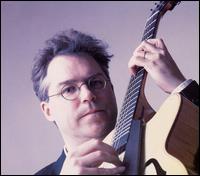
In 1997, Bill Frisell released an album called Nashville, his "country" album. I took it upon myself to write words for some of the songs on the record, including the song "Mr. Memory" (click here to listen to it on Spotify):
MR. MEMORY
When you're alone with your name
what you recall is your self
Shoulders hunched up with the rain
no umbrella lost again
Mr. Memory heads for home
turns the corner and he's gone
If you forget your own name
what can you say to yourself?
The rain against the windowpane
is everything left behind
Mr. Memory waits for you
round the corner but you're gone
And you awake with no name
Bells ringing in a blue day
I just liked the expression "Mr. Memory" and let it and the melody take me places while I was writing.
Last week, I watched Alfred Hitchock's The 39 Steps and was pleased to discover that Frisell's title might well be a reference to the character Mr. Memory, as played by Wylie Watson:

Saturday, February 25, 2012
Voices from the air
In a short prose text called "Voices from
the Air" (from her book What Is Found There: Notebooks on Poetry and Politics, Norton, 1993), Adrienne Rich
describes three scenes of hearing recorded poetry on the radio, with each scene
exemplifying a different way of responding to poetry. In the first, while in
the hospital recovering from an operation, Rich turned on the radio to look for
music and heard instead a recording of The
Duchess of Malfi, specifically, a passage that begins with the Duchess
saying, "Who am I?" (it's about halfway through this scene):
BOSOLA: Thou art a box of worm-seed, at best
but a salvatory
Of green mummy. What's this flesh? a little
cruded milk
Fantastical puff-paste. Our bodies are weaker
than those
Paper prisons boys use to keep flies in; more
contemptible,
Since ours is to preserve earth-worms. Didst
thou ever see
A lark in a cage? Such is the soul in the body:
this world
Is like her little turf of grass, and the
heaven o'er our heads,
Like her looking-glass, only gives us a
miserable knowledge
Of the small compass of our prison.
DUCHESS: Am not I thy Duchess?
BOSOLA: Thou art some great woman, sure, for
riot
Begins to sit on thy forehead (clad in gray
hairs)
Twenty years sooner than on a merry milkmaid's.
Thou sleepest worse than if a mouse
Should be forced to take up her lodging in a
cat's ear:
A little infant that breeds its teeth, should
it lie with thee,
Would cry out, as if thou wert
The more unquiet bedfellow.
DUCHESS: I am Duchess of Malfi still.
BOSOLA: That makes thy sleep so broken:
Glories, like glowworms afar off shine bright,
But look'd to near, have neither heat nor
light.
Rich found
that hearing this brutal passage, which precedes Bosola's strangling of the
Duchess, could "solace [her] consciousness to the point of relief. For
that is one property of poetic language: to engage with states that themselves
would deprive us of language and reduce us to passive sufferers." This is
a particularly vivid example of the cathartic experience of tragedy, the purification of negative emotions
("pity and terror," in Aristotle's terms) into an experience of
solace. The scene is strikingly different than the theatrical scene of
tragedy—not a stage with actors performing for an audience in a well-prepared
aesthetic experience, but a solitary sufferer listening to something on the
radio that she had not even been looking for—but even in this unlikely
situation, the play produces its effect, and its audience finds relief.
The second scene could hardly be more
different, except for the accidental discovery of poetry on the radio that
connects it to the first. Driving at night, Rich and a friend again come across
a Wallace Stevens poem being read by Stevens himself (I tried to find this
recording on the web somewhere, but had no luck):
The house was quiet and the world was calm.
The reader became the book; and summer night
Was like the conscious being of the book.
The house was quiet and the world was calm.
The words were spoken as if there was no book,
Except that the reader leaned above the page,
Wanted to lean, wanted much to be
The scholar to whom his book is true, to whom
The summer night is like a perfection of
thought.
The house was quiet because it had to be.
The quiet was part of the meaning, part of the
mind:
The access of perfection to the page.
And the world was calm. The truth in a calm
world,
In which there is no other meaning, itself
Is calm, itself is summer and night, itself
Is the reader leaning late and reading there.
Rich writes
of this experience: "And for those moments, on a mountain road on a calm
night, for two listeners in a world we knew to be in fracture, the words ...
rose in that flat, understated, actuarial voice to bind the actual night, the
moving car, the two existences, almost as house, reader, meaning, truth,
summer, and night are bound in the poem. For a few minutes, we could believe in
it all." This is quite a different way of responding to a poem: not
through a cathartic purging of negative emotions, but through identification: although the scene they
experience in the poem in is quite different from the scene described in the
poem, they find themselves identifying with the described experience and having
an experience of their own that corresponds to it. "The words were spoken
as if there were no book": and for Rich and her friend, of course, there
was no book, as they heard Stevens read the poem on the radio.
But Rich then spins this scene in a different
way, imagining a different person coming across the Stevens poem on the radio: someone
driving over to her sister's house in the middle of the night to go to the
emergency room with her sister, whose boyfriend has stabbed her. This listener
also searches for music while driving, but comes across poetry instead. If you
were this listener, Rich wonders, "what would make your hand pause on the
dial, why would these words hold you?" Such a listener would not identify with the reader in the poem,
because her house is not "quiet," and her world is not
"calm." Nor would she experience catharsis,
for the poem is far from being a tragedy that can "purge pity and
fear." If she is drawn in, Rich imagines, it will be for another reason
entirely: "You are drawn in not because this is a description of your
world, but because you begin to be reminded of your own desire and need,
because the poem is not about integration and fulfillment, but about the desire
... for those conditions." For such a listener, the poem provides not
solace or confirmation but a vision of an alternative, a utopia even, in which
solace and confirmation might be possible.
In all of these scenes, the listeners turn on
the radio to look for music, and they get poetry instead. They look for distraction from their momentary existence,
and instead they find a commentary on it. They do not get an experience of
wholeness that erases their own experience and replaces it with a commodity;
they get the experience of a desire for wholeness, a desire for "what is
found there" in poetry, as the title of Rich's book puts it, in a
reference to William Carlos Williams: "It is difficult / to get the news
from poems / yet men die miserably every day / for lack / of what is found
there." The misery of the lack of catharsis, the lack of identification,
and the lack of a way to represent one's desires even (or especially) when
one's world is fractured beyond hope of repair.
*
Click here for the context of the Williams quotation in his poem "Asphodel, That Greeny Flower." The quoted passage is right near the end.
*
Alex Ross has a beautiful and brief response to the Stevens poem here.
Wednesday, February 15, 2012
Updating "The Day I Swapped My Dad for Two Goldfish"
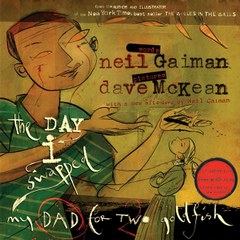
It begins as follows:
One day my mom went out and left me home with just my little sister and my dad. My dad sat in front of the television, reading his newspaper. My Dad doesn't pay much attention to anything, when he's reading his newspaper.
I revised it as follows:
One day my mom went out and left me home with just my little sister and my dad. My dad sat in front of the television, reading his iPad. My Dad doesn't pay much attention to anything, when he's reading his iPad.
Yes, yes, that is much more up-to-date!
I should add that the book is hysterically funny. I laugh my head off about some of the bits, even though I know they are coming: "Mumf, mumf, mumf," said my little sister. You'll have to get the book yourself to know why that is hysterical. :-)
Monday, February 13, 2012
Streaming services and bands
My friend David Bauer wrote a quick defense of streaming services such as Spotify against the complaints musicians have about how little they earn from such services. It's in German here. (If you read German, the comments are worth reading, too.)
David's points are as follows:
1. Every band can choose whether or not to work with streaming services.
2. Bands earn money every single time a song is played on a streaming service. That's not comparable to the sale of a CD or other ways of earning money from selling music. (My comment: when you sell a CD, you don't earn money every time the consumer listens to each song.)
3. If a song is not available for streaming, that does not mean that you sell a CD. People can find free downloads or listen to something else.
4. Spotify is not making great profits. David provides a link to an article called "Why Spotify can never be profitable."
5. Spotify is not about making money for bands but about generating attention for their music. (My comment: it suddenly reminds me of the Grateful Dead: give away the right to record concerts and trade tapes, and the fans will come in droves, assuming the music is any good, especially if you promise a distinct concert at every show.)
David also links to this post of suggestions as to how Spotify can help musicians.
Curious what my musician friends have to say about this.
Subscribe to:
Posts (Atom)
